



The difference between stroke and cerebral hemorrhage is a common question among patients, caregivers, and the general public, especially when these terms are mentioned in the context of a medical emergency. Both conditions affect the brain and can have serious consequences, but they are not exactly the same.
What is a stroke?
The term stroke is a general medical term that refers to any acute cerebrovascular event. That is, any sudden event that disrupts blood flow in the brain, either due to an obstruction (ischemic) or bleeding (hemorrhagic). In contrast, cerebral hemorrhage refers specifically to a type of hemorrhagic stroke. Therefore, all cerebral hemorrhages are strokes, but not all strokes are cerebral hemorrhages. This is the first and most important difference between stroke and cerebral hemorrhage.
Types of stroke
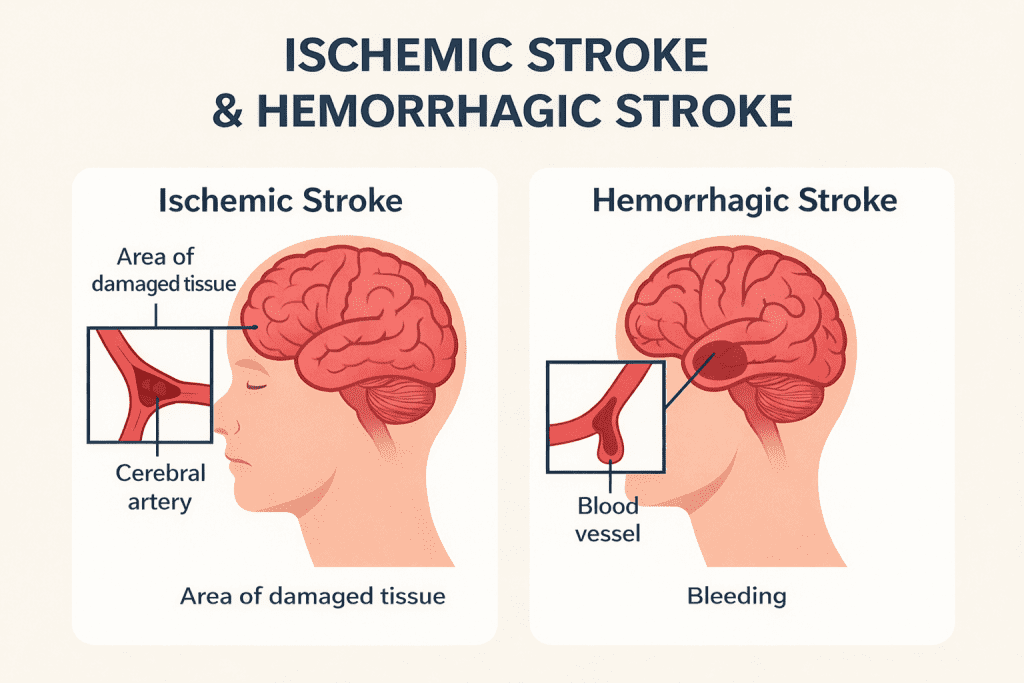
From a clinical perspective, a stroke can be classified as either ischemic or hemorrhagic:
- Ischemic stroke: occurs when a blood clot obstructs a cerebral artery, preventing normal blood flow. This accounts for approximately 80% of stroke cases.
- Hemorrhagic stroke (cerebral hemorrhage): occurs when a blood vessel ruptures and bleeding takes place within the brain. Although less frequent, it is typically more severe.
This highlights another key difference between stroke and cerebral hemorrhage: the underlying cause of the event.
Risk factors
Risk factors also help to clarify the difference between stroke and cerebral hemorrhage:
- Ischemic stroke: arterial hypertension, hypercholesterolemia, diabetes mellitus, smoking, obesity, and physical inactivity.
- Cerebral hemorrhage: poorly controlled hypertension, vascular malformations, and aneurysm rupture.
Symptoms
From a symptomatic perspective, the difference between stroke and cerebral hemorrhage may not be immediately apparent. Both conditions can present with:
- Sudden weakness affecting one side of the body.
- Difficulty speaking or understanding language.
- Vision loss.
- Loss of balance or coordination.
- Mental confusion.
However, cerebral hemorrhages often present with a sudden and severe headache. This feature can help clinicians rapidly differentiate between stroke and cerebral hemorrhage in clinical practice.
Diagnosis and treatment
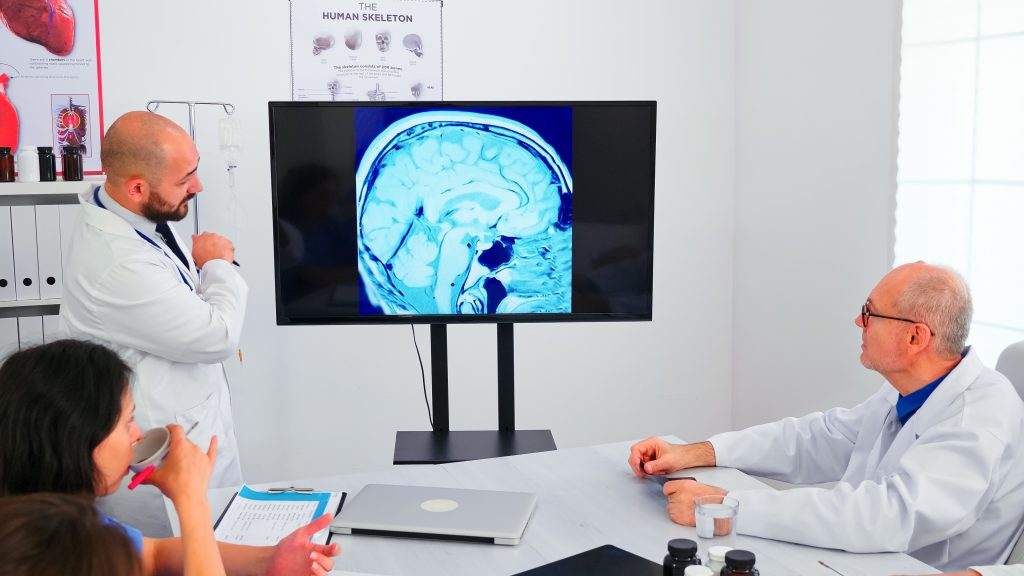
Neuroimaging techniques such as computed tomography (CT) or magnetic resonance imaging (MRI) are used to determine whether the event is an ischemic or hemorrhagic stroke. This distinction is essential, as treatment depends entirely on the type. Understanding the difference between stroke and cerebral hemorrhage is therefore critical.
- Ischemic stroke: thrombolytic therapy may be administered to dissolve the clot.
- Cerebral hemorrhage: requires control of the bleeding, often through surgical intervention. Thrombolytic therapy is contraindicated.
Surgical intervention
Surgical management also highlights another difference between stroke and cerebral hemorrhage:
- In cerebral hemorrhage: surgical intervention may be required to evacuate the hematoma or repair the damaged vessel.
- In ischemic stroke: mechanical thrombectomy may be performed to remove the clot.
Prognosis and rehabilitation
Prognosis largely depends on the timeliness of medical intervention. However, cerebral hemorrhages tend to result in more severe sequelae. This further underscores the importance of understanding the difference between stroke and cerebral hemorrhage.
Rehabilitation may include physiotherapy, speech and language therapy, occupational therapy, and psychological support. Cerebral hemorrhages typically require longer and more complex recovery processes.
Public awareness importance
In the context of health education, understanding the difference between stroke and cerebral hemorrhage can improve overall prognosis. Early recognition of symptoms and seeking urgent medical care can reduce irreversible brain damage.
Cerebral hemorrhage typically involves a more challenging recovery and a greater emotional burden. Families who understand this distinction can better prepare for the caregiving process.
Conclusion
The difference between stroke and cerebral hemorrhage should not be underestimated. Although these terms are often used interchangeably, they represent distinct clinical conditions with different causes, treatments, and prognoses. Being able to differentiate between them is essential for both healthcare professionals and the general public. A better understanding of this distinction enables faster action, more informed decision-making, and improved quality of life following an acute cerebrovascular event.
If you would like more information about NeuroAiD II, please fill out this contact form.
"*" indicates required fields


