



Fahr’s disease, also known as idiopathic basal ganglia calcification, is a rare neurodegenerative disorder characterized by the accumulation of calcium deposits in specific areas of the brain, particularly in the basal ganglia and cerebral cortex. This condition may present with symptoms similar to other neurological disorders, such as movement disorders and cognitive impairment. Although its exact cause is not fully understood, it is known to have a genetic component and can affect individuals across different age groups.
What is Fahr’s Disease?
Fahr’s disease is a neurological condition characterized by progressive calcification in the basal ganglia and other brain structures. These calcifications lead to stiffness and impaired neural signal transmission, affecting both motor and cognitive functions. The disease typically presents in middle-aged individuals, although cases have also been reported in children and older adults.
Although most individuals with calcium deposits in the brain remain asymptomatic, in those with Fahr’s disease, these calcifications lead to a range of neurological symptoms that can significantly impact quality of life.
Causes of Fahr’s Disease

The exact causes of Fahr’s disease are unknown; however, genetic factors have been identified that may predispose individuals to calcium accumulation in the brain. In some cases, the condition is inherited in an autosomal dominant pattern, meaning that a single altered gene is sufficient to cause the disorder. In other cases, no clear hereditary pattern is identified, and the calcification is considered idiopathic, that is, of unknown origin.
In addition to genetic predisposition, other factors have been observed to contribute to the development of Fahr’s disease, such as imbalances in calcium and phosphorus metabolism, which affect how the body regulates and distributes these minerals.
Symptoms of Fahr’s Disease
The symptoms of Fahr’s disease may vary widely, as they depend on the areas of the brain affected by calcifications. In general, symptoms include:
- Movement disorders: Patients may experience tremors, muscle rigidity, and impaired coordination. These symptoms are similar to those observed in Parkinson’s disease.
- Cognitive impairment: Loss of cognitive abilities, such as memory and concentration, is common and may progress to dementia in advanced stages.
- Psychiatric disorders: Depression, anxiety, and behavioral changes may occur in some patients with Fahr’s disease, further complicating the diagnosis.
- Speech and swallowing disorders: Muscle rigidity and motor impairment may affect the ability to articulate speech clearly and swallow properly.
- Seizures: In some cases, patients may experience seizures due to disrupted electrical activity in the brain.
It is important to note that not all patients with Fahr’s disease present all of these symptoms, and their severity may vary.
Diagnosis of Fahr’s Disease
The diagnosis of Fahr’s disease is based on a combination of clinical presentation, imaging studies, and genetic testing. Some of the most common methods used to confirm the presence of the disease include:
- Computed tomography (CT): Allows visualization of calcified areas in the basal ganglia and other brain structures. This test is essential for detecting the characteristic calcium deposits of Fahr’s disease.
- Magnetic resonance imaging (MRI): Although MRI is less effective than CT in detecting calcium deposits, it can provide additional information about brain structure and help rule out other conditions.
- Genetic evaluation: In some cases, genetic testing may help identify mutations associated with Fahr’s disease, although this test is not always necessary or conclusive.
- Laboratory tests: Blood tests are commonly performed to assess calcium, phosphorus, and other substances that may be associated with calcification.
Diagnosis can be challenging due to the rarity of the disease and the similarity of its symptoms to other neurological conditions.
Treatment and Management of Fahr’s Disease
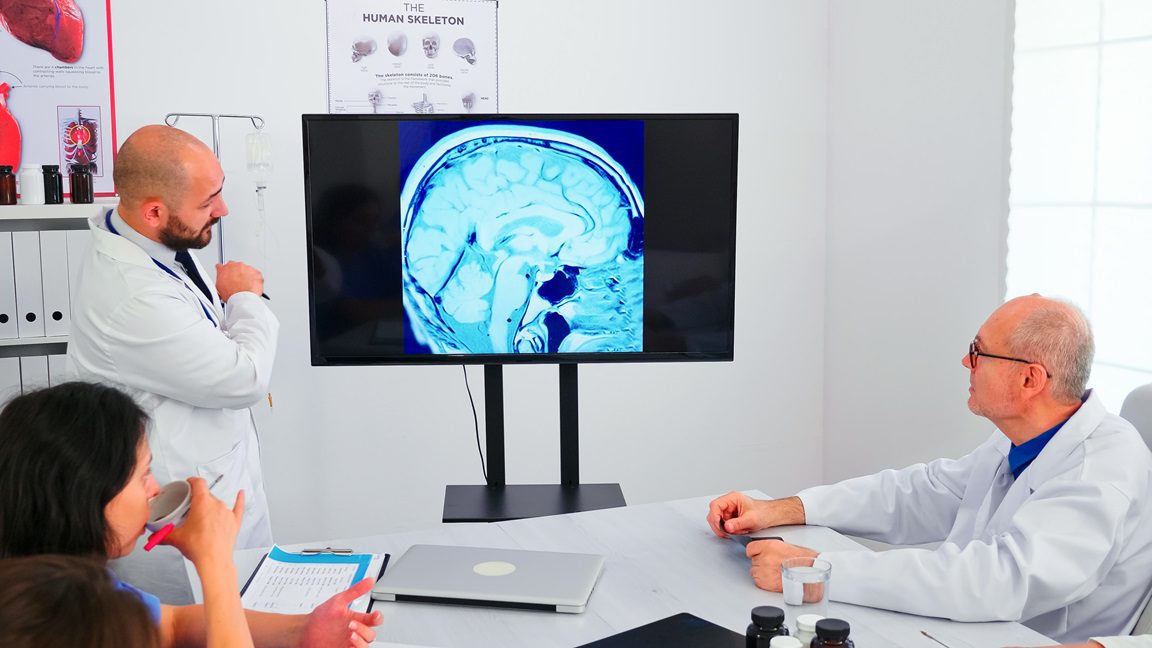
Currently, there is no cure for Fahr’s disease, and treatment focuses on symptom management and improving the patient’s quality of life. Management options include:
- Symptom control medications: Drugs used to manage motor symptoms in Parkinson’s disease, such as dopamine agonists, may be beneficial for some patients with Fahr’s disease.
- Occupational and physical therapy: These therapies help improve mobility and motor skills, enabling patients to maintain independence for a longer period.
- Psychiatric support: Due to associated psychiatric disorders, some patients may benefit from psychological therapy or the use of antidepressants and anxiolytics.
- Calcium and phosphorus level management: In some cases, adjusting these levels through dietary modifications or supplementation may help reduce the progression of calcification.
Management of this condition should be individualized and carried out by a multidisciplinary team including neurologists, psychiatrists, physical therapists, and occupational therapists.
Conclusion
Fahr’s disease is a rare neurodegenerative condition characterized by the accumulation of calcium in the basal ganglia and other areas of the brain, leading to a range of neurological and psychiatric symptoms. Although there is currently no cure, early identification and appropriate symptom management can improve the patient’s quality of life.
As research advances, the diagnosis and treatment of Fahr’s disease may improve, providing patients and their families with a better understanding and management of this condition.
If you would like more information about NeuroAiD II, please fill out this contact form.
"*" indicates required fields


