

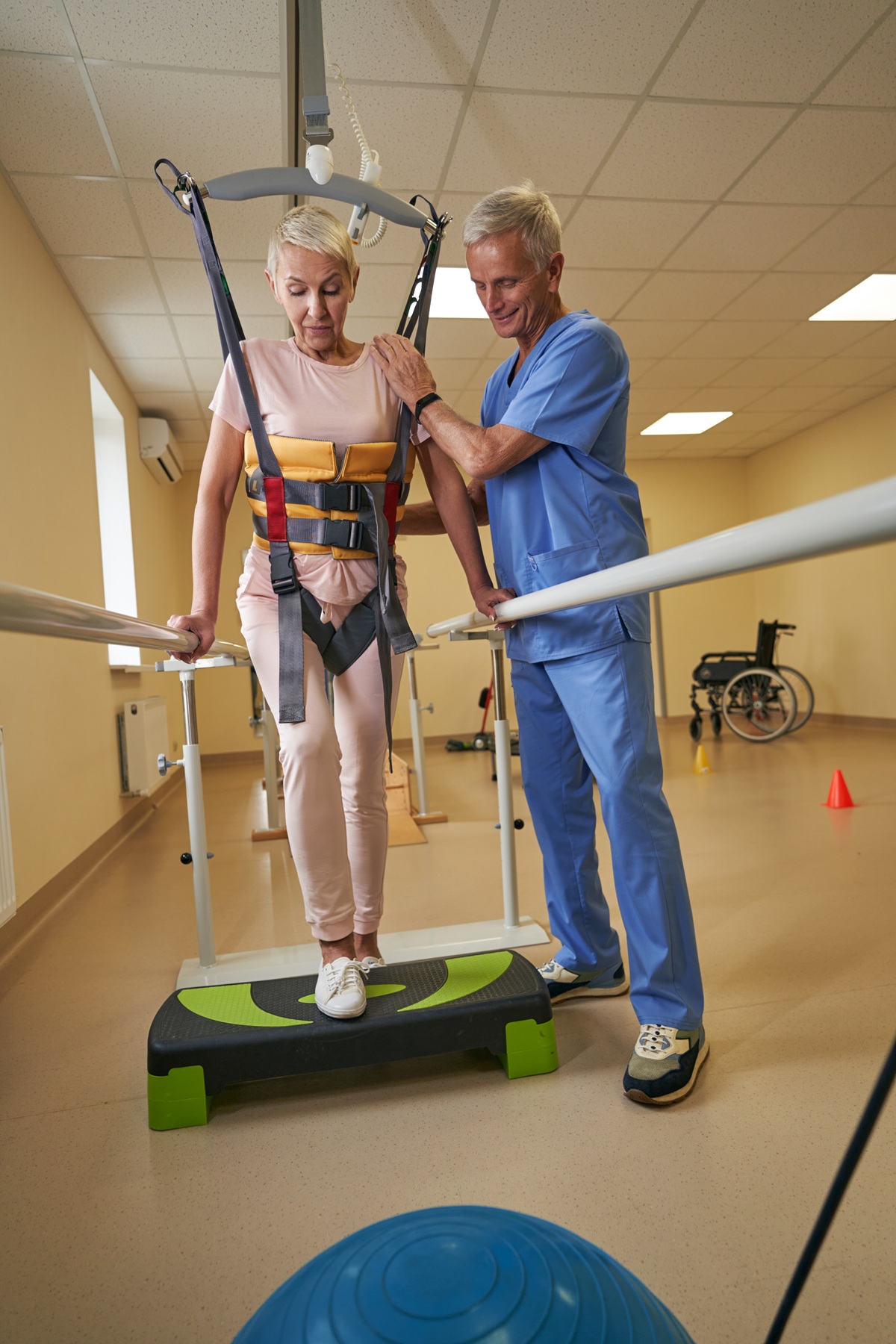

Hemiplegic gait is one of the most common locomotion patterns in patients with unilateral neurological damage, especially in those who have suffered a stroke. This type of gait is characterized by a series of biomechanical compensations that allow the patient to move, although in a limited way and with noticeable body asymmetry. Understanding its mechanisms, clinical implications, and rehabilitation strategies is essential to improving the quality of life of those affected.
What is hemiplegic gait?

Hemiplegic gait is an abnormal walking pattern that results from hemiplegia, which is the complete paralysis of one side of the body. In this context, the patient loses voluntary motor control over either the right or left half of the body, depending on the damaged cerebral hemisphere. The impairment affects both the arm and the leg on the same side, producing a very characteristic gait pattern.
In most cases, hemiplegic gait occurs after a major neurological event such as a stroke, traumatic brain injury, central nervous system infection, or degenerative disease. The resulting motor impairments prevent the patient from moving the lower limb normally, forcing them to use compensatory movements that affect the efficiency of their gait.
Clinical Characteristics of Hemiplegic Gait
Patients with hemiplegic gait exhibit a series of observable signs during movement. One of the most noticeable is circumduction of the affected leg. This means that instead of lifting the leg vertically while walking, the patient swings it in a semicircular motion outward. This pattern arises due to difficulty in properly flexing the hip, knee, and ankle.
Another common characteristic of hemiplegic gait is the abnormal posture of the arm on the affected side, which is typically held in a flexed position, with the elbow close to the torso, the wrist rigid, and the fingers clenched. This posture is the result of spasticity, an increase in muscle tone that prevents smooth and voluntary joint movement.
The gait of a person with hemiplegic walking pattern is typically slow, irregular, and unsteady. Often, the patient requires external support, such as canes or walkers, to move more safely. Additionally, the physical effort required to walk with this pattern is considerable, which can lead to rapid fatigue and an increased risk of falls.
Common Causes of Hemiplegic Gait
The most common cause of hemiplegic gait is stroke, also known as cerebral infarction or cerebrovascular accident (CVA). When an artery supplying a region of the brain becomes blocked or ruptures, nerve cells begin to die due to lack of oxygen. If the affected area is related to motor control, the patient may develop hemiplegia, resulting in this gait pattern.
In addition to stroke, other neurological conditions can trigger hemiplegic gait. These include traumatic brain injuries, brain tumors, multiple sclerosis, infections such as encephalitis, and neurodegenerative diseases such as advanced Parkinson’s disease.
Clinical Evaluation of Hemiplegic Gait
The diagnosis of hemiplegic gait is based on direct observation of the walking pattern and the patient’s medical history. However, to perform a comprehensive evaluation, professionals often use complementary tools such as video recording of gait, biomechanical analysis on gait platforms, and specific clinical scales that assess the degree of spasticity, muscle strength, and balance.
Entre las escalas más utilizadas para evaluar a pacientes con marcha hemipléjica se encuentra la escala de Ashworth modificada, que mide el grado de espasticidad, y la escala de Brunnstrom, que clasifica las fases de recuperación motora tras un ictus. También se puede recurrir a la prueba Timed Up and Go, que evalúa el tiempo que tarda el paciente en levantarse, caminar tres metros, girar y volver a sentarse.
Treatment and Rehabilitation of Hemiplegic Gait
The treatment of hemiplegic gait must be personalized and multidisciplinary. The goal is to improve patient functionality, reduce spasticity, strengthen weakened muscles, and optimize gait symmetry. To achieve this, it is essential to have a rehabilitation team that includes physical therapists, occupational therapists, neurologists, and rehabilitation physicians.
Physical therapy plays a central role in the recovery of hemiplegic gait. Techniques used include strengthening exercises, muscle stretching, treadmill gait retraining, body weight-supported training, and functional electrical stimulation. In some cases, orthoses are used to maintain proper joint alignment, especially at the ankle.
Prognosis of Recovery in Hemiplegic Gait

The progression of a patient with hemiplegic gait depends on multiple factors, such as the severity of neurological damage, age, comorbidities, personal motivation, and access to intensive rehabilitation. Some patients are able to regain functional gait with partial or full independence, while others require ongoing assistance.
It is important to highlight that the brain’s neuroplasticity allows for the recovery of motor functions through repetitive training and constant stimulation. Therefore, the earlier rehabilitation begins, the greater the chances of success in improving the hemiplegic gait pattern.
Emotional and Social Impact of Hemiplegic Gait
Beyond the physical implications, hemiplegic gait has a profound emotional and social impact. The loss of independence, difficulties in mobility, and the need for constant support can lead to feelings of frustration, sadness, and isolation. It is essential that treatment also includes a psychological approach that helps the patient adapt to their new reality, maintain self-esteem, and build effective support networks.
The social integration of patients with hemiplegic gait involves removing architectural barriers, promoting accessibility, and raising community awareness about the challenges faced by individuals with motor disabilities. Active inclusion and respect for functional diversity are key components for improving the quality of life of these individuals.
Conclusion
Hemiplegic gait is a complex clinical manifestation, but one that is understandable and treatable. It requires a comprehensive therapeutic approach and person-centered care. With the right resources, support from specialized professionals, and involvement from the family environment, many individuals are able to adapt, improve their mobility, and regain a significant degree of independence. The key lies in understanding that while hemiplegic gait presents a challenge, it is not a definitive limit, but rather a condition that can be addressed with knowledge, empathy, and consistent effort.
If you would like more information about NeuroAiD II, please fill out this contact form.
"*" indicates required fields


