

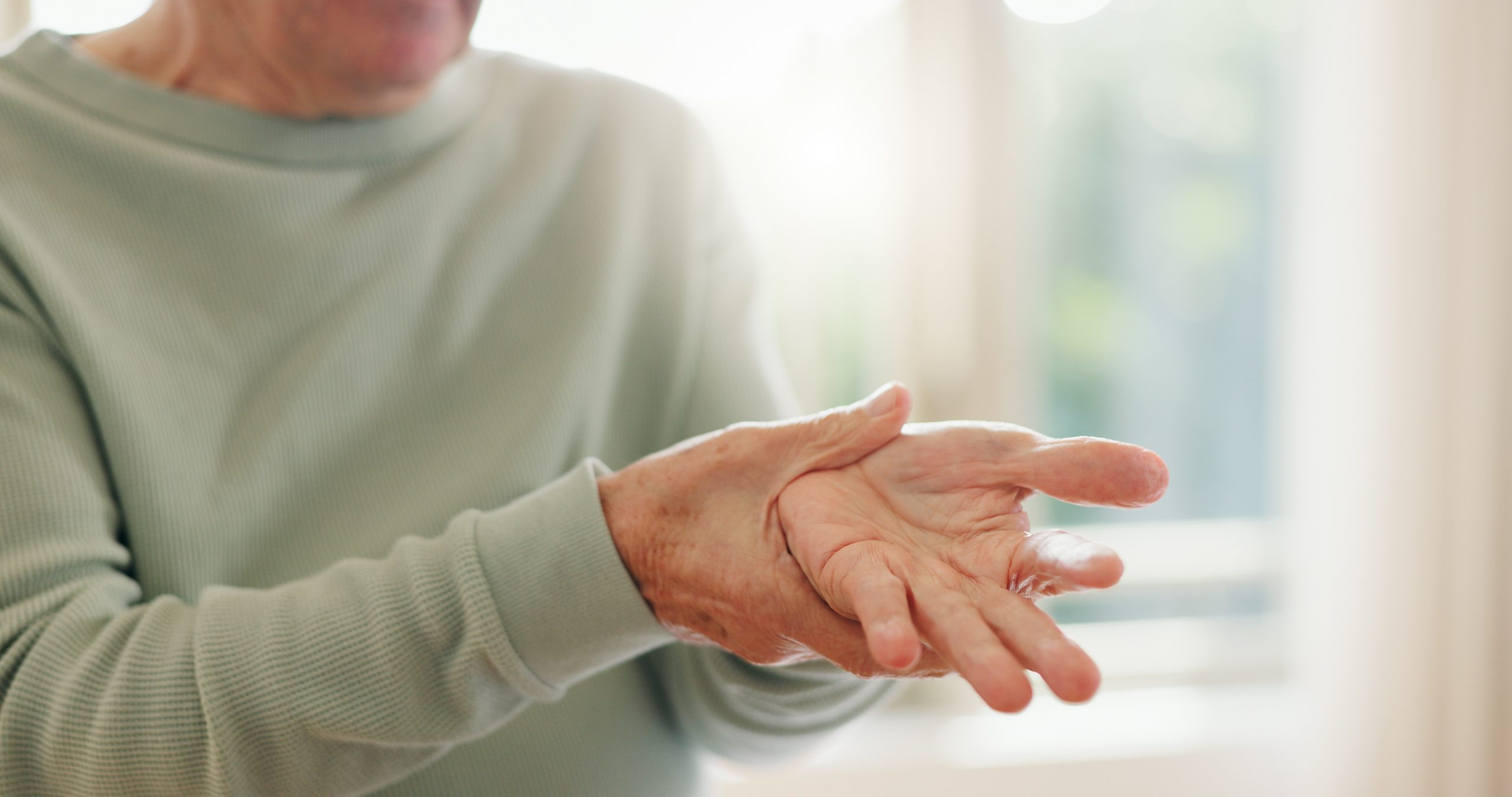

The closed hand after a stroke is one of the motor impairments that may occur following a cerebrovascular accident. In some patients, the hand remains partially or completely closed involuntarily, making everyday activities such as grasping an object, opening a door, or even maintaining proper palm hygiene difficult.
This impairment is usually related to changes in motor control caused by the stroke. Depending on the area of the brain affected and the severity of the injury, recovery can vary considerably from one person to another.
Why does the hand remain closed after a stroke?
The brain is responsible for sending the signals that allow muscles to move in a coordinated manner. When a stroke disrupts these connections, some muscles may no longer respond properly.
In the hand, the muscles responsible for closing the fingers often have greater strength or activity than those that allow them to open. As a result, the fingers tend to remain flexed toward the palm for much of the time.
In many cases, this posture occurs due to spasticity, an involuntary increase in muscle tone that can develop weeks or months after a stroke. However, muscle weakness, loss of coordination, and impaired voluntary control of movement may also contribute.
Is it a common consequence of stroke?
Yes. Hand impairment is one of the most common limitations following a stroke.
While some people recover mobility quickly, others experience persistent difficulties opening the hand or moving the fingers independently. Recovery depends on multiple factors, including:
- The extent of brain damage.
- The area affected by the stroke.
- The degree of mobility preserved after the stroke.
- The nervous system’s ability to reorganize motor functions.
Each recovery is different, so there is no single timeframe for being able to move the hand normally again.
Associated symptoms

A closed hand can present in different ways. In some people, there is only slight difficulty extending the fingers, while in others, the hand remains completely closed.
In addition to this characteristic posture, other symptoms may include:
- Stiffness in the hand or wrist.
- Difficulty separating the fingers.
- A feeling of muscle tightness.
- Involuntary spasms.
- Reduced strength.
- Less precision when grasping objects.
In some cases, keeping the hand closed for long periods can also cause discomfort in the palm or limit the ability to perform daily activities.
When does it usually occur?
The hand does not always remain closed immediately after a stroke.
During the first few days, weakness or even a lack of movement is more common. As the weeks pass, some people begin to develop spasticity, causing the hand to gradually adopt a flexed position.
However, this progression does not occur in all patients. Some people never develop spasticity, while others experience more pronounced stiffness from relatively early stages of recovery.
Can the hand open again?
Recovery of mobility varies greatly. Some people are able to open their hand more easily as muscle control improves, while others continue to experience some stiffness for a longer period.
The brain has an ability known as neuroplasticity, which allows it to reorganize some of its functions after an injury. Thanks to this process, many people experience gradual improvements even months after a stroke.
The speed and extent of recovery depend on numerous factors, so it is not possible to predict exactly how each individual case will progress.
How does it affect daily life?
The hand is involved in almost all everyday activities, so any limitation can have a significant impact.
Common activities such as getting dressed, cooking, writing, using a mobile phone, or holding a cup can become more difficult when the hand remains closed.
In some patients, the difficulty affects not only movement but also coordination between both hands, making simple tasks require more time or effort.
Despite these limitations, many people develop new strategies to adapt to daily activities while their recovery process continues.
What happens inside the muscles?
When the hand remains closed for long periods, the muscles and tendons can adapt to that position.
For this reason, stiffness may increase over time if the hand remains immobile for prolonged periods. This does not always mean that new brain damage has occurred, but rather that it can be part of the changes that develop following a neurological injury.
Understanding this process helps explain why some people have greater difficulty fully extending their fingers even some time after a stroke.
Long-term progression
Recovery after a stroke does not progress at the same rate for everyone. While some patients regain a large degree of hand mobility, others continue to experience functional limitations of varying severity.
Recovery often depends on the initial severity of the stroke, the degree of motor impairment, and the nervous system’s individual response.
In any case, a closed hand after a stroke should not necessarily be considered a permanent condition. Many people may experience gradual changes over time, especially during the first few months of recovery.
Conclusion
A closed hand after a stroke is usually related to changes in muscle control caused by brain damage, with spasticity being one of the most common causes. Although it can make many everyday activities difficult, its progression varies greatly and depends on each patient’s individual circumstances. Understanding why this impairment occurs can help provide a better understanding of the recovery process and the different ways in which a stroke can affect hand mobility.
If you need information about NeuroAiD II, you can fill out this contact form
"*" indicates required fields


