

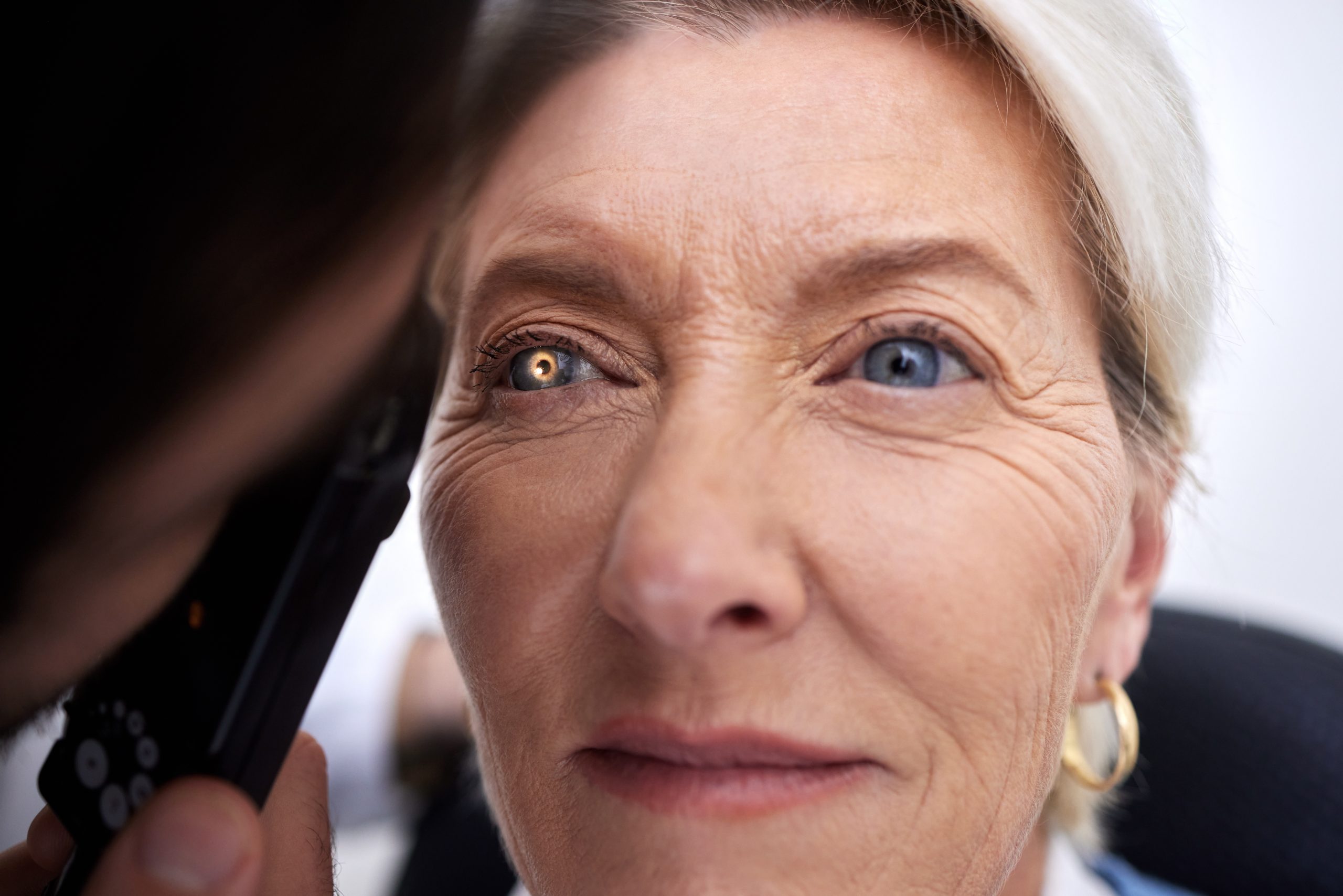

A stroke is a serious medical event that can have a wide range of effects on a person’s health. Among the many challenges stroke survivors face, vision after a stroke is a crucial aspect to consider.
Introduction
Vision after a stroke is an important topic that is often overlooked in discussions about the effects of this condition. Throughout this article, we will explore how a stroke can affect a person’s vision, with a special focus on damage to the occipital lobe of the brain, the primary visual cortex (V1) in the cerebral cortex, and the thalamus. We will also discuss the areas of the cerebral cortex and other vision-related structures, such as the thalamus, and how these can lead to visual deficits such as scotoma. In addition, we will explore recovery strategies and available solutions.

What is a stroke?
A stroke occurs when the blood supply to the brain is interrupted, either due to a clot (ischemic stroke) or bleeding (hemorrhagic stroke). This interruption can damage specific areas of the brain, including the occipital lobe, the primary visual cortex (V1) in the cerebral cortex, and the thalamus, which are crucial for visual function.
Effects on vision after a stroke
The occipital lobe is the region of the brain primarily responsible for visual processing. The effects on vision after a stroke can vary depending on the location and severity of the damage. Some effects include:
- Hemianopia: Damage to the occipital lobe, thalamus, and other areas can cause vision loss on one side of the visual field, known as hemianopia.
- Visual agnosia: Some individuals may have difficulty recognizing objects or faces, a condition known as visual agnosia.
- Color perception changes: Damage to the occipital lobe can affect color perception.
- Scotoma: A scotoma is a blind spot or an area of reduced vision that can be a consequence of a stroke.
- Visual hallucinations: In some cases, individuals may experience visual hallucinations.
- Diplopia: Diplopia is the perception of double images of a single object, which can be a visual consequence after a stroke.
In addition to the occipital lobe, other areas of the cerebral cortex, such as the visual association areas and the parietal cortex, also play a fundamental role in visual processing and may be affected by a stroke. The thalamus, as a subcortical structure, plays an important role in transmitting visual signals to the cerebral cortex and can also be affected.
Recovery and rehabilitation
Recovery of vision after a stroke can be a long and challenging process. Visual rehabilitation, which may include vision therapy and training, is essential to help individuals adapt to the visual difficulties resulting from a stroke.
Support and solutions
It is essential for individuals experiencing changes in vision after a stroke to seek support from healthcare professionals, including ophthalmologists and occupational therapists. Visual aids, such as corrective lenses or magnification devices, can be helpful in improving quality of life.

Conclusion
Vision after a stroke is a crucial aspect of recovery and adaptation to the aftermath of this condition, with a focus on the occipital lobe, cerebral cortex, thalamus, and other vision-related areas of the brain, including scotoma. Although the effects on vision can vary, there are rehabilitation strategies and available solutions to help individuals recover.
If you would like more information about NeuroAiD II, please fill out this contact form.
"*" indicates required fields


