

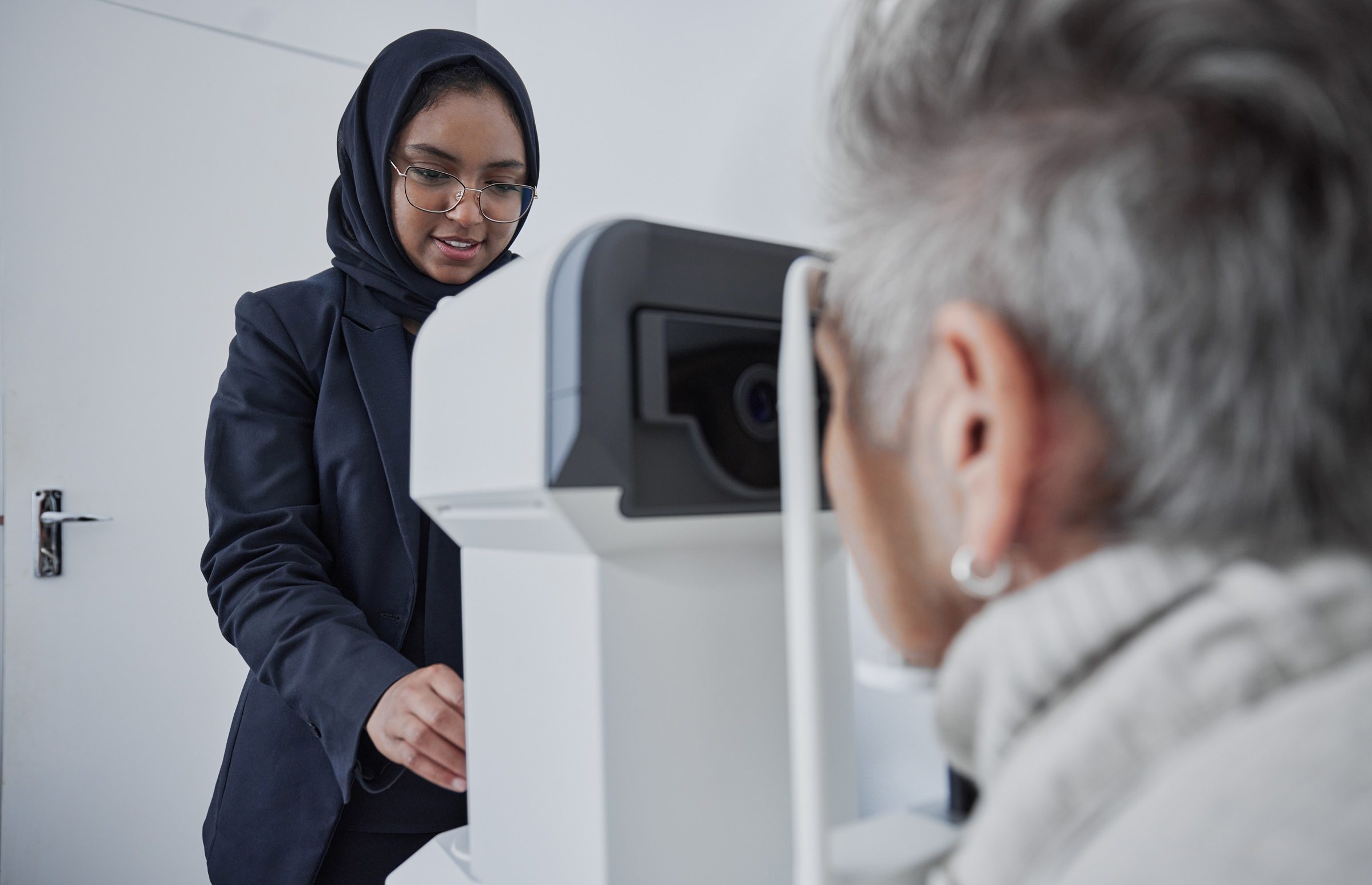

Visual agnosia is a neurological disorder in which a person loses the ability to recognize objects, faces, or shapes through sight, despite no significant damage to the eyes or the primary visual system. This problem can arise as a consequence of a stroke, especially when it affects brain areas responsible for visual processing.
What is visual agnosia?

Visual agnosia is defined as the inability to interpret visual information caused by brain damage, not by an eye problem or primary perception issue. Patients can see clearly but fail to identify what they are looking at.
There are different types:
- Apperceptive visual agnosia:
- Inability to correctly perceive the shape of objects, making their identification difficult.
- Associative visual agnosia:
- Patients perceive shapes but cannot associate them with their meaning or function.
Relationship between visual agnosia and strokes
Strokes are a common cause of visual agnosia, especially when they affect specific brain areas such as:
- Occipital cortex:
- Responsible for primary visual processing.
- Temporal lobe:
- Related to the recognition of faces and objects.
- Occipitotemporal connections:
- Involved in the interpretation and association of visual stimuli.
Damage to these regions can disrupt the communication between what the eyes see and the meaning the brain assigns.
Causes of visual agnosia
In addition to strokes, other conditions can cause visual agnosia:
- Traumatic brain injuries:
- Injuries that affect the visual areas of the brain.
- Brain tumors:
- Compression of regions responsible for visual interpretation.
- Neurodegenerative diseases:
- Such as Alzheimer’s disease, which progressively deteriorates brain connections.
- Infections or encephalitis:
- Inflammation that affects the visual cortex.
Symptoms of visual agnosia
Symptoms vary according to the type of visual agnosia, but include:
- Inability to recognize familiar objects, even when they are clearly seen.
- Difficulty identifying familiar faces (prosopagnosia).
- Problems distinguishing between similar objects.
- Dependence on other senses, such as touch, to recognize objects.
- Confusion when interpreting visual cues from the environment.
Diagnosis of visual agnosia
Diagnosis requires a multidisciplinary approach:
- Clinical evaluation:
- Observation of how the patient interprets visual stimuli.
- Neuropsychological testing:
- Exercises to assess visual perception and association.
- Brain imaging studies:
- Magnetic resonance imaging (MRI) or computed tomography (CT) to identify lesions in the brain’s visual areas.
- Rule out primary visual disorders:
- Ophthalmological tests to confirm the absence of ocular abnormalities.
Treatment of visual agnosia
Although no definitive cure exists, therapies focus on improving patient functionality:
- Neuropsychological rehabilitation:
- Exercises to strengthen the association between visual input and cognitive processing.
- Occupational therapy:
- Teach strategies to compensate for impaired visual recognition.
- Multisensory stimulation techniques:
- Use other senses, such as touch and hearing, to interpret objects.
- Psychological support:
- Help the patient manage frustration and adapt to their condition.
Impact of visual agnosia on daily life

Visual agnosia significantly affects quality of life. Patients may have difficulties performing basic tasks such as:
- Reading or writing.
- Recognizing the faces of family members and friends.
- Identifying everyday objects, which can lead to accidents or mistakes.
Family support and the use of adaptive tools, such as labels or assistive devices, are essential to improve the patient’s independence.
Prevention of visual agnosia in stroke patients
Although it is not always possible to prevent strokes that cause visual agnosia, steps can be taken to reduce risk factors:
- Maintain controlled blood pressure.
- Avoid smoking and excessive alcohol consumption.
- Adopt a healthy diet and engage in regular exercise.
- Undergo regular medical check-ups to detect cardiovascular diseases.
Conclusion
Visual agnosia is a complex condition that challenges visual perception and daily functioning in patients. Although it represents a significant challenge after a stroke, rehabilitation strategies and appropriate support can help patients adapt and regain some degree of autonomy.
Awareness of this condition allows for a better understanding of its implications and encourages a more empathetic and effective approach to its management.
If you would like more information about NeuroAiD II, please fill out this contact form.
"*" indicates required fields


