

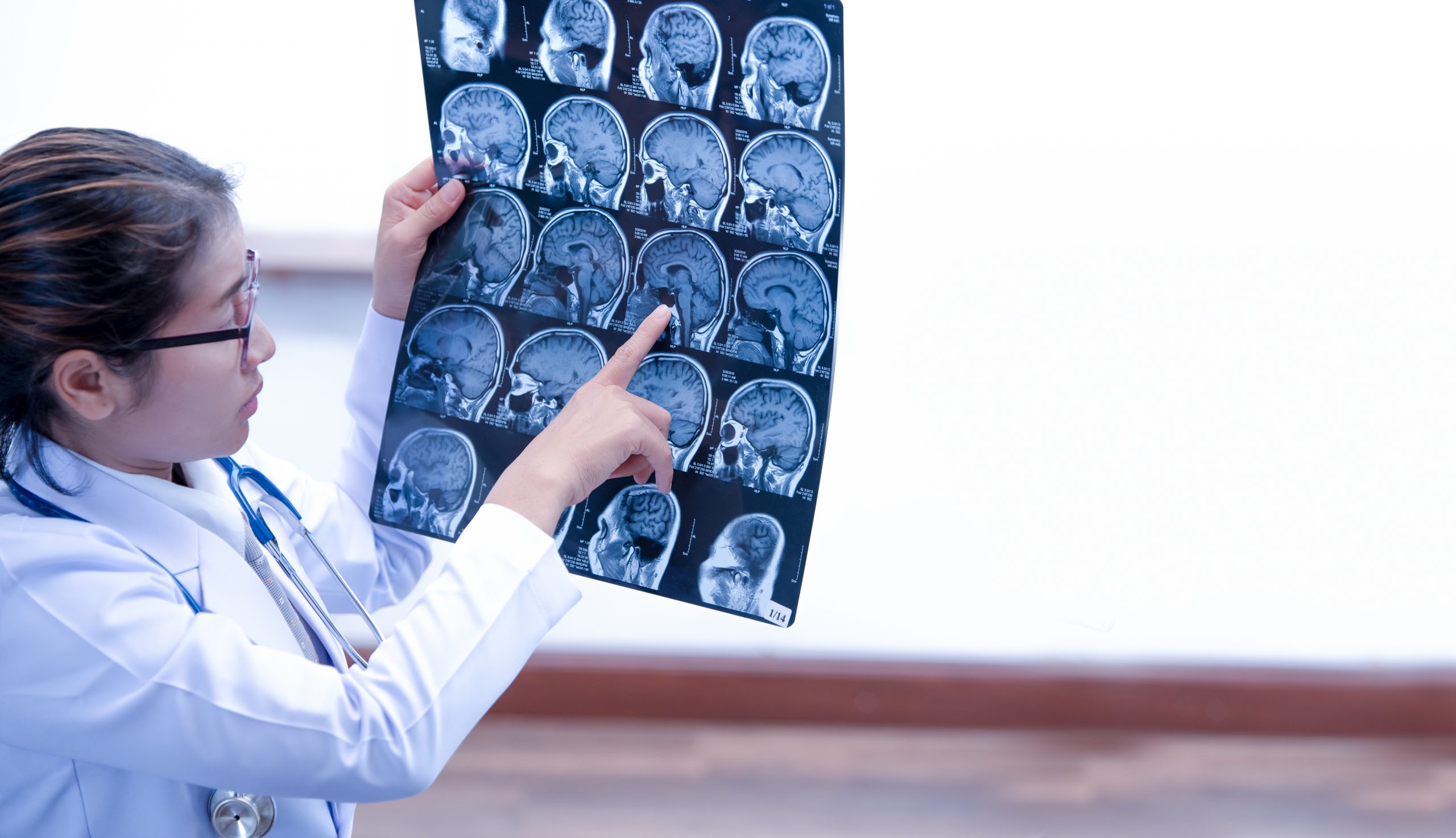

A stroke is a medical emergency, with ischemic stroke being the most common type. In general, cerebral ischemia is caused by a blood clot that blocks or obstructs a blood vessel in the brain. This prevents blood from flowing to the organ. Within minutes, brain cells begin to die.
Another cause is stenosis or arterial narrowing. This can occur due to atherosclerosis, a condition in which plaque builds up in the arteries. Transient ischemic attacks occur when blood fails to reach the brain for a few moments. Experiencing a transient cerebral ischemia may indicate that you are at risk of suffering a more severe stroke.
What is a cerebral ischemia?
A cerebral ischemia is the death of an area of brain tissue (cerebral infarction) as a result of an insufficient supply of blood and oxygen to the brain due to the obstruction of an artery.
What causes it?
Cerebral ischemia is generally caused by the obstruction of an artery leading to the brain; the blockage is due to the formation of a blood clot and/or an atherosclerotic fat deposit.
What are its symptoms?
Cerebral ischemia occurs suddenly. Symptoms include muscle weakness or fatigue, paralysis, loss of sensation or abnormal sensation on one side of the body, difficulty speaking, confusion, vision problems, dizziness, and loss of balance and coordination.
How should it be diagnosed?
Primary diagnosis is based on symptoms and the results of a physical examination, along with imaging tests (computed tomography and magnetic resonance imaging), as well as blood tests to identify the causes of cerebral ischemia.
What is its treatment?
It consists of administering medication to dissolve blood clots or to reduce the likelihood of blood clotting, and performing procedures to physically remove blood clots, followed by a rehabilitation process.
How is it prevented?
Measures include controlling the risk factors for cerebral ischemia (generally high blood pressure, cholesterol, triglycerides, and blood sugar), using medications to make the blood less prone to clotting, and sometimes surgery or angioplasty to open blocked arteries.
Causes of an ischemic stroke
A cerebral ischemia is usually the result of the obstruction of an artery that supplies the brain, typically one of the internal carotid arteries. The resulting damage depends on how long the neurons are deprived of blood flow.
Cerebral blood supply
The cerebral blood supply is primarily provided by two pairs of major arteries:
1. Internal carotid arteries, which carry blood from the heart along the front part of the neck
2. Vertebral arteries, which carry blood from the heart along the back part of the neck
Inside the skull, the vertebral arteries join to form the basilar artery (at the back of the head). The internal carotid arteries and the basilar artery divide into several branches, including the cerebral arteries. Some of these arterial branches connect to form a polygon (the Circle of Willis) that links the vertebral arteries and the internal carotid arteries. From the Circle of Willis, other arteries branch out like roads from a roundabout. These branches carry blood to all areas of the brain.
 When the major arteries supplying the brain become blocked, some people show no symptoms or experience only a minor cerebral ischemia. However, others with the same type of arterial blockage suffer a massive ischemic stroke.
Why? Part of the explanation lies in the collateral arteries.
Collateral arteries run between other arteries and provide additional connections. These arteries include the Circle of Willis and the connections between the arteries branching from it.
Some people are born with large collateral arteries, which can protect them from strokes. In these cases, when an artery becomes blocked, blood flow continues through a collateral artery, preventing cerebral ischemia. Others, however, are born with small collateral arteries. These arteries may be unable to carry enough blood to the affected area, leading to cerebral ischemia.
What are the common causes of cerebral ischemia?
When an artery that carries blood to the brain becomes blocked, a cerebral ischemia occurs. Arteries can be obstructed by fat deposits (atheromas or atherosclerotic plaques) caused by atherosclerosis. The arteries in the neck, particularly the internal carotid arteries, are a common site for atheroma formation.
Another common arterial blockage is caused by a blood clot (thrombus). Blood clots can form on an atheroma in an artery or in the heart of people with heart disease. Part of a clot can break off and travel through the bloodstream (becoming an embolus), usually driven by high blood pressure. In such cases, it may block one of the arteries that supply the brain, leading to a cerebral ischemia.
Therefore, common arterial blockages are caused by blood clots (thrombi) or fragments of fat deposits (atheromas or plaques) due to atherosclerosis. The three main causes of cerebral ischemia are the following:
Due to internal formation within the artery, which eventually leads to its blockage
If an atheroma on the inner wall of an artery continues to accumulate fatty material, it can grow large enough to block the artery, leading to a cerebral ischemia.
 Even if the artery is not completely blocked, the atheroma narrows the artery and reduces blood flow through it, much like a clogged pipe slows the flow of water. The slower circulation of blood makes it more prone to clotting.
A large clot can obstruct blood flow through a narrowed artery to such an extent that it may cause the death of the neurons supplied by that artery. Or, if an atheroma ruptures, the material inside it can trigger the formation of a blood clot that may block the artery.
Traveling from another artery to an artery in the brain
A fragment of an atheroma or a clot can break off from the wall of an artery and travel through the bloodstream (becoming an embolus), lodge in an artery that supplies the brain, and block blood flow. This phenomenon can be triggered by high blood pressure. Such blockages are more likely to occur in areas where arteries are already narrowed due to fat deposits, making them one of the main causes of cerebral ischemia.
Traveling from the heart to the brain
Blood clots can form in the heart or on a heart valve, particularly on artificial valves and valves that have been damaged by an infection of the heart lining (endocarditis).
These clots can break off, travel as emboli, and block an artery leading to the brain. Cerebral ischemia caused by these blood clots is more common among people who have recently undergone heart surgery, those who have had a heart attack, or those with valve disease or an irregular heart rhythm (arrhythmia), especially a rapid and irregular rhythm known as atrial fibrillation.
It is important to note that blood clots in a brain artery do not always cause a cerebral ischemia. If the clot breaks up spontaneously within 15 to 30 minutes, brain cells do not die and the symptoms resolve. These cases are known as transient ischemic attacks (TIAs).
If an artery narrows very gradually, other arteries may sometimes dilate to supply blood to the parts of the brain normally fed by the blocked artery. Therefore, if a clot forms in an artery that has developed collateral circulation, the person may not show any symptoms.
If you would like more information about NeuroAiD II, please fill out this contact form.
"*" indicates required fields


