

Corpus callosum infarction is a rare type of ischemic stroke affecting the main structure responsible for communication between the two cerebral hemispheres. Although it accounts for only a small proportion of all cerebral infarctions, its clinical presentation can be highly variable and, in some cases, difficult to recognize because its symptoms are not always typical of a stroke.
The corpus callosum plays an essential role in integrating motor, sensory, and cognitive information between both sides of the brain. When this communication is disrupted by an infarction, characteristic neurological disturbances may occur.
What is a corpus callosum infarction?

A corpus callosum infarction occurs when blood flow to this brain structure is blocked, resulting in neuronal death due to a lack of oxygen and nutrients.
The corpus callosum is composed of millions of nerve fibers that connect the left and right cerebral hemispheres, allowing them to function in a coordinated manner. It is divided into several regions:
- Rostrum.
- Genu.
- Body.
- Splenium.
Each region is involved in communication between different areas of the brain, meaning that the location of the infarction directly influences the symptoms.
Why is it rare?
The corpus callosum has a rich blood supply, derived from both the anterior cerebral artery and the posterior cerebral artery, with multiple anastomotic connections between them.
This dual blood supply makes the corpus callosum less vulnerable to infarction compared with other regions of the brain.
Functions of the corpus callosum
This structure is essential for coordinating numerous brain functions, including:
- Communication between the two hemispheres.
- Coordination of bilateral movements.
- Integration of sensory information.
- Language processing.
- Performance of complex tasks.
- Attention and executive functions.
- Learning and memory.
When these connections are disrupted, the brain may experience difficulties integrating information that is normally processed jointly.
Symptoms of a corpus callosum infarction
Symptoms are highly variable and depend on the region affected.
The most commonly reported symptoms include:
- Weakness in one or more limbs.
- Difficulty coordinating movements between both hands.
- Gait disturbances.
- Memory impairment.
- Attention difficulties.
- Slowed information processing.
- Language disturbances.
- Behavioral changes.
- Confusion.
- Interhemispheric disconnection syndrome in some cases.
Some patients experience only mild symptoms, while others develop more complex neurological deficits.
What is disconnection syndrome?
One of the most characteristic manifestations of corpus callosum infarction is disconnection syndrome, in which information cannot be transmitted properly between the two cerebral hemispheres.
Depending on the area affected, abnormalities may include:
- Difficulty performing tasks that require coordination between both hands.
- Difficulty integrating visual and tactile stimuli.
- Impairment of certain cognitive functions.
- Rare disorders such as alien hand syndrome, particularly when other frontal regions are also affected.
Not all patients develop this syndrome, as its occurrence depends on the size and precise location of the infarction.
Diagnosis
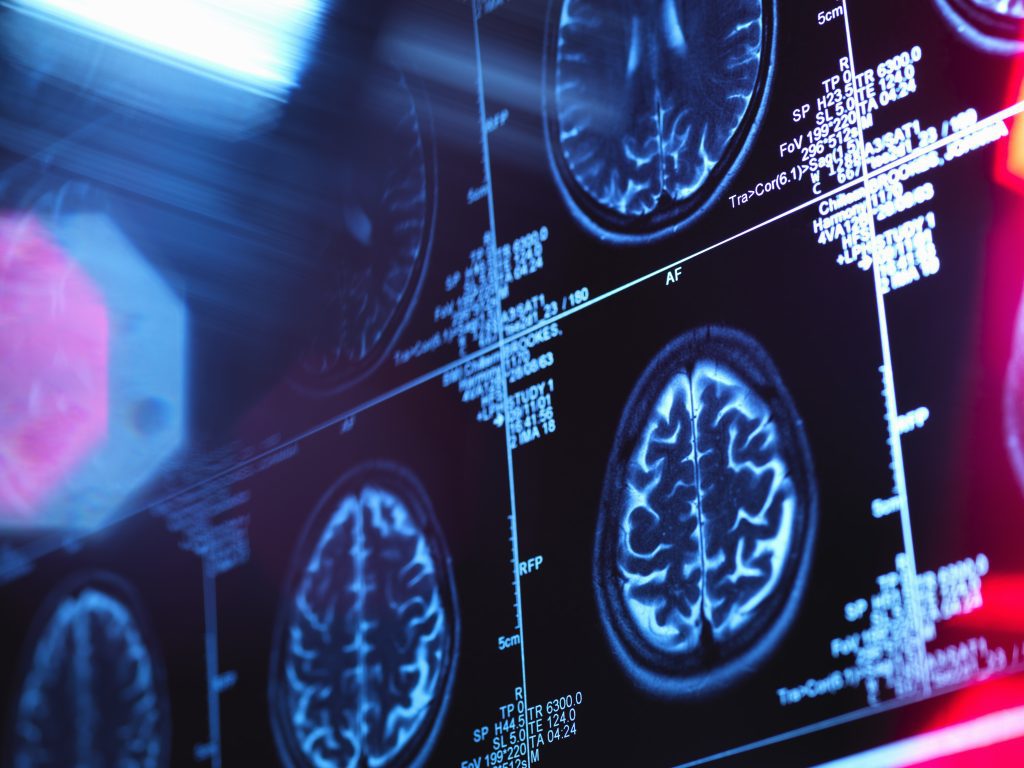
Diagnosis requires imaging studies because the symptoms may be confused with those of other neurological disorders.
The most commonly used techniques include:
- Computed tomography (CT).
- Magnetic resonance imaging (MRI), which is particularly sensitive for detecting lesions of the corpus callosum.
- CT angiography (CTA) or magnetic resonance angiography (MRA) to assess the cerebral circulation.
- Cardiovascular investigations when an embolic origin is suspected.
MRI generally provides the best visualization of this structure.
Possible sequelae
The consequences vary widely depending on the extent of the lesion and the areas involved.
Possible sequelae include:
- Cognitive impairment.
- Coordination problems.
- Executive function deficits.
- Memory impairment.
- Motor deficits.
- Changes in the speed of information processing.
In some cases, the deficits may be subtle and go unnoticed during the early stages.
Progression
Recovery depends on multiple factors, including:
- The size of the infarction.
- The timeliness of diagnosis.
- The specific region of the corpus callosum affected.
- The patient’s age.
- The presence of other associated brain lesions.
The brain’s ability to reorganize its neural connections may contribute to better functional recovery in some patients.
Conclusion
Corpus callosum infarction is a rare form of stroke that affects the main communication pathway between the two cerebral hemispheres. Due to the complex functions of the corpus callosum, this type of infarction can cause a wide range of symptoms, from mild cognitive impairment to more characteristic disconnection syndromes.
Diagnosis usually requires advanced imaging techniques, particularly magnetic resonance imaging (MRI), as its clinical manifestations may differ from those observed in other types of cerebral infarction.
If you need information about NeuroAiD II, you can fill out this contact form
"*" indicates required fields


