

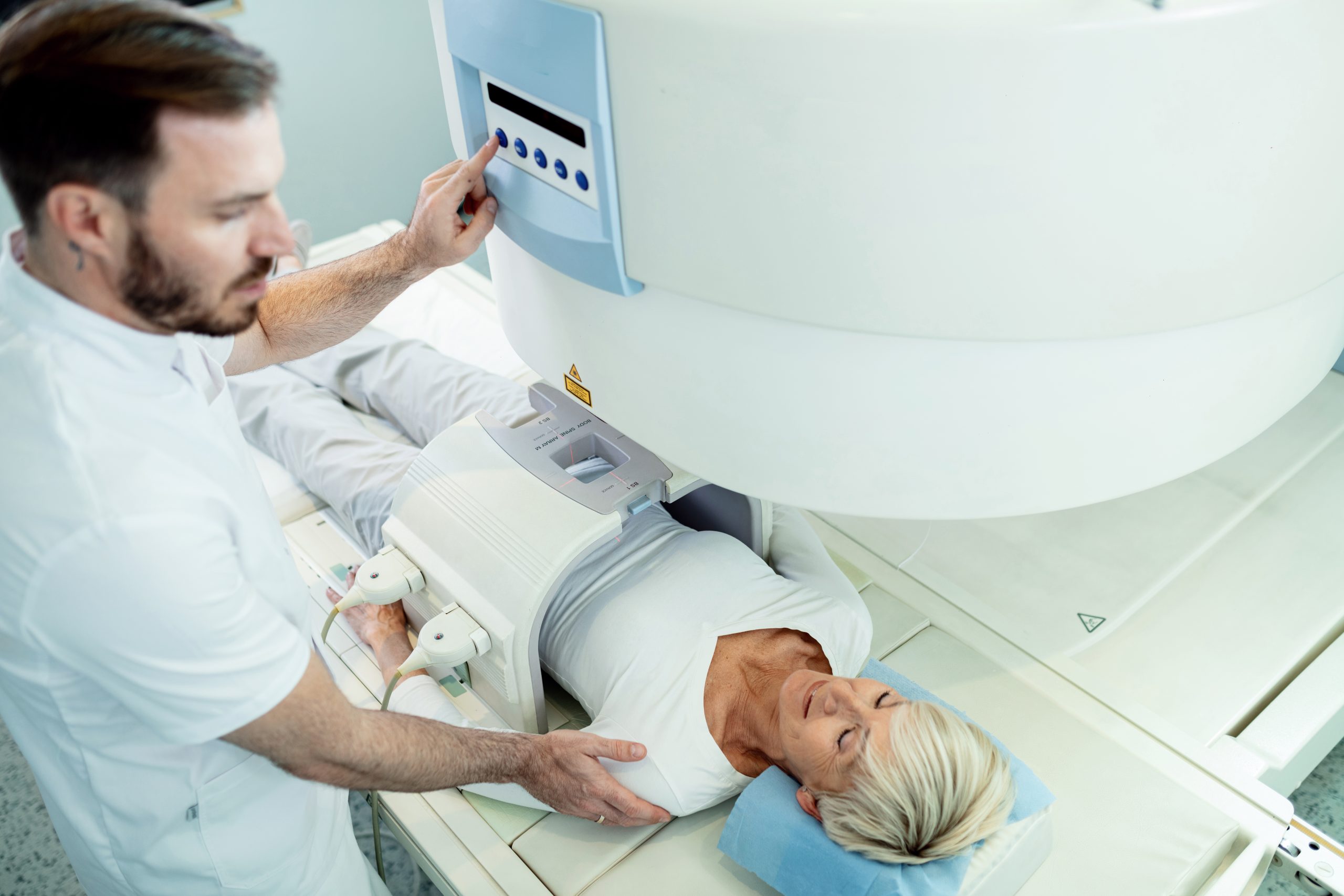

Medical technology has advanced considerably in recent decades, providing healthcare professionals with more precise and detailed tools for the diagnosis of diseases and injuries, including techniques that highlight the difference between CT Scan and MRI.
Two of the most common medical imaging techniques are computed tomography (CT) and magnetic resonance imaging (MRI). Both are widely used to visualize the inside of the human body, but there are significant differences in how they work, their applications, and their benefits. Understanding the difference between CT Scan and MRI is essential to determine which method is most appropriate for each medical evaluation.
Definition and fundamental principles
Computed Tomography (CT)
Computed tomography, also known as CT scan, is a medical imaging technique that combines X-rays and computer technology to generate detailed cross-sectional images of the human body. CT uses a series of X-rays taken from different angles to create a three-dimensional image of the body’s internal structures. These images can show soft tissues, bones, organs, and blood vessels.
Magnetic Resonance Imaging (MRI)
Magnetic resonance imaging is a medical imaging technique that uses magnetic fields and radiofrequency waves to generate detailed images of the soft tissues of the human body. MRI is based on the resonance of hydrogen atoms in the body when exposed to magnetic fields and radiofrequency waves. These signals are captured and converted into images through the use of powerful magnets and sophisticated computer systems.
Differences in image acquisition
The main difference between CT and MRI lies in how the images of the body are obtained.
Computed Tomography (CT)
In CT, an X-ray source rotates around the patient’s body to capture multiple images from different angles. These images are processed by a computer to generate high-resolution cross-sectional and three-dimensional images. The image acquisition process is fast, usually taking only a few seconds.
Magnetic Resonance Imaging (MRI)
In magnetic resonance imaging, the patient is placed in a tube or tunnel inside the MRI scanner. Powerful magnets are used to align the hydrogen atoms in the body, and then radiofrequency pulses are emitted to create signals that are captured by the scanner’s antennas. These signals are processed by a computer to generate detailed cross-sectional images of the soft tissues. The MRI image acquisition process is slower than CT and can take between 15 minutes and one hour, depending on the region of the body being examined.

Differences in image quality and contrast
Both CT and MRI provide detailed images of the human body, but there are differences in the quality and contrast of the images produced.
Computed tomography (CT)
Images obtained through CT are excellent for visualizing bone structures, calcifications, and vascular structures. CT is especially useful for detecting traumatic injuries such as fractures or internal bleeding. However, when it comes to visualizing soft tissues, CT may have less detail and contrast compared to magnetic resonance imaging.
Magnetic resonance imaging (MRI)
Differences in clinical application
Both CT and MRI have specific clinical applications in the diagnosis and follow-up of various medical conditions.
Computed tomography (CT)
CT is widely used in the diagnosis of lung diseases, such as lung cancer and pulmonary embolism. It is also used in the diagnosis of cardiovascular diseases, such as coronary artery disease and aneurysms. In addition, CT is useful for detecting traumatic injuries and for planning surgical interventions.
Magnetic resonance imaging (MRI)
Magnetic resonance imaging is especially useful in the diagnosis of neurological diseases such as brain tumors, multiple sclerosis, and strokes. It is also used in the diagnosis of musculoskeletal disorders such as ligament injuries and herniated discs. In addition, MRI is effective in detecting and evaluating tumors in different parts of the body, such as the abdominal organs and the prostate.

Conclusion: Difference between CT Scan and MRI
The difference between CT Scan and MRI lies in their fundamental principles, image acquisition, image quality and contrast, and clinical applications. CT is highly effective for visualizing bone and vascular structures, while MRI excels at visualizing soft tissues and is especially useful for diagnosing neurological and musculoskeletal conditions. Both techniques are valuable tools in medicine, and the choice depends on the specific condition being evaluated and the patient’s requirements for safety and accurate diagnosis.
If you would like more information about NeuroAiD II, please fill out this contact form.
"*" indicates required fields


