

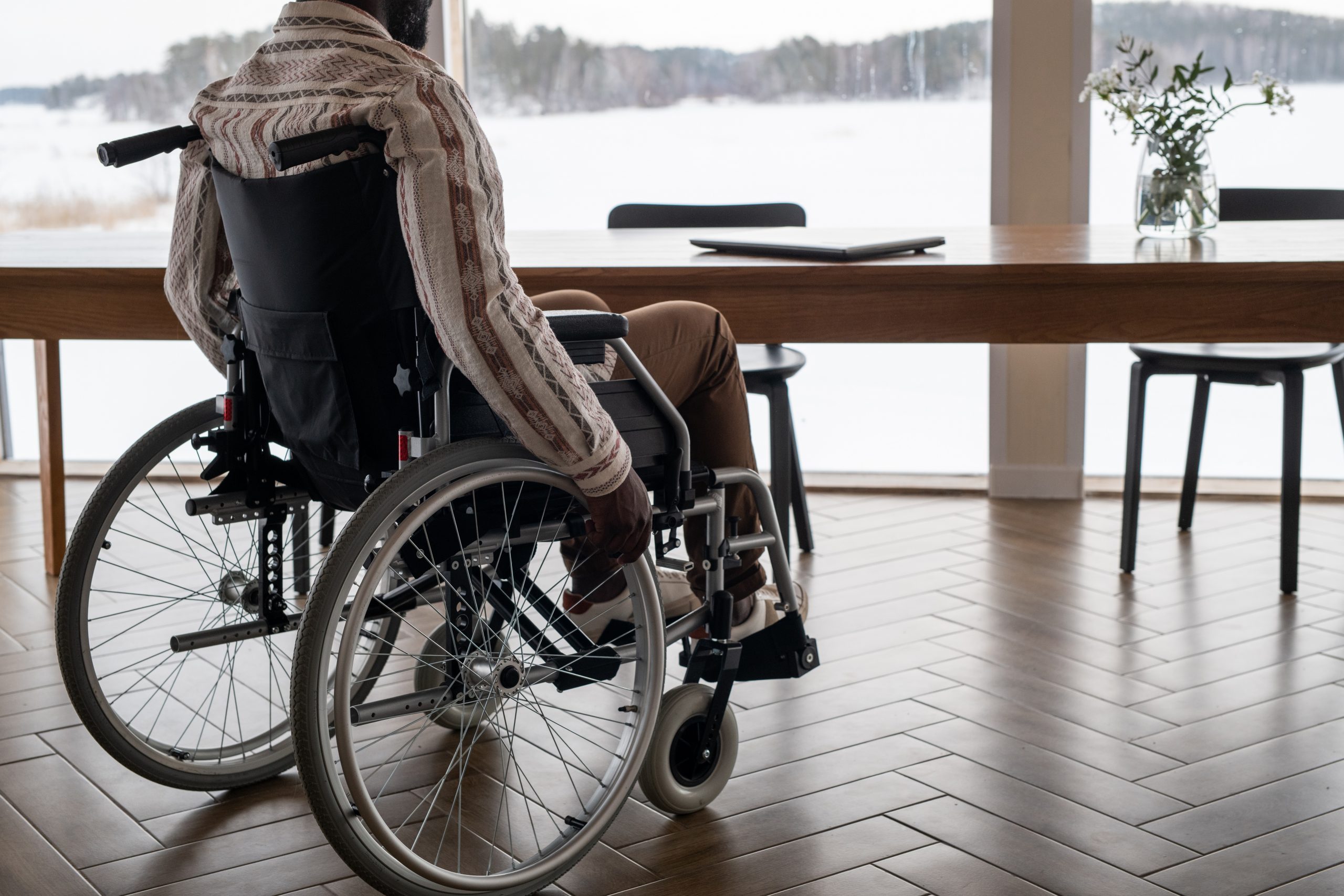

Hemiplegia is a disorder in which the contralateral half of the patient’s body is paralyzed. It is usually the result of a stroke, although it can also be caused by diseases affecting the spinal cord or the cerebral hemispheres.
Cerebral palsy can also affect only one hemisphere, resulting in limited function. This does not necessarily cause paralysis but does lead to spasms. Cerebral palsy in which this is the only symptom can also be referred to as hemiplegia.
 To better understand hemiplegia, we must know that it is the paralysis of one side of the body. Generally, the affected side is opposite to the hemisphere damaged by the stroke. This occurs because our pyramidal tract (our information highway) crosses over, or decussates. That’s why hemispheric lesions appear on the contralateral side of the body.
The exception to this rule involves damage to the cerebellum, where the impairment appears on the same side as the lesion. This happens because the cerebellum is located below the decussation point of the pyramidal tract.
What can cause hemiplegia?
Hemiplegia is not uncommon. In older individuals, the most common cause of hemiplegia is stroke, although it can also be caused by:
- Head trauma
- Brain tumors
- Multiple sclerosis
- Encephalitis
- Meningitis complications
- Conversion disorder
In most cases, the exact cause is unknown, but it appears that the brain is deprived of oxygen, resulting in the death of neurons.
When the corticospinal tract is damaged, the impairment usually appears on the opposite side of the body. For example, if there is a lesion on the right side of the brain, hemiplegia will appear on the left side of the body. This happens because the motor fibers of the corticospinal tract, which originate in the motor cortex of the brain, cross over to the opposite side at the lower part of the medulla oblongata and then descend to the spinal cord to innervate their corresponding muscles.
Depending on the location of the lesion in the brain, the severity of hemiplegia can vary. A lesion in the internal capsule, where all the motor fibers are condensed into a small area, will cause dense hemiplegia—that is, a complete loss of strength in all the muscles on one side of the body. In contrast, a lesion at the cortical or subcortical level will result in varying degrees of weakness on one side of the body.
What are the main symptoms of hemiplegia?
Hemiplegia is a disorder in which the patient experiences paralysis of one side of the body. However, the symptoms of hemiplegia mainly depend on the part of the brain that has been affected. Likewise, its severity will vary according to that same factor.
Among the most common symptoms, we can highlight:
- Difficulty walking and maintaining balance
- Difficulty with motor activities, such as holding or grasping
- Blurred or weakened vision
- Difficulty swallowing
- Difficulty spelling
- Loss of sensation on one side of the body
- Numbness or tingling on one side of the body
- Loss of bowel and bladder control
- Depression or increased emotional sensitivity
- Memory loss
- Behavioral problems such as anxiety, anger, irritability, lack of concentration, or difficulty understanding
What is the progression of hemiplegia?
Initial flaccid stage
It can last from a few days to several weeks or even longer. The patient is unable to move the affected side, has lost normal movement patterns, and at first, even the movements on the healthy side are inadequate to compensate for the loss of function on the affected side.
In the case of the upper limb, scapular retraction may be observed with some resistance to passive movement. The fingers and wrist may be slightly flexed, and some resistance may also be present when attempting passive extension. Additionally, there may be some resistance to full supination of the forearm and wrist.
In the lower limb, the first signs of spasticity are felt during dorsiflexion of the ankle and toes with the hip and knee in extension, and in some cases, there is mild resistance to foot pronation.
 The position of a bedridden patient is often as follows: the neck usually shows slight lateral flexion toward the affected side; the shoulder and arm are retracted, and the elbow remains extended at this stage. The forearm is pronated. The leg is typically extended and externally rotated. Some patients, usually the very elderly or severely affected, lie with one leg flexed and abducted and the foot supinated. In all cases, the entire affected side is slightly rotated backward.
In the case of a hemiplegic patient who is ambulatory, they are unable to turn toward the healthy side and cannot sit without support. They tend to fall toward the affected side and have no awareness of the body’s midline orientation.
Spasticity Stage
During the previous stage, spasticity gradually develops.
Spasticity usually progresses slowly, with a tendency to affect the flexor muscles of the upper limbs and the extensor muscles of the lower limbs, resulting in increasing resistance to certain passive movements.
The most common posture during this stage is as follows: the arm and hand are in flexion, internal rotation, and pronation; the leg is extended with the foot in plantar flexion and supination.
Relative Recovery Stage
Individuals who reach this third stage are those who were not severely affected at the onset and have achieved good recovery or have responded well to treatment.
If you need information about NeuroAiD II, you can fill out this contact form.
"*" indicates required fields


