

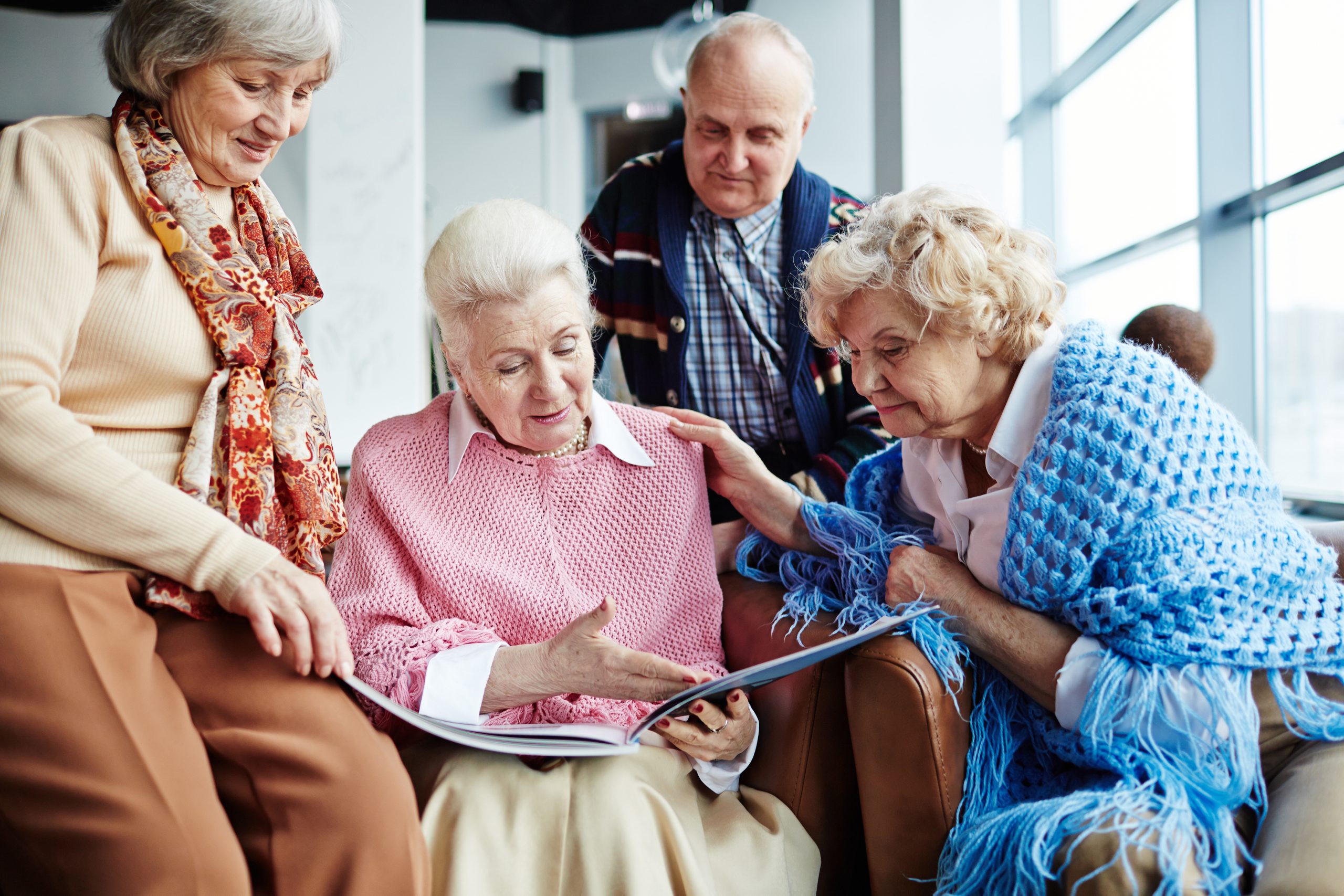

Poor memory can be a normal part of aging. As people grow older, changes occur in all parts of the body, including the brain.
As a result, some people may notice that it takes them longer to learn new things, that they do not remember information as well as they used to, or that they lose items such as their glasses. These are usually signs of mild memory problems, not serious memory issues.
But everyday situations such as “Where did I leave my keys?”, “What did I eat yesterday?”, or “I have such a bad memory, I need to write everything down!” start to become common, and our fear begins to grow.
Occupational therapy is an excellent tool to reverse the deterioration of our memory, specifically the so-called short-term memory.
Different studies show that we are not born with either good or bad memory, and memory loss is not exclusively associated with aging. Therefore, when faced with statements like these, what we should do is exercise our memory capacity and prevent or delay its deterioration.
Memory rehabilitation, a part of cognitive rehabilitation, is a therapeutic activity that can play a role in recovering memory functions or allowing the individual to adapt to the problems.
 Therefore, in occupational therapy, the intervention we carry out consists of designing activity programs aimed at preventing and maintaining this cognitive ability, as well as compensating for and restoring it when deterioration occurs due to various causes, such as decreased activity, stress, anxiety, sleep disturbances, depression, and the onset of conditions like dementia, stroke, Parkinson’s disease, Alzheimer’s disease, among others.
What do we understand as memory?
Memory is something more complex than a simple mental process. Broadly speaking, it is responsible for the encoding, storage, and retrieval of information.
In other words, memory allows us to recall events, ideas, relationships between concepts, sensations, and ultimately all the stimuli we have experienced at some point.
We are talking about a mental process that is key to learning and therefore vital for human adaptation. The ability to learn and remember what has been learned allows us, among other things, to achieve greater social adaptation.
At the anatomical level, we can relate memory to the hippocampus, but the truth is that many brain areas are involved in a process as complex as this. We can mention the temporal cortex, which stores childhood memories, the right hemisphere, which holds the meaning of words, the frontal lobes, which organize perception and thought, and even many of our automatic processes, which are located in the cerebellum.
Techniques for improving our memory
Repetition strategy
Its basic function is the retention of information. It consists of pronouncing, naming, or repeatedly saying the stimuli presented within a learning task.
It is a mechanism to keep information in short-term memory and then transfer it to long-term memory. This is a superficial process, so the information is retained mainly for a short period of time.
Selection strategy
The process of knowledge construction consists of linking new information with the prior knowledge stored in the cognitive structure. To achieve effective learning, it must be able to separate relevant information from irrelevant information.
This is the first step in any knowledge acquisition process: the selection of information or relevant data in order to simplify and reduce its length so it can be processed more easily and in greater depth. The most common selection techniques are summarizing and outlining.
Organization strategy
The objective is to combine, group, or relate the selected informational content within a coherent and meaningful structure.
When our short-term memory encounters a series of elements or ideas that lack organization, we tend to impose it before transferring them to long-term memory. Grouping words into categories is a common characteristic of the memorization process.
This strategy consists of grouping, structuring, and connecting information by classifying it into small units that maintain a coherent and semantic relationship with each other. It is a deeper process in terms of information retention while also facilitating more effective retrieval.
Elaboration strategy
Elaboration consists of linking the new content being learned with the prior knowledge stored in memory in order to facilitate retention and recall.
The importance of occupational therapy
The intervention carried out in occupational therapy is aimed, as previously mentioned, at maintaining optimal occupational performance in the patient’s daily life for as long as possible.
 Its importance lies in providing patients with strategies to compensate for the deficits they may encounter in their daily lives, while also working on the various components and types of memory to improve their function.
First, an initial evaluation is carried out. The objective of this assessment is to understand what the patient is requesting, what they need, what they wish to do, what they are able to do, and what difficulties they face in order to successfully meet their demands. The results of this first evaluation establish the foundation on which the intervention process is developed.
Among some of the standardized instruments used to conduct this initial evaluation are:
- Lobo’s Mini Cognitive Examination (MEC)
- Yesavage Geriatric Depression Scale (GDS)
- Rivermead Behavioral Memory Test III
Once the results of the initial evaluation are obtained, we proceed to plan the intervention program, in which activities are designed mainly related to the patient’s daily life. To achieve this, we use, as much as possible, all the objects that the patient uses in their routine and that allow them to maintain autonomy.
Activities
Below are some of the activities that can be included in the training program to improve memory implemented in occupational therapy. As we have discussed on other occasions, it is essential for us to develop activities based on the patient’s abilities and skills.
Write ten words that start with the first letter of your last name.
See sample exercise
Patient name: Ana Serrano
Sample words starting with “S”: Sun, Sand, Star, School, Silver, Strong, Smile, Sound, Storm, Shadow.
When the patient successfully completes the exercise, you can then ask them to find words that start with the second letter of their last name, the third, the fourth, and so on.
Text reading, in which the patient will have to memorize dates and cities.
See sample exercise
The early 19th century was dominated by the consequences of the French Revolution and the Napoleonic Wars. Although Napoleon was defeated in 1815 and the Bourbon monarchy was restored in France, many European countries had been transformed by 25 years of conflict.
States such as Prussia, Austria, and the Netherlands had expanded their territories through the Peace Agreement of 1815, while Poland, on the other hand, was dissolved in this process of national consolidation
The national uprisings were accompanied by a strong sense of nationalism in many countries, which was fueled by the Enlightenment ideas spread throughout Europe with Napoleon’s conquests.
In the decades following the Peace of 1815, many European countries were shaken by social conflicts, as the population sought to assert their rights against the generally autocratic rulers in their nations. This led to what historian Eric Hobsbawm called the Age of Revolutions, meaning that tensions between nations erupted frequently, resulting in large-scale political upheavals, such as the revolutions in France in 1830 and 1848.
Look at this image for one minute, now close your eyes and name the objects you remember and try to recall the image.
See sample exercise

Answer certain questions about their personal life and daily routine.
See sample exercise
Names of family members (children, parents, grandparents, friends, etc.)
Year and place of birth
City and country where you live
What was your last summer trip?
What is today’s day, month, and year?
Summary of what you did during the week.
See sample exercise
Have the patient describe, for each day of the week, a brief summary of all the activities they carried out day by day. If there is a special day among them, have them explain why (birthday, meetings, holidays, etc.).
Letter organization for word formation.
See sample exercise
| NITAR | SLIVE | KESTAB | HEOTL |
| TSEFOR | GIHTL | SEHOU | KCAJTE |
| NADH | DRBOA | OMUES | RLEPA |
| DRBOA | GNIR | TACR | GNIHT |
If you would like more information about NeuroAiD II, please fill out this contact form.
"*" indicates required fields


