


Modern medicine has experienced significant advancements in recent years, and one of the most notable achievements is computed tomography technology, commonly known as a CT scan. In this article, we will explore in detail what a CT scan is, how it works, and its medical applications. The goal is to understand the crucial role this technology plays in the diagnosis and treatment of various medical conditions.
What is a CT scan
A CT scan, or computed tomography, is an imaging diagnostic technique that combines X-rays and computers to generate detailed images of the inside of the human body. This revolutionary technology allows physicians to obtain high-resolution cross-sectional images of organs, bones, soft tissues, and blood vessels, providing a detailed view of internal anatomical structures.

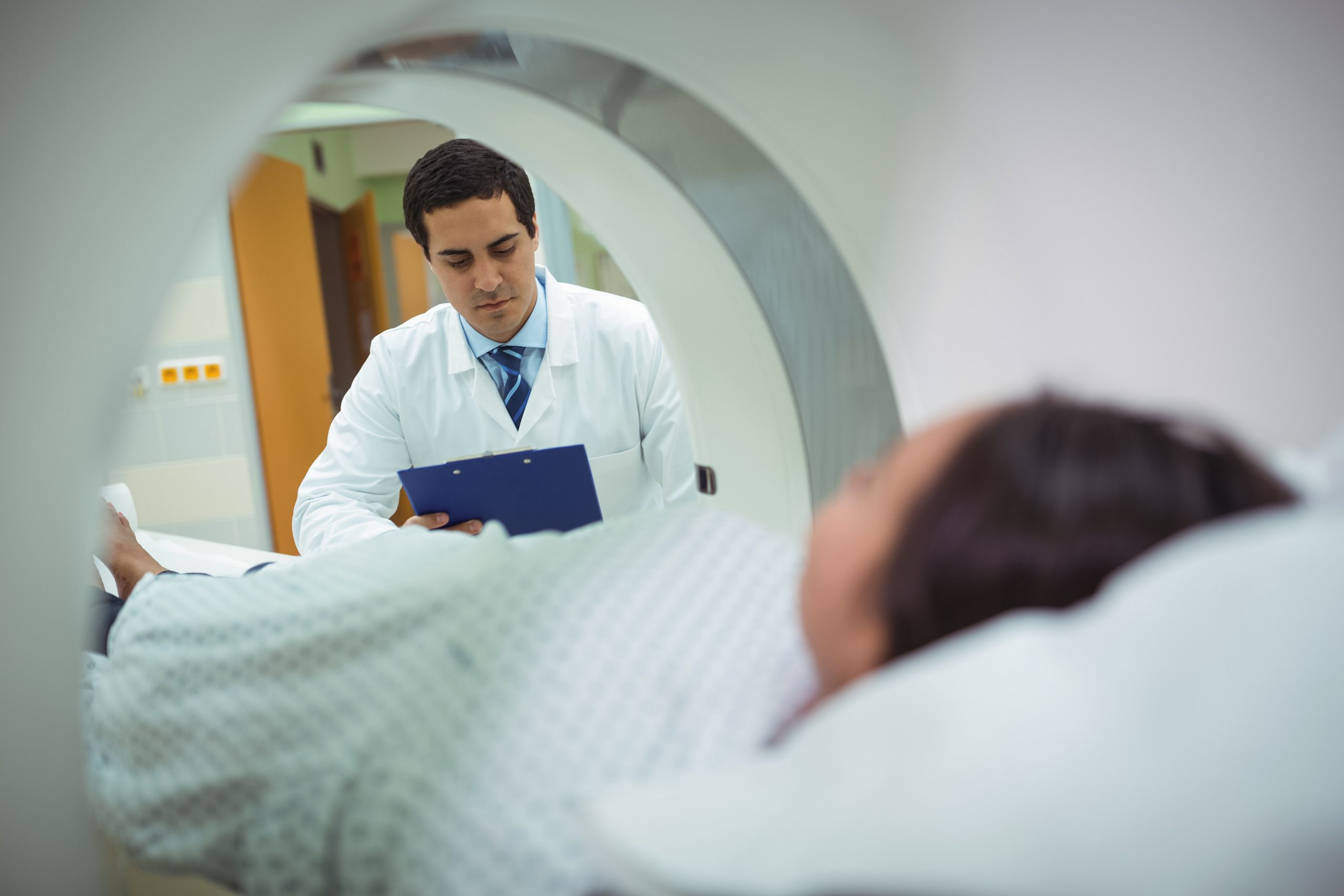
The CT scan process involves the use of a CT scanner, a specialized machine consisting of a sliding table and a donut-shaped ring that contains the X-ray components and detectors. During the procedure, the patient lies on the table, which slides into the ring while multiple thin-section images are taken. These images are captured from different angles and combined using computational algorithms to create a three-dimensional representation of the scanned area.
How a CT scan works
The operation of a CT scan is based on the interaction of X-rays with the body’s tissues. X-rays are a form of ionizing radiation that can penetrate through the body and are absorbed by tissues to varying degrees depending on their density. Dense tissues, such as bones, absorb more X-rays and appear whiter in the images, while less dense tissues, such as soft tissues, allow more X-rays to pass through and appear darker.

In a CT scan, the scanner’s ring rotates around the patient, emitting X-ray beams from multiple angles. The detectors inside the ring measure the amount of X-rays passing through the body and record the data as digital images. These images are transmitted to a computer, which reconstructs the information and presents it as cross-sectional images or a three-dimensional representation.
Medical applications of a CT scan
Computed tomography has a wide range of applications in the medical field. Some of the main areas where a CT scan is used include:
Disease diagnosis
Un TAC puede detectar y evaluar una variedad de afecciones médicas, como tumores, enfermedades cardíacas, enfermedades pulmonares, trastornos cerebrales, enfermedades del hígado y los riñones, entre otras. Proporciona información detallada sobre el tamaño, la forma y la ubicación de las anomalías, lo que ayuda a los médicos a realizar diagnósticos precisos.
Treatment planning
Physicians use CT scan data to plan surgical interventions and radiotherapy treatments. The three-dimensional visualization of anatomical structures helps determine the best treatment strategy and identify critical areas to avoid.
Trauma assessment
In cases of traumatic injuries, a CT scan is used to assess the severity of internal damage, such as fractures, internal bleeding, or injuries to vital organs. This enables a rapid and accurate medical response.
Monitoring and follow-up
A CT scan can be used to monitor the progression of a disease or the effect of a treatment. Follow-up images can be compared with previous ones to evaluate changes in the size or response of the affected tissue.
Conclusion
Computed tomography, or CT scan, is an imaging diagnostic technique that has revolutionized the field of medicine. By combining X-rays and computer technology, physicians can obtain detailed and accurate images of the inside of the human body. With applications ranging from disease diagnosis to treatment planning and follow-up, CT scanning has become an invaluable tool in modern medical practice. With its ability to provide crucial anatomical and functional information, CT scanning has significantly enhanced physicians’ ability to diagnose and treat medical conditions effectively and accurately.
If you would like more information about NeuroAiD II, please fill out this contact form.
"*" indicates required fields


