

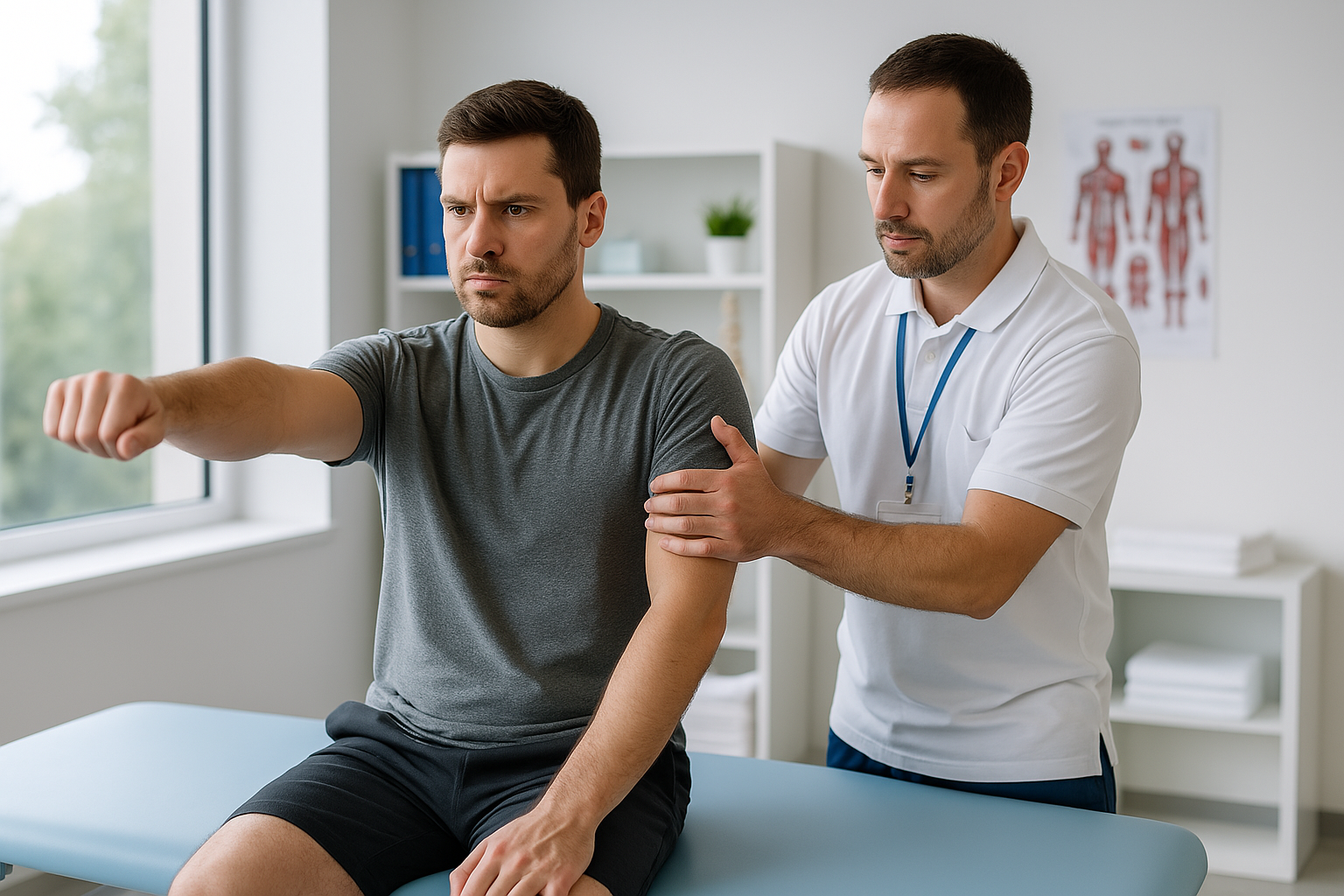

Disorders of the nervous system that affect voluntary motor control can manifest in various ways, and among the most relevant in the field of clinical neurology are tetraparesis and hemiplegia. Although different in origin and presentation, these conditions have a significant impact on the patient’s quality of life and require specialized attention in both diagnosis and treatment.
What are tetraparesis and hemiplegia?
To begin with, it is important to clearly differentiate the terms:
-
Tetraparesis (also called quadriparesis) refers to partial muscle weakness in all four limbs, meaning both the arms and legs. It is not a complete paralysis, but rather a partial loss of strength that can vary in intensity.
-
Hemiplegia, on the other hand, involves complete paralysis of one side of the body, usually as a result of unilateral brain damage, as often occurs in strokes.
Both conditions indicate damage to the central nervous system, either at the spinal cord level (as in many cases of tetraparesis) or at the brain level (as seen in hemiplegia). Despite their differences, tetraparesis and hemiplegia share common elements in their evaluation and treatment, which is why they are often addressed together in many clinical disciplines.
Common causes of tetraparesis and hemiplegia

Tetraparesis and hemiplegia can have multiple causes, among which the following stand out:
Tetraparesis:
-
Cervical spinal cord injuries: Due to trauma, vertebral compression, or degenerative diseases.
-
Multiple sclerosis: An autoimmune disease that affects nerve conduction.
-
Guillain-Barré syndrome: Although it is usually more symmetrical, in severe cases it can lead to tetraparesis.
-
Central nervous system infections: Such as myelitis or epidural abscesses.
-
Myopathies or generalized muscle diseases: (less common).
Hemiplegia:
-
Stroke: This is the most common cause of hemiplegia, especially in older adults.
-
Traumatic brain injury: Injuries to one cerebral hemisphere can cause contralateral hemiplegia.
-
Brain tumors: They can compress motor structures.
-
Cerebral palsy in children: Some types manifest with hemiplegia from birth or early childhood.
-
Brain infections: Such as encephalitis or abscesses.
In both cases, accurately diagnosing the underlying cause is key to establishing a prognosis and determining the therapeutic approach.
Clinical evaluation and diagnosis
The evaluation of patients with tetraparesis and hemiplegia requires a detailed medical history, a complete neurological examination, and complementary tests. The physical examination should assess:
-
Muscle strength
-
Tendon reflexes
-
Sensation
-
Coordination and muscle tone
-
Presence of spasticity or flaccidity
In the case of tetraparesis, the pattern of weakness may suggest a spinal cord injury, especially if accompanied by sphincter disturbances or band-like sensory loss. In contrast, hemiplegia usually appears suddenly, with motor loss in the arm and leg on the same side, which points toward a cerebrovascular event.
Among the complementary tests used to evaluate tetraparesis and hemiplegia are:
-
Magnetic resonance imaging (MRI): Essential for identifying structural lesions.
-
Computed tomography (CT): Useful in acute cases such as stroke.
-
Electromyography (EMG): Assesses neuromuscular function.
-
Nerve conduction studies: Differentiate peripheral from central neurological disorders.
-
Laboratory tests: To rule out infectious, autoimmune, or metabolic causes.
Rehabilitation and treatment
The treatment of tetraparesis and hemiplegia should be comprehensive, interdisciplinary, and patient-centered. It includes:
Medical management:
-
In stroke-related hemiplegia: early use of thrombolytics if indicated.
-
In inflammatory tetraparesis: immunotherapy, corticosteroids, or antibiotics if an infection is present.
-
Spasticity control: With baclofen, botulinum toxin, or physical therapy.
-
Prevention of complications such as pressure ulcers, deep vein thrombosis, or respiratory infections.
Physical rehabilitation:
-
Physical therapy: To maintain joint mobility, strengthen muscles, and improve gait.
-
Occupational therapy: Helps restore independence in daily activities.
-
Speech therapy: In cases where swallowing or communication difficulties are present (common in hemiplegia).
Psychological support:
The emotional impact of tetraparesis or hemiplegia can be profound. Psychological support promotes adaptation, helps manage functional loss, and fosters motivation during recovery.
Prognosis
The prognosis of tetraparesis and hemiplegia varies depending on the cause, the speed of diagnosis, the initial severity, and adherence to rehabilitation. Some patients achieve complete or significant recovery, while others experience permanent limitations.
In general, young patients with reversible causes and early access to rehabilitation tend to have better outcomes. On the other hand, when neurological damage is severe or progressive, as in some cases of degenerative diseases, the focus shifts to maintaining quality of life and preventing complications.
Adaptations and daily life

A fundamental part of managing tetraparesis and hemiplegia is adapting the patient’s environment. This includes:
-
Support bars in the home
-
Wheelchairs or walkers
-
Furniture modifications
-
Assistive technology for communication or access to digital devices
Social inclusion, access to education, and employment must also be considered. Collaboration between the healthcare system and community support networks enables individuals with tetraparesis and hemiplegia to lead as autonomous a life as possible.
Conclusión
Las tetraparesias y hemiplejias representan desafíos clínicos significativos tanto para el paciente como para el equipo médico. Su origen neurológico implica una atención cuidadosa y prolongada, donde el diagnóstico precoz, la intervención terapéutica oportuna y el enfoque integral son esenciales para maximizar la recuperación funcional. Gracias a los avances en neurorehabilitación, cada vez más pacientes logran superar barreras y recuperar su independencia. Por eso, conocer, comprender y actuar frente a las tetraparesias y hemiplejias es clave en el compromiso con una atención médica humana, personalizada y efectiva.
If you would like more information about NeuroAiD II, please fill out this contact form.
"*" indicates required fields


