
Stroke, also known as a cerebrovascular accident, is one of the leading causes of disability and death worldwide. It is a medical emergency in which blood flow to the brain is suddenly interrupted, causing neuronal damage within minutes. Understanding what triggers a stroke is essential not only for its treatment, but especially for its prevention.
Types of Stroke: Is It Important to Distinguish Them?
Before addressing what triggers a stroke, it is essential to understand that there are two main types:
-
Ischemic stroke: accounts for 80% of cases. It occurs when a clot obstructs a cerebral artery.
-
Hemorrhagic stroke: occurs due to the rupture of a blood vessel in the brain, causing internal bleeding.
In both cases, the damage occurs due to the interruption of oxygen and nutrient supply to brain tissue.
Understanding what triggers a stroke helps clarify the differences between these two types and enables the implementation of more targeted preventive measures.
Risk Factors: What Can Predispose to a Stroke
Most strokes do not occur randomly. There are conditions and habits that increase the risk. Therefore, when considering what triggers a stroke, it is important to examine both modifiable and non-modifiable factors:
Non-modifiable factors:
-
Age: the risk increases significantly from the age of 55.
-
Sex: men have a higher risk, but women tend to experience more severe outcomes.
-
Genetics: a family history of stroke may increase the likelihood.
Modifiable factors:
-
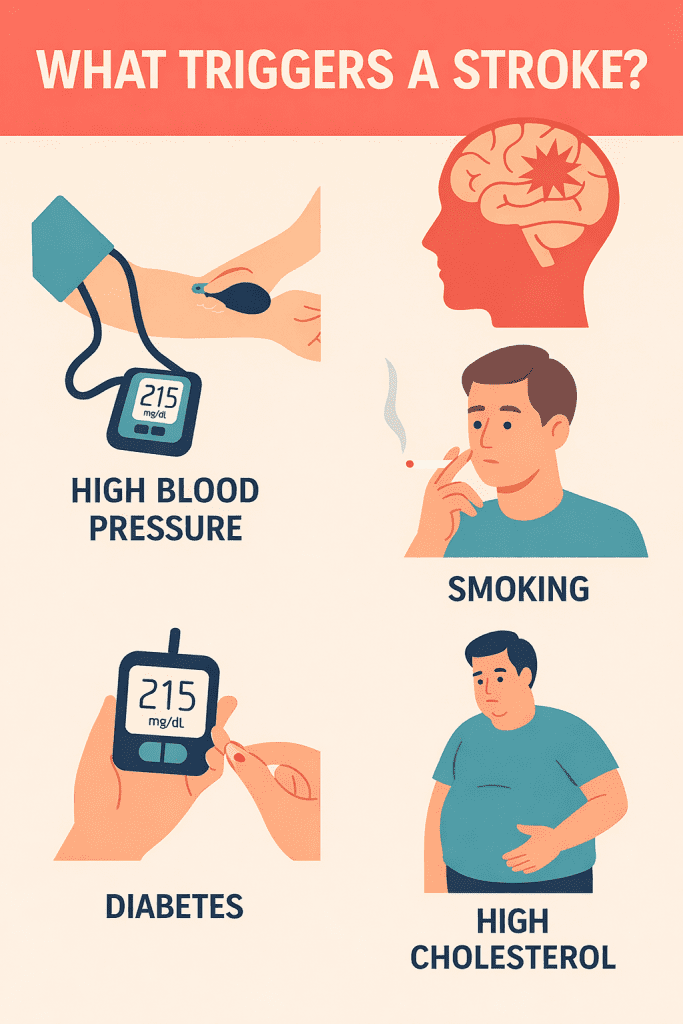
Arterial hypertension: it is the leading cause of stroke. Elevated blood pressure damages the cerebral arteries.
-
Diabetes mellitus: elevated glucose levels impair blood vessels.
-
Hypercholesterolemia: it promotes the formation of atherosclerotic plaques that can obstruct arteries.
-
Smoking: tobacco smoke increases blood viscosity and promotes vascular damage.
-
Sedentary lifestyle and obesity: both contribute to other risk factors such as hypertension and diabetes.
-
Excessive alcohol consumption: it increases blood pressure and the risk of arrhythmias.
All these factors partially answer the question of what triggers a stroke, as they directly impact vascular health.
Cardiac diseases and atrial fibrillation
A common cause of ischemic stroke is atrial fibrillation, an arrhythmia in which the heart beats irregularly. This can lead to blood stasis and thrombus formation, which may embolize to the brain and cause a stroke.
Therefore, when analyzing what triggers a stroke, cardiac conditions cannot be excluded. Cardiac disease is often the underlying source of a silent cerebrovascular event.
Stroke in young individuals: an increasing reality
Although stroke is more commonly associated with older adults, cases in younger individuals are becoming increasingly frequent. In these cases, what triggers a stroke may be related to:
-
Drug use, particularly cocaine or amphetamines
-
Migraine with aura
-
Oral contraceptives in combination with smoking
-
Autoimmune diseases or vasculitis
-
Undiagnosed cerebral arteriovenous malformations
These scenarios demonstrate that what triggers a stroke is not limited to traditional risk factors. Unusual causes may also affect individuals without prior medical history.
Warning symptoms: acting rapidly saves lives
Recognizing symptoms can make the difference between a favorable recovery and irreversible damage. Remembering the FAST acronym is very useful:
-
Facial droop
-
Arm weakness
-
Speech impairment
-
Time to act
Understanding what triggers a stroke helps us remain vigilant for these signs and act with urgency.
Stress and emotional factors: can they influence?
Although they are not considered direct causes, chronic stress, anxiety, or intense emotional episodes can act as indirect triggers. They increase blood pressure and promote arrhythmias or vasoconstriction. Therefore, when we ask what triggers a stroke, we must also consider the emotional and mental impact on cardiovascular health.
Prevención: claves para reducir el riesgo
Saber qué desencadena un ictus es solo la mitad del camino. La otra mitad es aplicar ese conocimiento a la prevención:
-
Controlar la presión arterial y el azúcar en sangre
-
Evitar el tabaco y el consumo excesivo de alcohol
-
Mantener un peso saludable y realizar ejercicio físico
-
Seguir una dieta rica en frutas, vegetales, omega 3 y baja en grasas trans
-
Controlar el colesterol
-
Realizar chequeos médicos regulares, especialmente si se tienen antecedentes familiares
Estas acciones tienen un gran impacto y responden de forma práctica a la pregunta qué desencadena un ictus, ya que eliminan o reducen los factores de riesgo más comunes.
Tratamiento y rehabilitación
Once a stroke has occurred, acute treatment and rehabilitation are essential. However, it is equally important to identify what triggers a stroke in that particular patient in order to prevent recurrence.
Treatment options include:
-
Thrombolytic therapy in ischemic stroke
-
Surgical intervention in cases of hemorrhage or aneurysms
-
Physical, speech, and occupational therapy
-
Neurorehabilitation and cognitive stimulation
Understanding what triggers a stroke in each case allows for personalized medical follow-up.
Conclusion
Understanding what triggers a stroke is not only useful from a clinical perspective, but also from a prevention and awareness standpoint. Each individual may be exposed to different factors, but with the right information, it is possible to significantly reduce the risk.
Knowledge, combined with healthy habits and medical monitoring, is the most effective tool we have to prevent the devastating impact of a stroke on our lives.
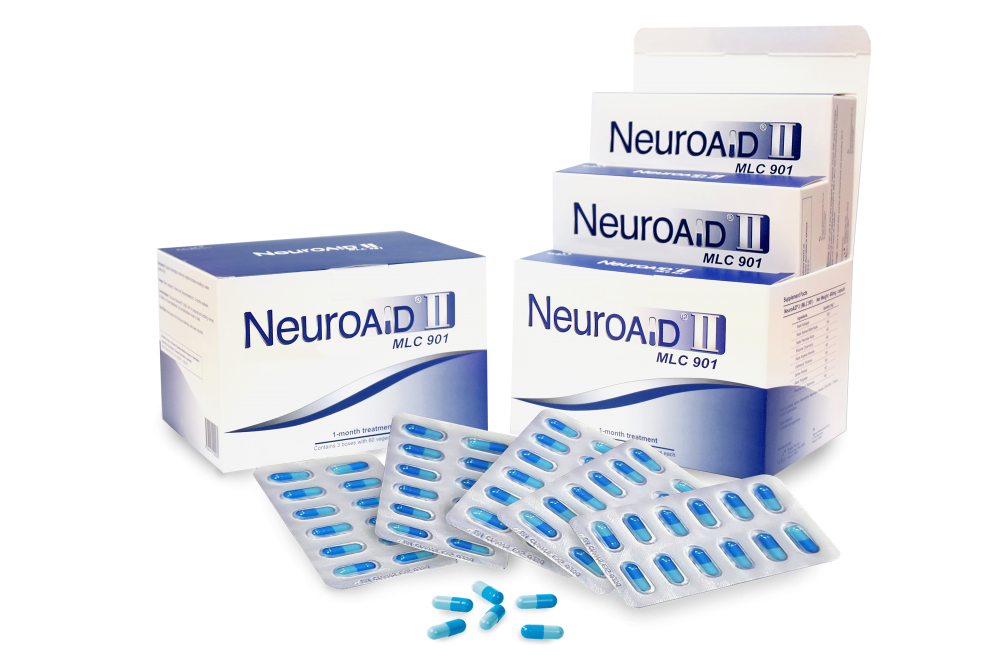
If you would like more information about NeuroAiD II, please fill out this contact form.
"*" indicates required fields


