



Cerebellar infarction is a type of ischemic stroke that affects the cerebellum, a region of the brain that is essential for maintaining balance, coordinating movement, and controlling posture. Although it accounts for a small proportion of all strokes, it can cause severe symptoms and, in some cases, become a medical emergency due to the risk of complications.
Early recognition of a cerebellar infarction is essential to initiate treatment as soon as possible and improve the patient’s prognosis.
What is a cerebellar infarction?

A cerebellar infarction occurs when an artery supplying blood to the cerebellum becomes blocked. When blood flow is interrupted, nerve cells no longer receive oxygen and nutrients and begin to sustain damage within minutes.
The cerebellum is located in the lower posterior part of the brain and, although it is not directly involved in generating movement, it is responsible for coordinating movement so that it is precise and smooth.
Depending on the size and location of the infarction, symptoms can range from mild balance disturbances to severe neurological deficits.
What functions does the cerebellum perform?
The cerebellum is involved in numerous functions related to movement and coordination. These include:
- Maintaining balance.
- Coordinating voluntary movements.
- Regulating body posture.
- Fine-tuning the precision of movements.
- Coordinating eye movements.
- Supporting motor learning.
When this structure is damaged, movement may become imprecise, unstable, or uncoordinated.
Symptoms of cerebellar infarction
Symptoms usually appear suddenly and may initially be mistaken for less serious conditions, particularly when vertigo or dizziness are the predominant symptoms.
The most common signs include:
- Sudden onset of severe dizziness.
- A sensation that the surroundings are spinning.
- Loss of balance.
- Difficulty walking.
- Unsteadiness while standing.
- Nausea and vomiting.
- Severe headache, particularly at the back of the head.
- Double vision or abnormal eye movements.
- Difficulty coordinating movements of the arms and legs.
- Slow or unclear speech.
In some cases, the patient retains muscle strength but experiences significant difficulty coordinating any movement.
Why can it be difficult to diagnose?
Cerebellar infarction can be mistaken for inner ear disorders, such as labyrinthitis or vestibular vertigo, because both can cause severe dizziness and loss of balance.
However, when vertigo is accompanied by difficulty walking, neurological abnormalities, or a severe headache, a stroke should always be ruled out.
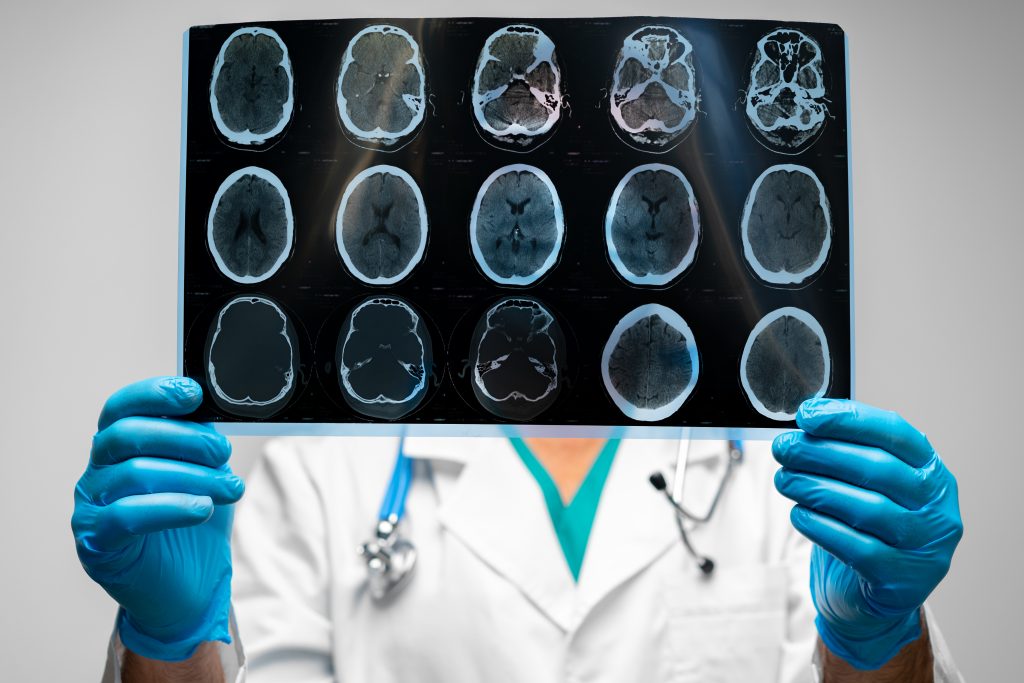
Imaging tests, particularly brain magnetic resonance imaging (MRI), are essential for confirming the diagnosis.
Causes of cerebellar infarction
The arteries that supply the cerebellum arise from the vertebrobasilar system. When one of these arteries becomes blocked, a cerebellar infarction may occur.
The most common causes include:
- Atherosclerosis.
- High blood pressure.
- Diabetes.
- High cholesterol.
- Smoking.
- Atrial fibrillation and other heart conditions.
- Vertebral artery dissection.
- Formation of blood clots that travel to the cerebral circulation.
In some cases, the underlying cause remains unknown even after a comprehensive diagnostic evaluation.
How is it diagnosed?
When a cerebellar infarction is suspected, the medical team performs an urgent neurological assessment together with a range of diagnostic tests.
The most commonly used tests include:
- Computed tomography (CT).
- Magnetic resonance imaging (MRI).
- CT angiography (CTA) or MR angiography (MRA).
- Cardiac investigations.
- Blood tests.
These tests help confirm the diagnosis and identify the underlying cause of the infarction in order to guide treatment.
Treatment
Treatment depends on the time elapsed since symptom onset, the size of the infarction, and the patient’s overall condition.
During the acute phase, treatments aimed at restoring blood flow may be used when the patient meets the established eligibility criteria.
Subsequent treatment typically focuses on:
- Managing cardiovascular risk factors.
- Preventing recurrent events.
- Monitoring for potential complications.
- Initiating rehabilitation as early as possible.
Large cerebellar infarctions can cause significant swelling of the cerebellum, requiring close monitoring due to the risk of compression of surrounding structures.
Recovery after a cerebellar infarction
The course of recovery depends on multiple factors, including the size of the lesion, how quickly treatment was initiated, and the patient’s age.
Many patients experience progressive recovery during the first few months, particularly in terms of balance and coordination.
However, some impairments may persist, including:
- Unsteadiness while walking.
- Fine motor coordination difficulties.
- Occasional dizziness.
- Difficulty performing rapid and precise movements.
- Fatigue during physical activities.
Rehabilitation plays an essential role in promoting functional recovery.
Rehabilitation
Rehabilitation treatment is usually tailored to each patient’s individual needs and may include:
- Physiotherapy to improve gait and balance.
- Coordination exercises.
- Postural control retraining.
- Occupational therapy to help regain independence in activities of daily living.
- Speech and language therapy when speech or swallowing difficulties are present.
Consistency and continued training help enhance the brain’s ability to reorganize its functions.
Conclusion
Cerebellar infarction is a type of stroke that affects the cerebellum, a structure that plays a key role in balance and the coordination of movement. Although it may initially present with symptoms resembling a simple episode of vertigo, early diagnosis is essential to prevent complications and improve recovery.
Recognizing the warning signs and seeking immediate medical attention allows treatment to be initiated as soon as possible, increasing the chances of preserving neurological function and restoring quality of life.
If you would like more information about NeuroAiD II, please complete this contact form
"*" indicates required fields


