



Dysgraphia is a learning disorder that affects an individual’s ability to write in a legible and organized manner. Although it is often confused with motor skill difficulties or lack of interest in writing, dysgraphia is a neuropsychological condition that requires specialized attention. Understanding what dysgraphia is is essential for early identification of its symptoms and for implementing effective intervention strategies in both educational and home environments.
What is dysgraphia and how does it manifest?
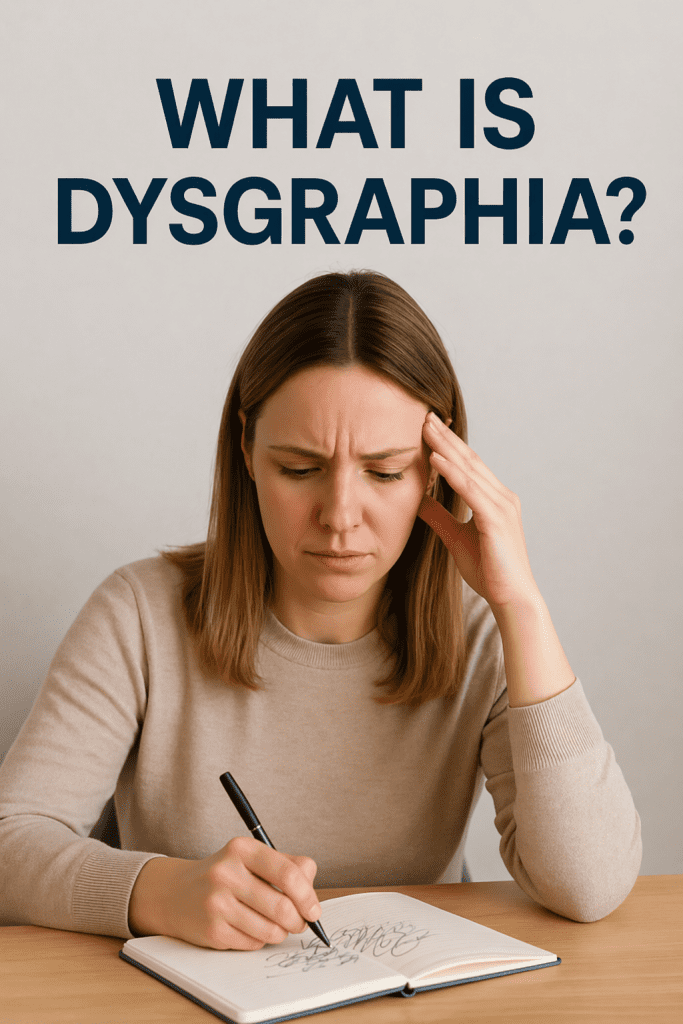
Dysgraphia is a condition that primarily affects handwriting. Individuals with dysgraphia have difficulty forming letters correctly, maintaining consistent alignment on the page, respecting margins, and spacing words appropriately. Although each case is different, the common characteristic is that the writing is illegible or highly disorganized, even when the individual has adequate knowledge of grammar, spelling, or composition.
Understanding what dysgraphia is allows it to be differentiated from other disorders such as dyslexia or dyspraxia. In the case of dysgraphia, the core issue does not lie in language comprehension, but in the motor and cognitive act of writing. In other words, the child may clearly know what they want to write, but their hand is unable to accurately translate it onto paper.
Types of dysgraphia
There are different types of dysgraphia, and understanding them helps to better define what dysgraphia is in each specific context:
-
Motor dysgraphia: affects fine motor coordination. Individuals with this type of dysgraphia have difficulty holding a pencil, controlling strokes, and maintaining an appropriate writing speed.
-
Language-specific dysgraphia: associated with difficulties in language processing. The individual may struggle to structure sentences or select appropriate words, which impacts written expression.
-
Spatial dysgraphia: refers to difficulty organizing content within the space of the page. Words may appear crowded together or distributed without visual coherence.
-
Mixed dysgraphia: combines characteristics of more than one type of dysgraphia, making diagnosis and intervention more complex.
What causes dysgraphia?
Although there is no single clear cause that explains what dysgraphia is and why it occurs, studies indicate that it may be related to neurological, genetic, and developmental factors. Some children with dysgraphia also present with motor development disorders, autism spectrum disorder, or attention deficit hyperactivity disorder (ADHD).
Dysgraphia has also been observed in children without any associated conditions, which reinforces the need for multidisciplinary evaluations to ensure an accurate diagnosis.
Common symptoms of dysgraphia
Understanding what dysgraphia is also involves identifying its most common symptoms. These may include:
-
Disorganized or illegible handwriting.
-
Inconsistent spelling, even with simple words.
-
Excessive time required to complete written tasks.
-
Hand pain or fatigue while writing.
-
Difficulty maintaining alignment on the line.
-
Avoidance of tasks that involve writing.
In school settings, children with dysgraphia often feel frustrated, may develop low self-esteem, and may even avoid writing in front of others due to fear of judgment.
Diagnosis of dysgraphia
To accurately diagnose what dysgraphia is in a child or adolescent, a psychoeducational assessment is required. This evaluation includes analysis of fine motor skills, hand-eye coordination, written language, and spatial organization.
Psychologists, occupational therapists, pediatric neurologists, and education specialists may be part of the team involved in identifying the disorder. Early diagnosis of dysgraphia is key to initiating effective intervention.
Treatment and intervention strategies
The treatment of dysgraphia is based on a combination of therapies tailored to the individual’s needs. Some strategies include:
-
Occupational therapy: focuses on improving fine motor skills, posture, and pencil grip.
-
Personalized educational support: includes curriculum adaptations such as extended time on exams, use of technology (keyboards, tablets), and oral tasks instead of written ones.
-
Graphomotor exercises: specific activities to train stroke formation, letter directionality, and visual coordination.
-
Assistive writing software: digital tools with features such as spell checking, word prediction, and text-to-speech.
The goal is not necessarily to achieve perfect handwriting, but to enable the individual to express their ideas effectively without handwriting becoming a barrier.
Emotional and family support

Understanding what dysgraphia is also involves recognizing its emotional impact. Children with dysgraphia often feel insecure or compare themselves negatively with their peers. Therefore, emotional support is crucial.
Parents and teachers should foster an environment of acceptance and encouragement, valuing the child’s efforts beyond the visual outcome of their writing. Play-based activities, shared reading, and genuine praise can strengthen self-esteem and motivate the child to continue developing their skills.
Dysgraphia in adults
Although dysgraphia is commonly diagnosed in childhood, it can also persist into adulthood. Some individuals are not diagnosed until they encounter difficulties in academic or professional settings.
In adults, dysgraphia can interfere with note-taking, signing documents, or producing professional written content. The use of technology, time management, and self-awareness of one’s own limitations are essential tools for effectively managing the condition.
Conclusion
Understanding what dysgraphia is is the first step toward raising awareness of a condition that often goes unnoticed. Far from being simply “poor handwriting,” dysgraphia is a disorder that can significantly impact an individual’s academic, emotional, and social development.
Early diagnosis, appropriate intervention, and a supportive environment make a significant difference in the lives of those living with this condition. Recognizing and understanding what dysgraphia is opens the door to personalized strategies that enable each individual to reach their full potential.
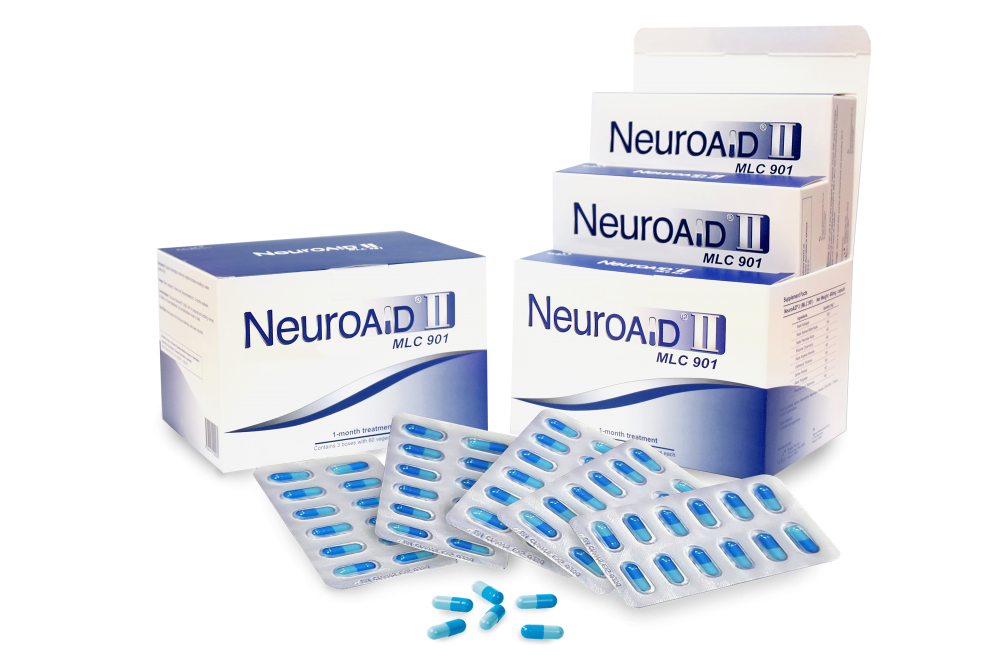
If you would like more information about NeuroAiD II, please fill out this contact form.
"*" indicates required fields


