

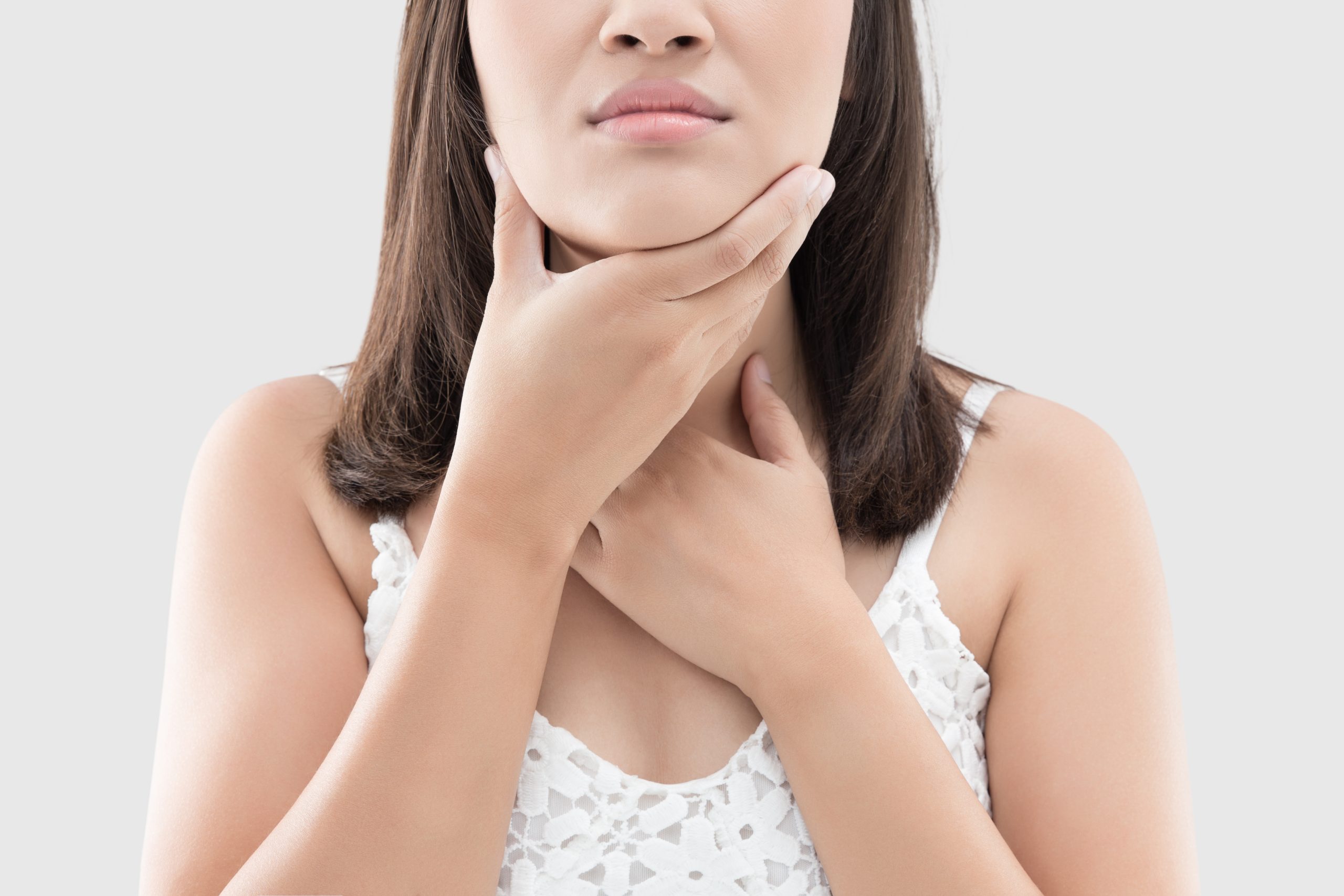

After a stroke, swallowing difficulties, known as dysphagia, affect 50% of patients.
While most patients regain swallowing function within seven days, between 11% and 13% continue to experience dysphagia after six months. This highlights the importance of early detection of swallowing and nutritional problems, as proper nutritional management in these cases is associated with a reduction in clinical complications, disability, mortality, and hospitalization and rehabilitation costs.
On the other hand, dysphagia and nutritional deficits after a stroke increase the risk of pneumonia by 50% and the risk of death by 37%. This is why taking preventive measures in a timely manner is so important.
Classification
Dysphagia, as a consequence of a stroke, is a form of oropharyngeal dysphagia. Therefore, alterations in the transit of the food bolus occur during its passage through the mouth or pharynx and result from weakness, paralysis, sensory impairment, incoordination, or apraxia of the oral or pharyngeal structures caused by an acute vascular brain injury. A selective deficit in cognitive function affecting the initiation of swallowing may also be involved.
What are the phases of swallowing?
Normal swallowing occurs in three phases:
Oral
It begins voluntarily and includes chewing, salivation, and the action of the lips and cheeks.
In this phase, the tongue pushes the food bolus against the palate, directing it toward the pharynx. Stimulation of the tonsillar pillars initiates the second phase, the pharyngeal phase.
Pharyngeal
- Elevation of the soft palate, which blocks the choanae
- Anterior-superior displacement of the larynx, epiglottic tilt, vocal cord adduction, and apnea
- Pharyngeal peristalsis that propels the bolus toward the esophagus
- Relaxation of the upper esophageal sphincter
Esophageal
It involves the transport of the bolus to the stomach. The afferent and efferent impulses that make swallowing possible are carried by the cranial nerves.
Rehabilitation in the Dysphagia Process
All therapeutic measures in oropharyngeal dysphagia aim to achieve effective oral feeding (to meet nutritional and hydration requirements) and safe feeding (without compromising the airway).
Patients who are candidates for rehabilitative treatment are those:
- Are able to maintain at least partial intake of some foods by mouth
- Who, despite receiving nutrition and hydration through enteral feeding, meet the conditions to partially or fully resume oral feeding
Rehabilitative treatment is part of a comprehensive care plan for patients with dysphagia, which also includes nutritional recommendations and the level of assistance or supervision required from others.
 In designing the treatment plan, the following data must be taken into account:
- Instrumental studies, such as fiberoptic endoscopic evaluation of swallowing (FEES) and videofluoroscopy (VF), which allow us to understand the pathophysiology of oropharyngeal dysphagia (OPD), the patient’s swallowing capacity, and the risk to the airway, as well as to test the effectiveness of certain interventions.
- A complete clinical evaluation, including a record of all medical diagnoses, which will provide insight into the natural history and expected progression of the condition, comorbidities, the patient’s cognitive and communication abilities, awareness of the deficit, learning capacity and motivation, fatigability, nutritional status, and motor and sensory skills.
- The patient’s environment, the effective support of family members and caregivers, and their access to available resources
Rehabilitative Treatment for Dysphagia
Rehabilitative treatment is part of a comprehensive care plan for patients with dysphagia, which includes nutritional recommendations and the level of assistance or supervision required from others.
All therapeutic measures in oropharyngeal dysphagia aim to achieve effective oral feeding (that meets nutritional and hydration requirements) and safe feeding (without compromising the airway).
Rehabilitative treatment uses a set of measures that can be grouped into:
Compensatory techniques
They allow the patient to eat at least some foods orally while protecting the airway. They provide immediate symptom relief, but only while being applied.
They are simple, and most patients with dysphagia can perform them with minimal supervision from a family member or caregiver. They represent the first line of treatment and help initiate oral intake in patients with severe oropharyngeal dysphagia.
Modifications in the volume, texture, and viscosity of the bolus
One of the most commonly used initial measures in the treatment of oropharyngeal dysphagia is the modification of the texture and viscosity of solid or liquid foods to make the bolus easier to swallow and reduce the risk of aspiration.
They allow the oral route to be maintained at least partially, preventing disuse atrophy of the oropharyngeal structures and facilitating the initiation of treatment for transitioning from enteral to oral nutrition.
These are explained in detail in another chapter, but it is important to emphasize the following key idea: the choice of texture and bolus size should be made after completing both clinical and instrumental evaluations to determine what is most suitable for the patient, and it must also be reassessed over time.
Postural techniques
The first general postural rule is to eat in an upright position, sitting with the torso straight and the head erect.
In this position, gravity helps the bolus transit through the oral, pharyngeal, and esophageal cavities. It prevents premature spillage of the bolus into the pharynx from the mouth, with an open airway, which can occur if a horizontal posture is adopted, as well as nasal regurgitation.
They are simple, and most patients can perform them with minimal instruction or supervision, even those with cognitive or communication impairments.
They may be limited in patients with pain and restricted mobility due to cervical osteoarthritis. It should be noted that postural changes, although simple to perform, require the patient to have good awareness of their deficit, as they must apply them throughout the entire feeding process. Otherwise, a caregiver must be present to closely monitor compliance.
Chin tuck (cervical flexion)
The patient is instructed to lower the chin or flex the head (chin down) or touch the throat with the jaw to “make a double chin” when swallowing. This widens the vallecula, decreases the distance between the tongue and the pharyngeal wall, and narrows the airway entrance.
It can be useful in patients with delayed initiation of the swallowing reflex, as widening the vallecula allows it to contain the bolus and prevent it from entering the airway. It may also be helpful in patients with impaired airway closure (reduced laryngeal elevation or vocal cord closure) by narrowing the entrance to the larynx, and in those with reduced base of tongue retraction.
 It is one of the most commonly recommended postures, although its effectiveness cannot be generalized to all patients with oropharyngeal dysphagia. Various studies in stroke and other conditions have shown effectiveness in approximately 50% of patients.
Cervical extension
The patient is instructed to raise the chin when swallowing. In this position, gravity facilitates the movement of the bolus from the oral cavity to the pharynx.
A fundamental requirement for recommending this posture is that the patient has good airway closure and no delay in the activation of the swallowing reflex. As a protective measure, if the patient is cooperative, they can be instructed to hold their breath (apnea) before raising the chin or to combine it with the supraglottic swallowing maneuver. It may be useful in selected patients with difficulty in the oral transport phase, such as those with amyotrophic lateral sclerosis or after tongue resection.
Head rotation
The patient with dysphagia is instructed to turn or rotate the head, directing the chin toward the affected side when swallowing. This maneuver helps close off the affected side (the side of the pharynx toward which the chin is turned), redirecting the bolus toward the healthy side.
It also appears to have an effect on the relaxation of the upper esophageal sphincter (UES). It may be useful in patients with unilateral paralysis of the pharyngeal or laryngeal wall (vocal cords) and in some patients with impaired cricopharyngeal mobility. It helps protect the airway both during and after swallowing.
Head tilt (lateral inclination)
The patient is instructed to tilt the head laterally, bringing the ear toward the stronger or healthier side. Gravity redirects the bolus toward the stronger or healthier region of the oral and pharyngeal cavity.
It may be useful in patients with unilateral paresis affecting the mouth and pharynx, and in patients with head and neck cancer involving the posterior part or base of the tongue.
Oral sensory stimulation
The application of various sensory stimuli to the oral cavity can modify several aspects of oropharyngeal swallowing. Tactile and thermal stimulation has been used, as well as changes in the characteristics of the bolus (viscosity, volume, and taste), or combinations of both.
Tactile and thermal stimulation is applied to areas of the oral cavity that contain sensory receptors involved in triggering the swallowing reflex, usually in the posterior region of the tongue and the faucial pillars.
A common example is applying pressure with the spoon on the tongue when offering food. Cold and sour or acidic flavors (such as lemon), or the combination of both, have been the most frequently used stimuli, resulting in reduced oral and pharyngeal transit times in patients with stroke and other neurological disorders, as well as in those with head and neck cancer sequelae.
The practical application of these techniques is controversial, as these changes typically occur only during the first swallow following the stimulus. Nevertheless, they can be helpful for patients with severe oropharyngeal dysphagia and sensory disorders, or with delayed oral or pharyngeal phases and swallowing apraxia, especially when they are beginning to resume oral feeding.
If you would like more information about NeuroAiD II, please fill out this contact form.
"*" indicates required fields


