



Locked-in syndrome is an extremely severe neurological disorder in which a person remains conscious and retains cognitive function but loses almost all ability to move the body or speak. In most cases, the patient can communicate only through vertical eye movements or blinking.
This condition typically occurs following a stroke affecting the brainstem, particularly the pons, although it may also result from other less common causes.
What is locked-in syndrome?

Locked-in syndrome is a neurological condition caused by a lesion in the ventral portion of the pons within the brainstem.
As a result of this damage, the neural pathways responsible for transmitting motor commands from the brain to the body are disrupted. However, the structures responsible for consciousness remain intact.
Consequently, the patient remains awake, understands what is happening around them, and retains normal cognitive function, despite having little or no ability to perform voluntary movements.
Why does locked-in syndrome occur?
The syndrome occurs when the corticospinal and corticobulbar fibers that pass through the pons are damaged.
These pathways control:
- Voluntary movements of the limbs.
- Facial muscles.
- The tongue.
- Swallowing.
- Speech.
In most cases, vertical eye movements and blinking are preserved because they are controlled by different neural structures.
Causes
The most common cause is ischemic stroke resulting from occlusion of the basilar artery.
Other possible causes include:
- Brainstem hemorrhage.
- Traumatic brain injury.
- Brain tumors.
- Multiple sclerosis.
- Central pontine myelinolysis.
- Encephalitis.
- Other rare neurological disorders.
Symptoms of locked-in syndrome
The most characteristic clinical manifestations include:
- Near-complete paralysis of the limbs.
- Inability to speak (anarthria).
- Preservation of consciousness.
- Preserved ability to understand language.
- Preserved vertical eye movements.
- Voluntary blinking.
- Preserved hearing.
- Preserved sensation in many cases.
The ability to communicate through eye movements is a key feature in establishing the diagnosis.
Types of locked-in syndrome
Three main forms have been described:
Classic locked-in syndrome
The patient has tetraplegia and loss of speech, while vertical eye movements and blinking remain preserved.
Incomplete locked-in syndrome
In addition to eye movements, the patient retains some limited voluntary movements.
Total locked-in syndrome
There is no voluntary movement, including eye movements, although consciousness remains preserved.
Association with stroke
Most cases occur following occlusion of the basilar artery.
The interruption of blood flow causes an infarction in the ventral portion of the pons, where the major descending motor pathways are located.
This location explains the near-complete loss of voluntary movement while consciousness remains preserved.
How is locked-in syndrome diagnosed?
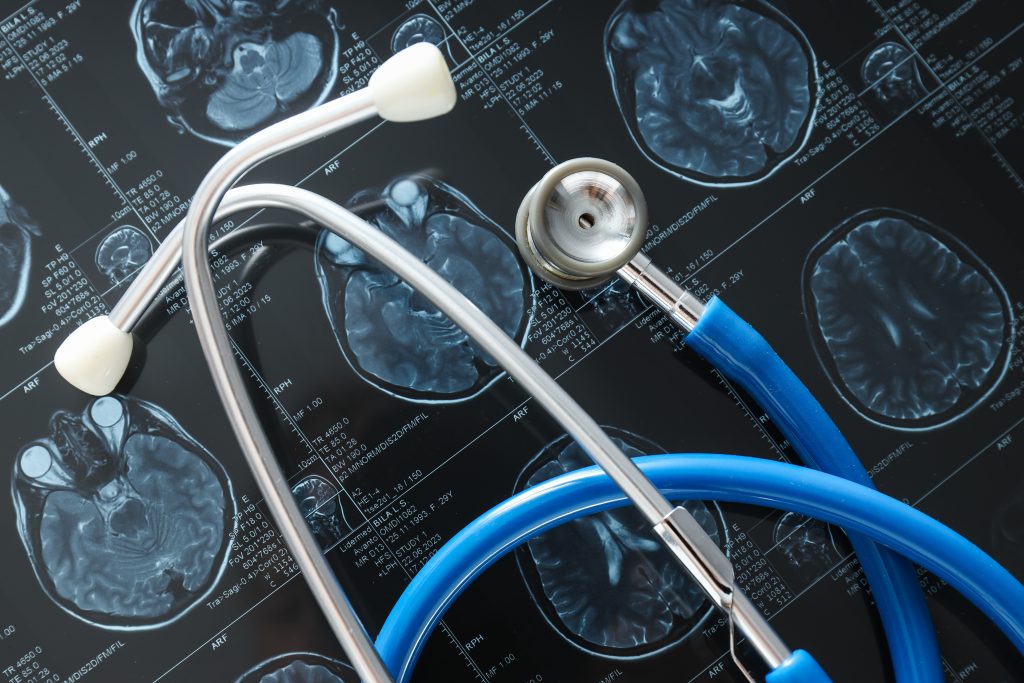
Diagnosis combines neurological examination with neuroimaging studies.
The most commonly used diagnostic tests include:
- Brain magnetic resonance imaging (MRI).
- Computed tomography (CT).
- CT angiography (CTA).
- Magnetic resonance angiography (MRA).
- Vascular studies.
Clinical assessment is essential to differentiate locked-in syndrome from other disorders that affect the level of consciousness.
Treatment
Treatment depends on the underlying cause of the brain lesion.
When the cause is a stroke, management follows established stroke treatment protocols. Subsequently, many patients require multidisciplinary care and adapted communication strategies, as well as rehabilitation programs aimed at maintaining physical function and facilitating interaction with their environment.
The treatment approach should be individualized according to each patient’s clinical characteristics.
Prognosis
The prognosis depends on several factors:
- The extent of the lesion.
- The time to diagnosis.
- The underlying cause.
- The treatment received.
- The development of complications.
Some patients partially recover certain motor functions, while others experience significant long-term functional limitations.
Conclusion
Locked-in syndrome is one of the most severe neurological consequences of a brainstem stroke. It is characterized by preserved consciousness combined with a near-complete loss of voluntary movement. Recognizing this condition is essential for establishing an accurate diagnosis, facilitating communication with the patient, and understanding the extent of the brain injury.
If you need information about NeuroAiD II, please complete this contact form
"*" indicates required fields


