


Progressive aphasia is a specific type of aphasia that, unlike most cases related to stroke, is characterized by a slow and continuous deterioration of language. This disorder belongs to the group of neurodegenerative diseases and progressively affects the ability to communicate, posing a significant challenge for patients, as well as for their families and caregivers.
What is progressive aphasia?
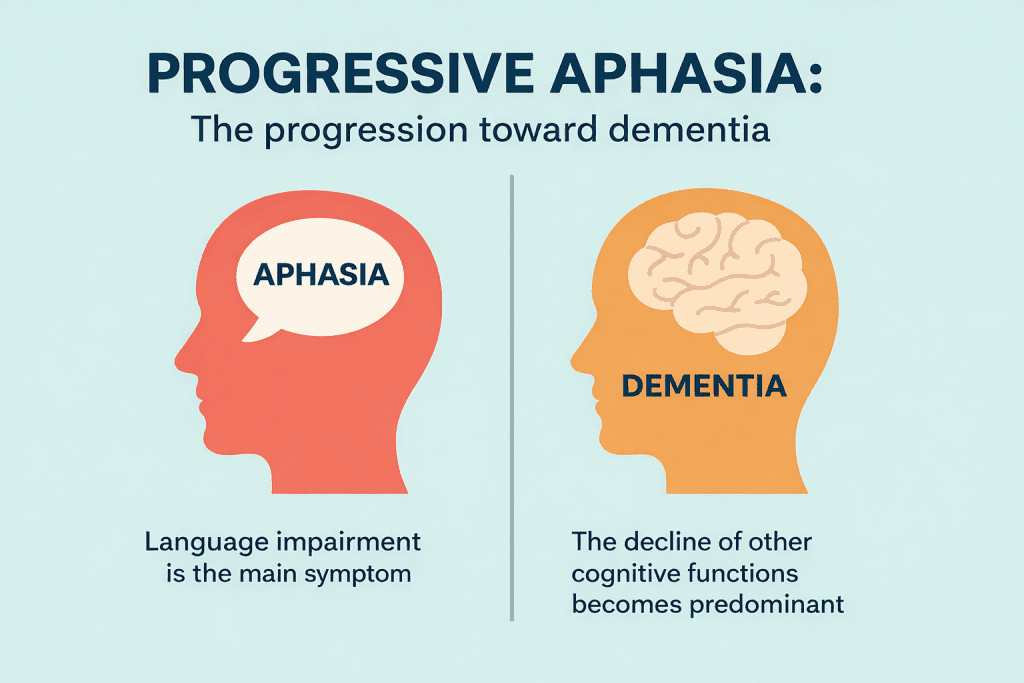
Progressive aphasia, also known as primary progressive aphasia (PPA), is a neurological syndrome in which the main initial deficit is the loss of language. This disorder occurs as a result of degeneration in the brain areas that control language, especially in the left hemisphere.
Unlike other types of aphasia that appear suddenly, such as in the case of a stroke, progressive aphasia develops gradually. People who experience it show a progressive decline in their ability to speak, understand, read, and write.
Causes of progressive aphasia
Progressive aphasia is not caused by an acute injury, but by neurodegenerative diseases, such as:
-
Frontotemporal dementia: one of the most common causes of progressive aphasia.
-
Atypical Alzheimer’s disease: in some cases, degeneration primarily affects language areas.
-
Tauopathies and proteinopathies: abnormal accumulations of proteins in the brain.
Degeneration occurs in the perisylvian regions of the left hemisphere, which include the frontal, temporal, and insular cortex.
Types of progressive aphasia
There are three main variants of progressive aphasia, each with its own clinical characteristics:
1. Non-fluent/agrammatic variant (nfvPPA)
-
Difficulty constructing grammatically correct sentences.
-
Slow and effortful speech.
-
Relative preservation of the comprehension of simple words.
-
It may be associated with motor impairments such as apraxia of speech.
2. Semantic variant (svPPA)
-
Progressive loss of the meaning of words.
-
Difficulty naming common objects.
-
Impaired comprehension of less frequent words.
-
Fluent speech but lacking precise content.
3. Logopenic variant (lvPPA)
-
Difficulty finding words.
-
Difficulty repeating long sentences.
-
Relatively preserved comprehension.
-
Frequently associated with beta-amyloid deposits, as seen in Alzheimer’s disease.
Understanding these variants is essential for the accurate diagnosis and appropriate treatment of progressive aphasia.
Initial symptoms
The first signs of progressive aphasia are usually subtle and can be easily confused with normal aging-related difficulties. Some of the initial symptoms include:
-
Frequently searching for words during conversation.
-
Forgetting common names or everyday objects.
-
Difficulty following a conversation or understanding instructions.
-
Confusing writing or writing with grammatical errors.
Over time, the deterioration worsens and may come to affect all forms of verbal and written communication.
Diagnosis of progressive aphasia
The diagnosis of progressive aphasia requires a multidisciplinary assessment. It includes:
-
Neurological examination: to rule out other conditions.
-
Neuropsychological assessment: using specific language tests.
-
Brain magnetic resonance imaging: showing atrophy in specific language-related areas.
-
Positron emission tomography (PET): to detect metabolic changes or protein accumulation.
To be diagnosed as progressive aphasia, language impairment must be the primary symptom for at least two years, without other evident signs of generalized dementia during that initial period.
Progression of progressive aphasia
Progressive aphasia is a degenerative disorder, so the prognosis involves progressive decline. Although it may initially be limited to language, over time it can affect other cognitive domains such as:
-
Short-term memory.
-
Executive functions.
-
Reasoning ability.
In advanced stages, patients may develop mutism, complete loss of speech, and total dependence for communication.
Treatment of progressive aphasia

Although there is no cure for progressive aphasia, there are strategies to slow its progression and improve the patient’s quality of life:
Speech therapy
A specialized speech-language therapist can help the patient preserve communication abilities for as long as possible. Therapy is adapted according to the type of progressive aphasia and includes:
-
Techniques to stimulate residual language abilities.
-
Use of pictograms or augmentative communication applications.
-
Training in gestures or alternative writing.
Psychological support
The emotional impact of progressive aphasia can be profound. It is common for patients to experience frustration, anxiety, or social isolation. Psychological support and working with the family are essential.
Education of the environment
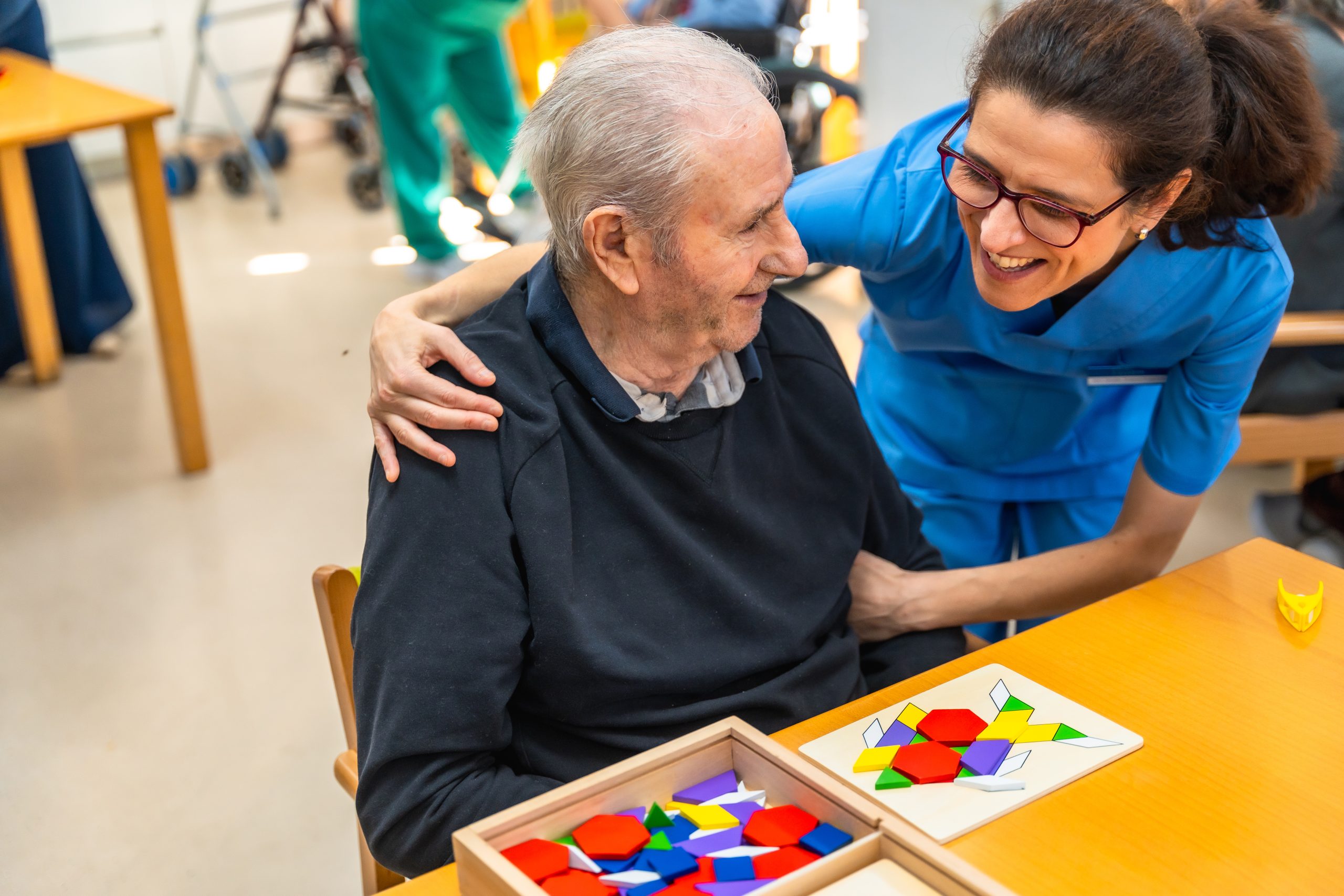
It is crucial that family members and caregivers understand the nature of the disorder. Learning to communicate with the patient patiently, using simple sentences and allowing time for responses, makes a significant difference in daily interactions.
Pharmacological treatment
There are no specific medications for progressive aphasia, but some treatments targeting associated symptoms may be used:
-
Cholinesterase inhibitors in cases with an Alzheimer’s-type profile.
-
Antidepressants if there are symptoms of depression.
Social and family impact
Progressive aphasia not only affects the individual, but also their environment. Unlike other neurological conditions, an essential function for social life is impaired: language. This loss of communication can impact family dynamics, work life, and the patient’s self-esteem.
Participation in support groups, inclusion in medical decision-making, and ongoing support help better cope with the condition.
Conclusion
Progressive aphasia is a neurological condition that gradually impairs communication abilities. It directly affects the patient’s quality of life and autonomy, making early detection, accurate diagnosis, and a comprehensive approach essential.
Although it cannot be reversed, early treatment with speech therapy, family support, and adaptive resources can significantly improve the patient’s daily life. Recognizing early symptoms and acting in time is key to slowing the progression and maintaining human connection for as long as possible.
If you would like more information about NeuroAiD II, please fill out this contact form.
"*" indicates required fields


