


The relationship between aphasia and dementia has been extensively studied in neurology, geriatrics, and neuropsychology for decades. Both disorders affect essential cognitive functions, but they do so from different perspectives. Understanding the connection between aphasia and dementia is key for early diagnosis, appropriate clinical management, and improving the quality of life of patients and their families.
What is aphasia?
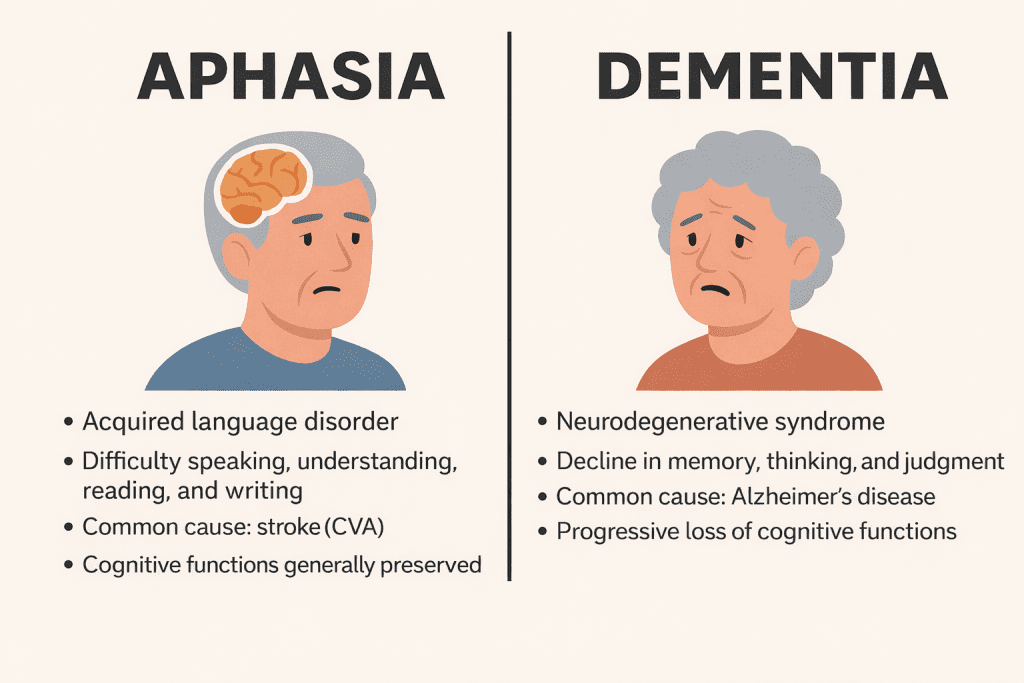
Aphasia is an acquired language disorder that affects a person’s ability to speak, understand, read, or write. It is usually the result of localized brain damage, particularly in areas of the left hemisphere responsible for language. The most common causes are:
-
Stroke (cerebrovascular accident, CVA)
-
Traumatic brain injury (TBI)
-
Brain tumors
-
Central nervous system infections
In aphasia, general intelligence is usually preserved, but the ability to communicate is impaired. There are several types, such as Broca’s aphasia, Wernicke’s aphasia, global aphasia, and anomic aphasia, each with specific characteristics depending on the affected brain area.
What is dementia?
Dementia, on the other hand, is a progressive neurodegenerative syndrome that affects multiple cognitive functions, such as memory, orientation, judgment, attention, and language. Unlike aphasia, it is not a localized impairment but a global decline in mental capacities.
The most common causes of dementia include:
- Alzheimer’s disease
-
Frontotemporal dementia
-
Dementia with Lewy bodies
-
Vascular dementia
The link between aphasia and dementia becomes evident when language impairment emerges as one of the main symptoms of the dementing process.
The connection between aphasia and dementia can manifest in various ways. Although in many cases aphasia is an independent disorder, it can also be part of the clinical presentation of certain dementias, particularly those affecting the frontal and temporal lobes of the brain.
Some forms of dementia present aphasia as one of the earliest and most prominent symptoms. This is the case of primary progressive aphasia (PPA), a subtype of frontotemporal dementia.
Primary progressive aphasia (PPA)
Primary progressive aphasia (PPA) is a neurodegenerative disorder in which language impairment is the initial and predominant symptom for at least the first two years. Unlike other dementias, memory and other cognitive functions remain relatively preserved in the early stages.
There are three main variants of PPA:
-
Nonfluent/agrammatic variant: difficulty producing complete sentences and slow, effortful, halting speech.
-
Semantic variant: progressive loss of word meaning, especially nouns.
-
Logopenic variant: difficulty finding words and repeating phrases.
In these cases, aphasia and dementia are intertwined from the outset, and language impairment becomes the primary functional challenge for the patient.
Differences between classic aphasia and aphasia in dementia
It is important to distinguish between aphasia caused by a stroke, for example, and aphasia that is part of a dementia syndrome.
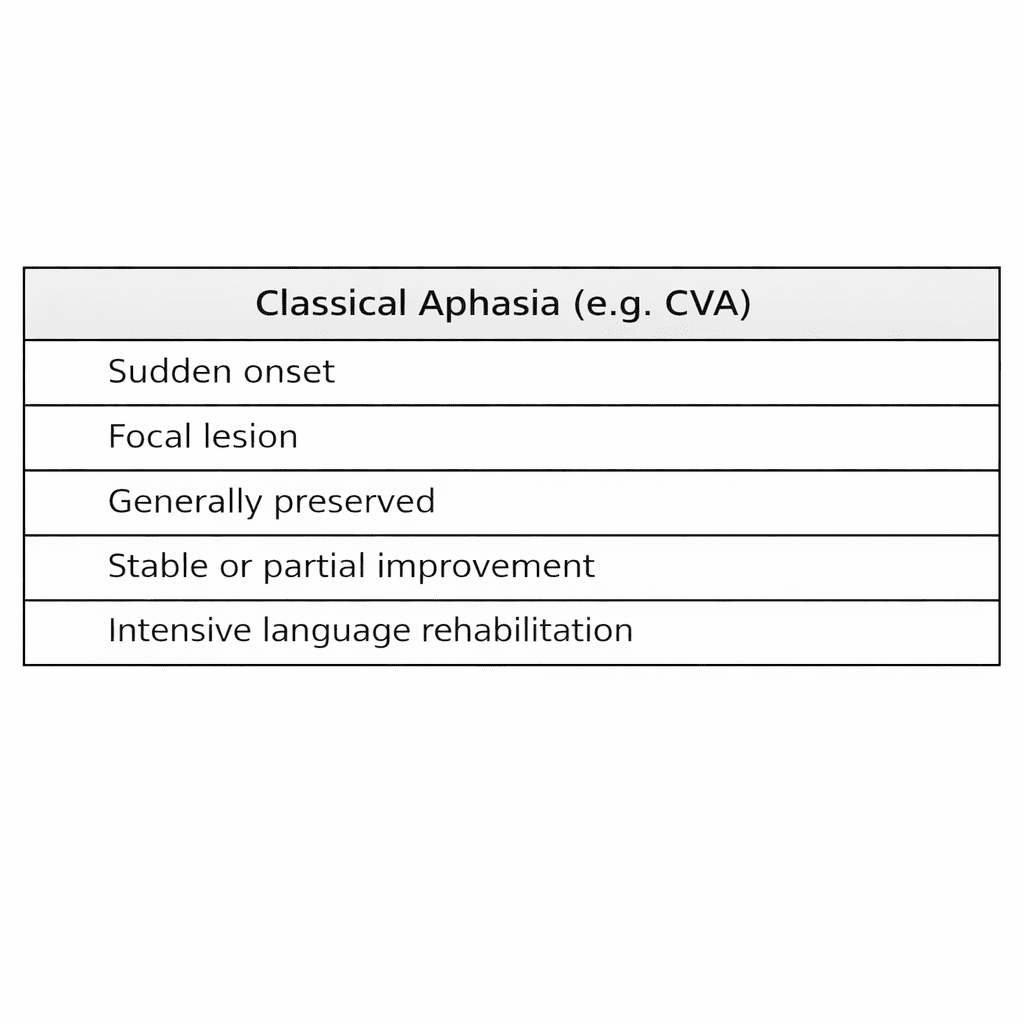
This comparison helps explain why, in certain clinical contexts, it is crucial to determine whether a patient has both aphasia and dementia, or only one of these conditions.
Differential diagnosis
Identifying whether a person presents with aphasia and dementia simultaneously or in isolation is essential for care planning.
The diagnostic process may include:
-
Detailed clinical history
-
Neuropsychological testing
-
Brain magnetic resonance imaging (MRI)
-
Positron emission tomography (PET)
-
Assessment by speech-language pathologists and neurologists
When PPA is suspected, the diagnosis must differentiate it from other forms of dementia, as well as from vascular or post-traumatic aphasias.
Available treatments
Both aphasia and dementia have no cure, but there are therapies available to improve the patient’s quality of life.
In aphasia:
-
Intensive speech and language therapy
-
Visual or technological supports
-
Alternative communication strategies
In dementia:
-
Medications (cholinesterase inhibitors, memantine)
-
Cognitive stimulation
-
Occupational therapy
-
Family support and psychoeducation
When a patient presents with both aphasia and dementia, the therapeutic plan must integrate both perspectives, with an emphasis on functional communication and maintaining autonomy for as long as possible.
Having aphasia and dementia involves not only medical challenges, but also social and emotional ones. The loss of language affects identity, the ability to express needs and emotions, and connection with others.
The family plays a crucial role, and it is necessary to provide guidance on:
-
How to facilitate communication
-
How to adapt to progressive changes
-
How to provide care without infantilizing or isolating the patient
Caregivers also require psychological support, as managing aphasia and dementia can lead to high levels of stress and emotional burden.
Prevention and early detection
Although the onset of aphasia and dementia cannot be completely prevented, adopting a healthy lifestyle can reduce the risk:
-
Management of cardiovascular risk factors
-
Regular exercise
-
Balanced diet (e.g., Mediterranean diet)
-
Ongoing cognitive activity
-
Stress reduction
Early detection of symptoms, especially changes in language or memory, allows for the initiation of treatments that may slow progression and improve quality of life.
Conclusion
The relationship between aphasia and dementia is complex, but increasingly well understood. While aphasia can occur as an independent condition, it may also be an initial manifestation of certain types of dementia, such as primary progressive aphasia.
A multidisciplinary approach, accurate diagnosis, and ongoing support for patients and caregivers are essential to address this condition with both compassion and effectiveness. Recognizing early signs of language deterioration and differentiating them from classic aphasia allows for timely intervention and the provision of the most appropriate treatment.
If you would like more information about NeuroAiD II, please fill out this contact form.
"*" indicates required fields


