



The human brain is divided into several regions, each with specific functions that regulate behavior, emotions, reasoning, and movement. One of the most complex and essential areas is the frontal lobe. Understanding the symptoms of frontal lobe damage is crucial for early detection of neurological disorders, effective treatment planning, and providing appropriate support to affected individuals.
What is the frontal lobe?
Before addressing the symptoms of frontal lobe damage, it is important to understand what this structure is. The frontal lobe is located in the anterior part of the brain, just behind the forehead. It is the largest cerebral region and also one of the most highly evolved.
Its main functions include:
-
Control of voluntary movement (through the primary motor cortex).
-
Planning, decision-making, and logical reasoning.
-
Regulation of social and emotional behavior.
-
Attention and concentration capacity.
-
Expressive language (particularly in the left hemisphere, where Broca’s area is located).
-
Self-awareness and moral judgment.
When an injury occurs in this area, the symptoms of frontal lobe damage can severely impair the patient’s quality of life.
Common causes of frontal lobe damage
To better understand the symptoms of frontal lobe damage, it is important to consider its most common causes:
-
Traumatic brain injury (TBI): Blows to the forehead can directly damage this region.
-
Stroke (cerebrovascular accident, CVA): An infarction or hemorrhage can compromise frontal blood flow.
-
Brain tumors: Particularly those located in the anterior region of the brain.
-
Neurodegenerative diseases: Such as Alzheimer’s disease or frontotemporal dementia.
-
Encephalitis or infections of the central nervous system.
-
Previous brain surgeries or neurosurgical interventions.
Main symptoms of frontal lobe damage
The symptoms of frontal lobe damage may vary depending on the exact location of the lesion, its extent, and whether the right or left hemisphere is affected. Below are the most common clinical signs:
1. Personality changes
One of the most significant symptoms of frontal lobe damage is a profound alteration in personality. The individual may become apathetic, disinhibited, impulsive, or aggressive, which can be distressing for family members and caregivers.
Examples:
-
Loss of social inhibition (making inappropriate comments).
-
Childish or socially inappropriate behavior.
-
Lack of empathy or emotional indifference.
2. Language disorders
If the damage involves Broca’s area (in the left hemisphere), the symptoms of frontal lobe damage include difficulty articulating words or constructing sentences (Broca’s aphasia).
Possible symptoms:
-
Non-fluent speech.
-
Word-finding difficulties.
-
Preserved comprehension with limited verbal expression.
3. Memory and concentration impairments
Another common symptom of frontal lobe damage is impairment of working memory and the ability to sustain attention.
Examples:
-
Forgetting recent tasks or instructions.
-
Difficulty planning or following a logical sequence.
-
Increased distractibility by irrelevant stimuli.
4. Reduced initiative and apathy
The so-called abulia syndrome is typical when the medial region of the frontal lobe is affected. Patients exhibit a marked loss of motivation and reduced interest in activities.
Key signs:
-
Do not initiate conversations.
-
They appear indifferent even in emotionally significant situations.
-
They are unable to make decisions or act on their own initiative.
5. Impulsive or disinhibited behavior
The symptoms of frontal lobe damage may lead to risky or inappropriate behaviors. The individual acts without considering the consequences.
Examples:
-
Excessive spending without justification.
-
Inappropriate sexual behavior.
-
Unexpected verbal or physical aggression.
6. Motor impairments
As the frontal lobe contains the primary motor cortex, a lesion may result in weakness or paralysis on the contralateral side of the body.
Common symptoms:
-
Hemiparesis or weakness in the arms or legs.
-
Clumsiness in voluntary movements.
-
Changes in gait or posture.
7. Impaired judgment and decision-making
An individual with frontal lobe damage may have difficulty evaluating risks or distinguishing between appropriate and inappropriate choices.
Examples:
-
Erratic decision-making.
-
Failure to recognize the negative consequences of their actions.
-
Lack of self-control in everyday situations.
8. Changes in sense of humor or affectivity
Affect may become flattened or inappropriate. The patient may laugh in tragic situations or appear emotionally unresponsive during meaningful or emotional events.
Diagnosis of frontal lobe damage
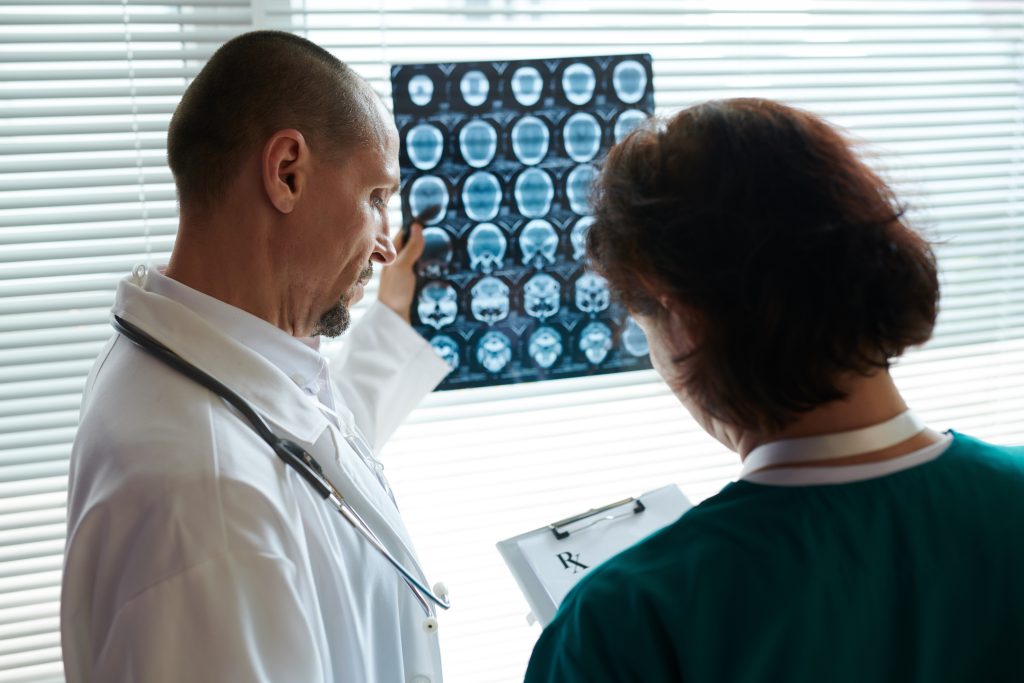
Detecting the symptoms of frontal lobe damage requires a comprehensive clinical and neuropsychological evaluation. The main assessment tools include:
-
Brain imaging: Magnetic resonance imaging (MRI) or computed tomography (CT).
-
Neuropsychological testing: To assess memory, judgment, attention, language, and behavior.
-
Functional assessment: Direct observation of behavior in real or simulated situations.
Early diagnosis allows rehabilitation to begin as soon as possible and helps prevent symptom progression.
Treatment and rehabilitation
There is no single cure for all symptoms of frontal lobe damage, but treatment is typically multidisciplinary:
-
Neuropsychology: Interventions aimed at improving attention, memory, and executive functioning.
-
Psychotherapy: In cases of anxiety, depression, or reduced motivation.
-
Occupational therapy: To restore functional and practical skills.
-
Speech therapy: In cases of language impairment.
-
Pharmacological treatment: Antidepressants, antipsychotics, or psychostimulants depending on the clinical presentation.
The family and social environment also plays a key role, particularly in reinforcing routines and boundaries in cases of impulsivity or disinhibition.
Are the symptoms reversible?
The progression of symptoms of frontal lobe damage depends on several factors:
-
The underlying cause of the damage (trauma, stroke, tumor, etc.).
-
The extent of the lesion.
-
The patient’s age and overall health status.
-
The timeliness of rehabilitation initiation.
In many cases, significant improvements can be achieved, although some sequelae may be permanent.
Conclusion
Understanding the symptoms of frontal lobe damage is essential for the early detection of neurological alterations that profoundly affect behavior, personality, and daily functioning. From subtle changes in decision-making to severe impairments in language and motor function, the frontal lobe plays a role in nearly everything that defines human behavior. A comprehensive assessment and early intervention are critical to improving prognosis and quality of life.
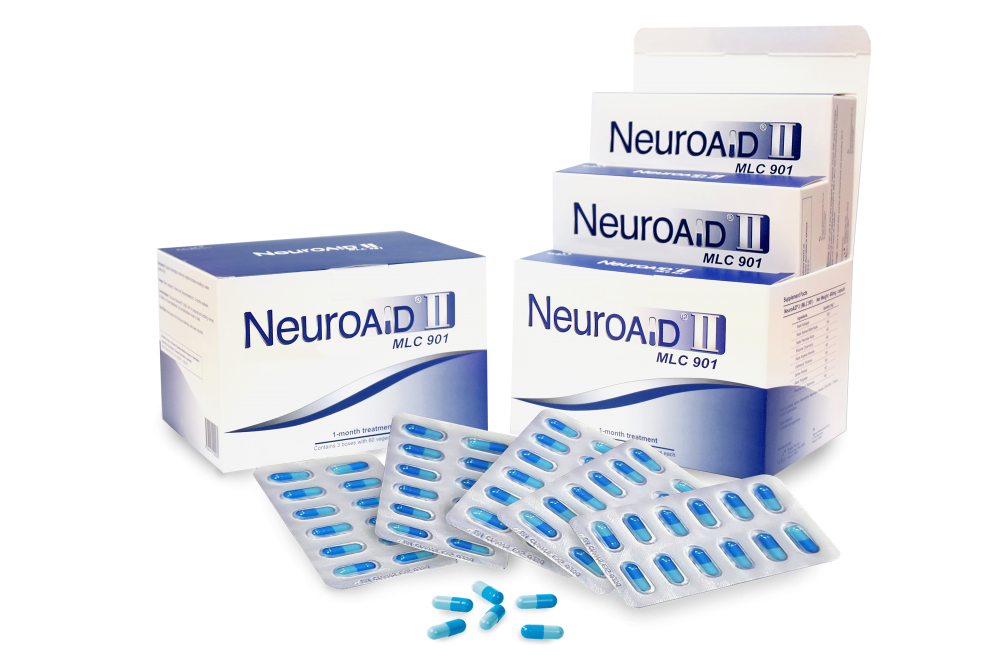
If you would like more information about NeuroAiD II, please fill out this contact form.
"*" indicates required fields


