



The Tinetti Scale, also known as the Performance-Oriented Mobility Assessment (POMA), is a clinical tool used to assess a person’s balance and gait. Its primary purpose is to identify the risk of falls and evaluate how mobility impairments may affect independence in activities of daily living.
Although it is frequently used in older adults, the Tinetti Scale is also used in the assessment of patients who have experienced a stroke, neurological disorders, or other conditions affecting motor control.
What is the Tinetti Scale?
The Tinetti Scale is a functional assessment developed by Dr. Mary Tinetti to evaluate two fundamental aspects of mobility: balance and gait.
Through a series of simple tasks, a healthcare professional observes how the patient moves and identifies potential impairments that may increase the risk of falls.
Based on this information, the scale provides an overall assessment of stability and safety during walking.
What does the Tinetti Scale assess?
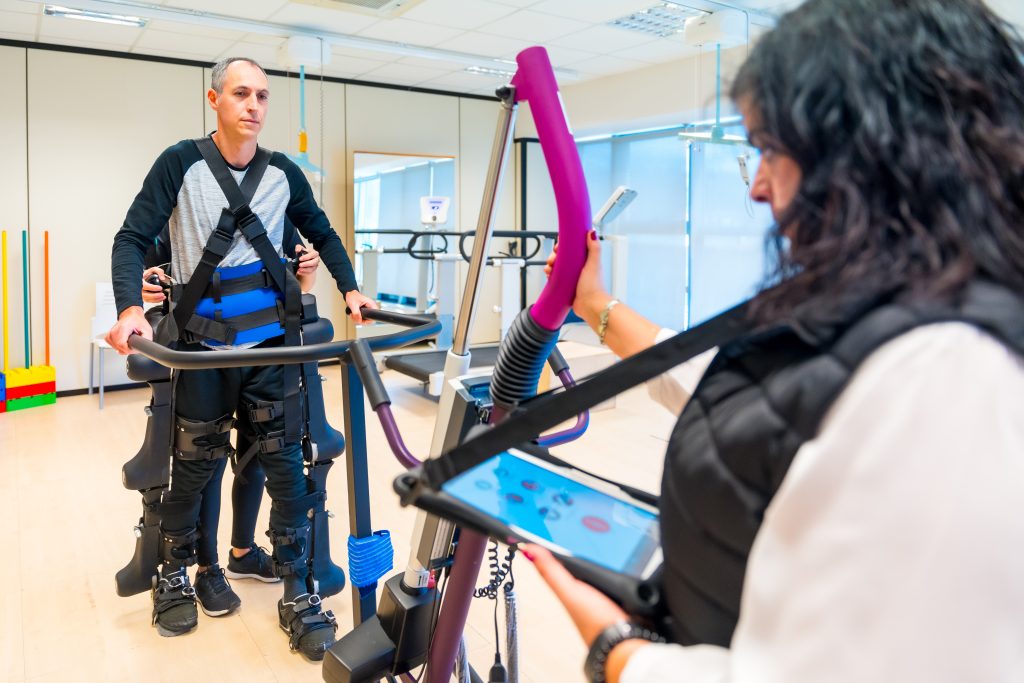
The assessment is divided into two main sections.
Balance assessment
This section assesses different aspects of stability, including:
- Maintaining a seated position.
- Rising from a chair.
- Standing.
- Maintaining balance with the eyes open.
- Regaining stability after a slight push.
- Turning around.
- Sitting down in a controlled manner.
Gait assessment
During gait assessment, aspects such as the following are observed:
- Gait initiation.
- Step length.
- Step height.
- Symmetry between both legs.
- Continuity of movement.
- Direction of gait.
- Stability while walking.
- Trunk position.
Each of these elements helps identify abnormalities that may go unnoticed during a brief observation.
How is it scored?
Each section is scored according to how the patient performs the different tasks.
The complete scale has a maximum score of 28 points, distributed as follows:
- 16 points for balance.
- 12 points for gait.
The higher the score, the better the patient’s stability and mobility.
How are the results interpreted?
The total score provides an estimate of the risk of falls.
In general:
- 25 to 28 points: low risk of falls.
- 19 to 24 points: moderate risk of falls.
- Below 19 points: high risk of falls.
These values are intended as a general guide and should always be interpreted alongside the patient’s clinical assessment.
Why is it used after a stroke?
After a stroke, balance impairments, muscle weakness, coordination problems, and difficulty walking are common.
The Tinetti Scale helps assess how these impairments affect mobility and facilitates monitoring of the patient’s progress during recovery.
By repeating the assessment at different stages, healthcare professionals can determine whether balance and gait are improving.
How does it differ from the Berg Balance Scale?
Both the Tinetti Scale and the Berg Balance Scale assess balance, but there are some differences between them.
The Berg Balance Scale focuses primarily on balance during various functional activities and is widely used in neurological rehabilitation.
In addition to balance, the Tinetti Scale includes a substantial assessment of gait, making it particularly useful when the aim is to evaluate the risk of falls associated with walking.
In many cases, both tools are used together to provide a more comprehensive assessment.
Who uses the Tinetti Scale?
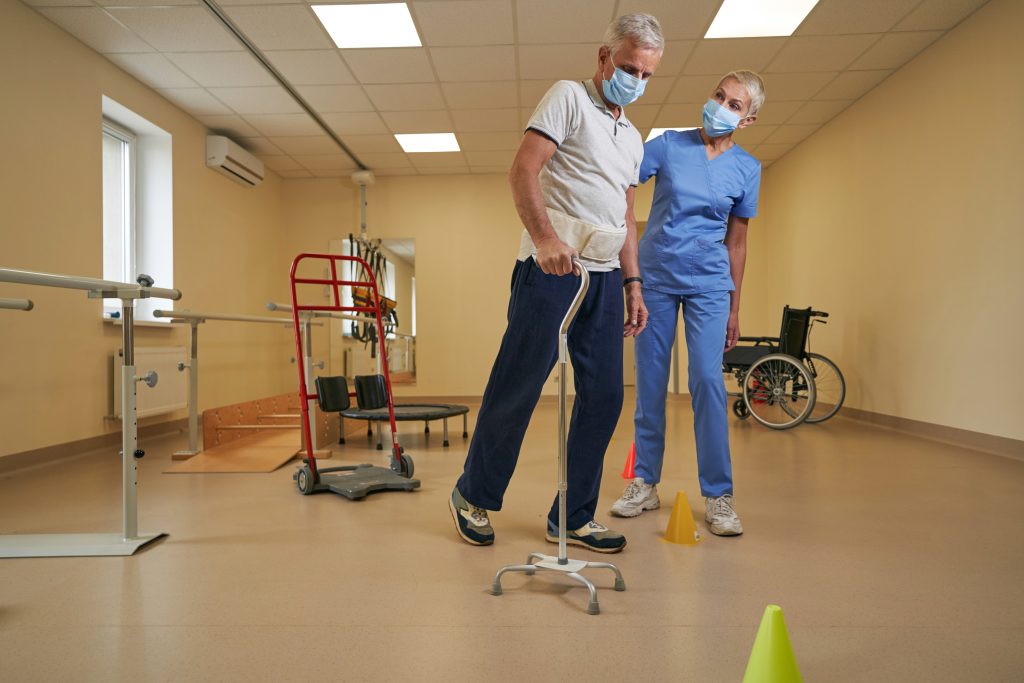
The Tinetti Scale is commonly used in clinical practice across various healthcare settings.
Healthcare professionals who frequently use it include:
- Physiotherapists.
- Physical medicine and rehabilitation physicians.
- Neurologists.
- Geriatricians.
- Occupational therapists.
Its use allows healthcare professionals to document the patient’s progress using an objective and reproducible scoring system.
Does it have limitations?
Although it is a very useful tool for assessing mobility, the Tinetti Scale does not evaluate other important aspects such as muscle strength, sensation, cognitive function, or the ability to perform activities of daily living.
In addition, external factors, such as the use of walking aids or certain medical conditions, may also influence the test results.
For this reason, it is often combined with other functional assessment scales to provide a more comprehensive evaluation of the patient’s condition.
Why does it remain a widely used assessment tool?
The Tinetti Scale is widely used because it is quick, simple, and easy to interpret. It provides a structured assessment of two aspects that are essential for a person’s independence: balance and gait.
Its ability to identify the risk of falls and monitor functional progress has made it one of the most commonly used assessment tools in rehabilitation, neurology, and geriatrics.
Conclusion
The Tinetti Scale is a clinical tool designed to assess balance and gait, two essential aspects of mobility. Its score helps estimate the risk of falls and determine a person’s level of functional stability, particularly after a stroke or other neurological conditions. Due to its simplicity and clinical usefulness, it remains one of the most widely used assessment scales for evaluating mobility and monitoring progress during rehabilitation.
If you need information about NeuroAiD II, please fill out this contact form.
"*" indicates required fields


