




The FAC Scale (Functional Ambulation Categories) is a clinical tool used to assess a person’s ability to walk. Its primary purpose is to determine the level of independence during ambulation and classify the amount of assistance a patient requires to move safely.
This scale is frequently used in people who have experienced a stroke, spinal cord injury, traumatic brain injury, and other neurological conditions that affect mobility. Its simplicity and rapid administration have made it one of the most widely used assessment tools in rehabilitation.
What is the FAC Scale?
The FAC Scale, which stands for Functional Ambulation Categories, classifies walking ability according to the level of assistance a person requires.
Unlike other assessments that evaluate specific aspects such as balance or muscle strength, the FAC focuses on one specific question: How much assistance does the patient need to walk?
This classification allows healthcare professionals to determine the patient’s functional walking ability and monitor their progress throughout the rehabilitation process.
What does the FAC Scale assess?
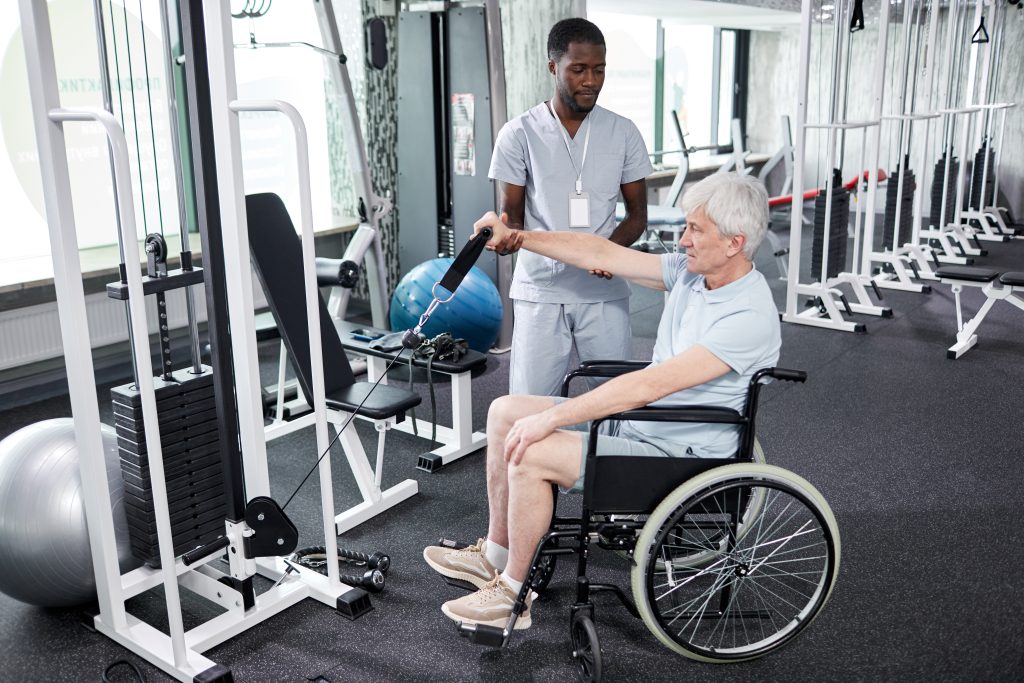
The FAC assesses a person’s ability to walk in different situations, determining whether the patient can walk independently or requires physical assistance or supervision.
During the assessment, factors such as the following are considered:
- Ability to initiate walking.
- Need for physical assistance.
- Level of supervision required.
- Safety during ambulation.
- Independence while walking.
The test does not measure walking speed, endurance, or quality of movement, but rather the degree of independence in walking.
How is it scored?
The FAC Scale uses a 0-to-5 classification system, with each level representing a greater degree of independence in walking.
FAC 0
The person is unable to walk or requires assistance from two people to ambulate.
FAC 1
The person can walk only with continuous physical assistance from another person.
FAC 2
The person requires light physical contact to maintain balance or coordinate walking.
FAC 3
The person can walk without physical assistance but requires supervision or verbal guidance for safety.
FAC 4
The person can walk independently on level surfaces but may experience difficulty with stairs, uneven terrain, or more challenging environments.
FAC 5
The person can walk completely independently in any environment, including on stairs and uneven surfaces.
What does the score mean?
The score reflects the level of independence during walking.
Lower scores indicate greater dependence and a greater need for physical assistance, while higher scores correspond to individuals who are able to walk independently.
The scale is particularly useful for monitoring the patient’s functional progress during rehabilitation.
Why is it used after a stroke?
Gait impairments are among the most common long-term effects of stroke.
Muscle weakness, spasticity, balance problems, or loss of coordination can make walking difficult and increase the risk of falls.
The FAC Scale helps determine the patient’s level of independence in walking and facilitates the monitoring of changes throughout the recovery process.
Who uses the FAC Scale?
The assessment is routinely used in many rehabilitation settings.
Healthcare professionals who commonly use the FAC Scale include:
- Physiotherapists.
- Physical medicine and rehabilitation physicians.
- Neurologists.
- Occupational therapists.
- Specialized neurological rehabilitation teams.
Its use provides a rapid and easily reproducible assessment of walking ability.
How does it differ from other scales?
Several tools are available to assess mobility, although each evaluates different aspects of function.
For example, the Berg Balance Scale focuses on balance, while the Tinetti Scale assesses balance, gait, and the risk of falls.
The Barthel Index evaluates the ability to perform basic activities of daily living, while the Fugl-Meyer Assessment evaluates motor and sensory function after a stroke.
In contrast, the FAC Scale is specifically designed to classify the level of independence in walking according to the amount of assistance the patient requires.
Does it have limitations?
Although the FAC is a very useful tool for assessing functional walking ability, it does not provide detailed information about gait quality, walking speed, physical endurance, or movement patterns.
For this reason, it is often used alongside other functional assessments when conducting a comprehensive evaluation of mobility.
Why is it still widely used?
The FAC Scale is widely used because it is quick, simple, and easy to interpret. Within just a few minutes, it provides an indication of the patient’s level of independence in walking and establishes a baseline for monitoring progress over time.
Its clinical usefulness and ease of administration have led to its widespread adoption in neurological rehabilitation programs worldwide.
Conclusion
The FAC Scale (Functional Ambulation Categories) is a clinical tool designed to classify a person’s walking ability according to the level of assistance required. Its scoring system, ranging from 0 to 5, assesses the degree of independence during ambulation and helps monitor functional progress in patients with stroke and other neurological conditions. Due to its simplicity and clinical usefulness, it remains one of the most widely used scales for assessing walking ability in rehabilitation.
If you would like more information about NeuroAiD II, please complete this contact form.
"*" indicates required fields


