
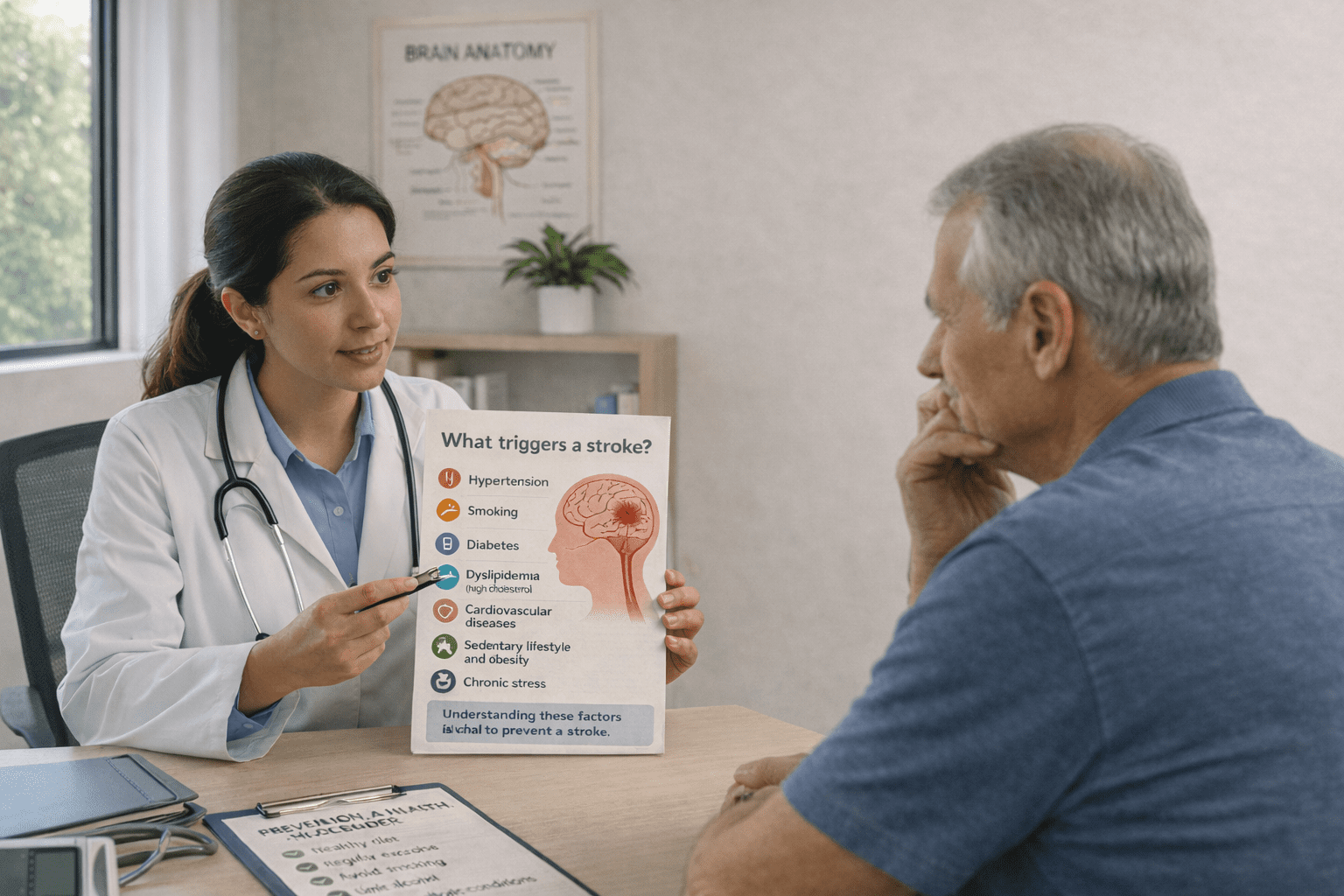

A stroke (cerebrovascular accident, CVA), also known as a stroke or brain hemorrhage, is a medical emergency that can have devastating consequences. It occurs when blood flow to the brain is interrupted, preventing brain cells from receiving oxygen and nutrients. However, beyond the event itself, it is essential to ask: what triggers a stroke? To understand this, multiple factors must be considered, both modifiable and non-modifiable, which act as underlying triggers of this serious health condition.
Types of stroke and their immediate causes
Before exploring in depth what triggers a stroke, it is important to understand its main types:
-
Ischemic stroke: accounts for approximately 85% of cases. It is caused by a clot that obstructs a cerebral artery.
-
Hemorrhagic stroke: results from the rupture of a blood vessel in the brain, leading to bleeding within the brain tissue.
-
Transient ischemic attack (TIA): a “mini-stroke” that occurs when there is a temporary interruption of cerebral blood flow.
Each of these types has distinct immediate causes, but they all share common triggering factors that increase their likelihood.
Risk factors: what triggers a stroke?
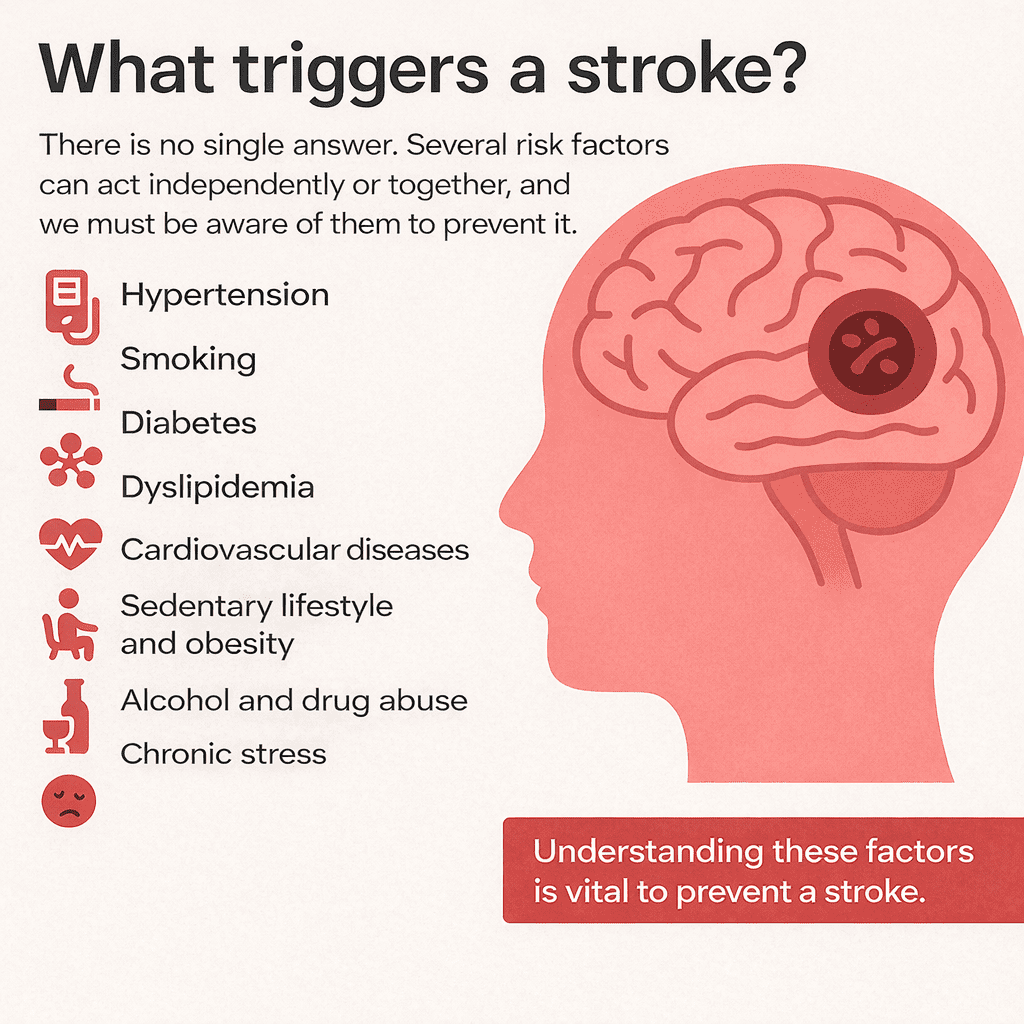
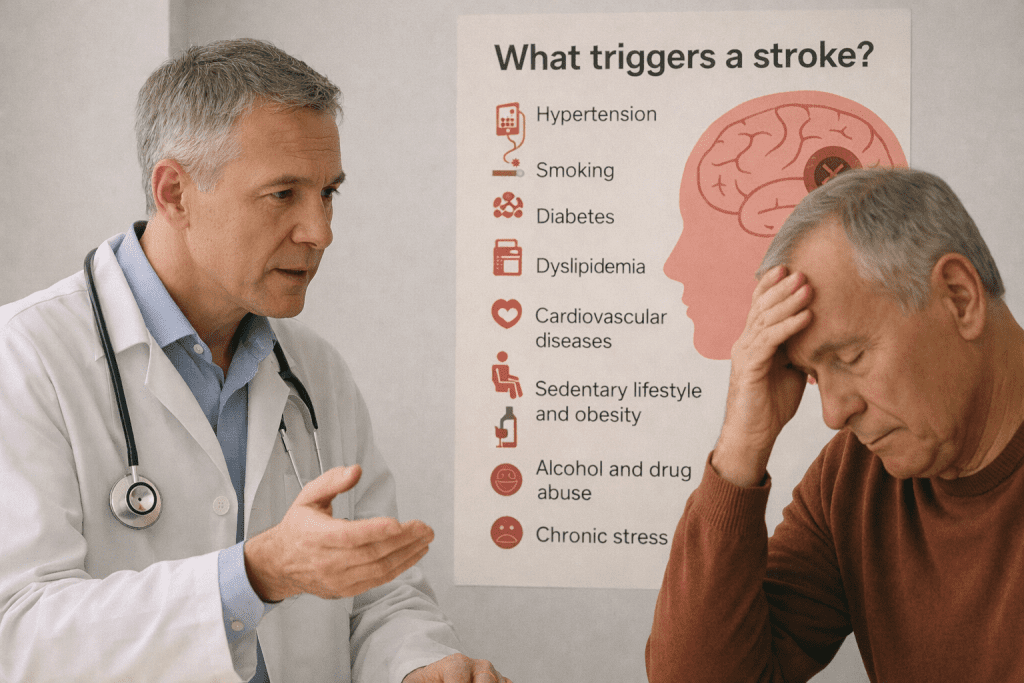
There are multiple factors that can explain what triggers a stroke. The most important ones are outlined below:
1. Hypertension
It is the most significant risk factor in the majority of cases. High blood pressure can damage the walls of blood vessels, making them more prone to rupture or clot formation. In fact, numerous studies indicate that poorly controlled hypertension is the primary factor triggering hemorrhagic stroke.
2. Smoking
Cigarette smoking damages the cardiovascular system, promotes arterial stiffness, and increases the risk of clot formation. It is a major factor that triggers both ischemic and hemorrhagic stroke, while also amplifying other risk factors.
3. Diabetes mellitus
Individuals with diabetes are more likely to develop vascular disease. Elevated blood glucose levels damage blood vessels, which can facilitate thrombotic events. Therefore, it is another key factor that triggers a stroke.
4. Dyslipidemia (high cholesterol)
Elevated levels of LDL cholesterol and low levels of HDL promote atherosclerosis, a condition that hardens and narrows the arteries. When a cerebral artery becomes blocked by fatty plaques, it clearly explains what triggers an ischemic stroke.
5. Cardiovascular diseases
Conditions such as atrial fibrillation increase the risk of clot formation in the heart, which can subsequently travel to the brain. This is a classic mechanism that triggers an embolic stroke.
6. Sedentary lifestyle and obesity
Lack of physical activity and excess body weight are associated with multiple risk factors, such as hypertension, diabetes, and dyslipidemia. Therefore, they are indirect but highly influential conditions in understanding what triggers a stroke.
7. Alcohol and substance abuse
Excessive alcohol consumption can increase blood pressure and induce arrhythmias. Meanwhile, substances such as cocaine or amphetamines can cause severe vascular spasms. In these cases, the answer to what triggers a stroke is clear: an acute and extreme disruption of the vascular system.
8. Chronic stress
Stress not only affects emotional well-being, but also has physiological effects such as sustained elevation of blood pressure, systemic inflammation, and disruption of cardiac rhythm. All these factors converge in a cascade that can trigger a stroke.
Non-modifiable factors
In addition to the above, there are factors that cannot be modified but help determine what triggers a stroke:
-
Age: the risk increases significantly after the age of 55.
-
Sex: men have a higher incidence, although women tend to have a poorer prognosis.
-
Family history: having first-degree relatives who have experienced a stroke increases the risk.
-
Ethnicity: certain groups, such as African Americans or Hispanics, have higher stroke incidence rates.
Early symptoms and warning signs
Recognizing the signs of a stroke can make the difference between life and death. The most common warning signs include:
-
Sudden loss of strength or sensation in the face, arm, or leg, especially on one side of the body
-
Difficulty speaking or understanding language
-
Visual disturbances in one or both eyes
-
Dizziness, loss of balance, or impaired coordination
-
Severe headache with no apparent cause
Early recognition of these signs can help prevent the progression of what triggers a stroke, particularly in the case of a transient ischemic attack.
Prevention: how to avoid what triggers a stroke
Although some factors are unavoidable, many of the causes that trigger a stroke can be prevented through lifestyle modifications and appropriate medical management:
-
Control blood pressure
-
Follow a diet low in sodium, saturated fats, and sugars
-
Engage in regular physical activity
-
Avoid tobacco use and excessive alcohol consumption
-
Manage chronic conditions such as diabetes and high cholesterol
-
Undergo regular medical check-ups
Conclusion: understanding what triggers a stroke is essential for prevention
In summary, the question of what triggers a stroke does not have a single answer, but rather involves a combination of risk factors that may act independently or synergistically. From chronic medical conditions to unhealthy lifestyle habits, all contribute to creating a favorable environment for a cerebrovascular event. Therefore, understanding these factors not only supports prevention, but also enables early intervention and improves the quality of life for millions of individuals.
If you would like more information about NeuroAiD II, please fill out this contact form.
"*" indicates required fields


