



When we talk about conditions that compromise the health of the brain, the heart, or even the entire organism, a critical condition arises that requires special attention: anoxia. Understanding what anoxia is is essential to prevent risk situations, respond appropriately in emergency cases, and be aware of its short- and long-term consequences.
What is anoxia?
Anoxia is a severe medical condition that occurs when oxygen fails to reach the body’s tissues. It represents an extreme form of hypoxia, which refers to a partial reduction in oxygen supply. In the case of anoxia, the deprivation is complete. When a person experiences anoxia, cells are unable to perform their basic functions, which can lead to irreversible damage in vital organs such as the brain, heart, or lungs.
Understanding exactly what anoxia is also involves recognizing that its effects can be immediate and devastating. Oxygen is essential for cellular life, and a complete interruption in its supply can lead to cell death within minutes.
Types of anoxia
To better understand what anoxia is, it is important to be familiar with its different forms, as each type has specific causes and distinct consequences.
-
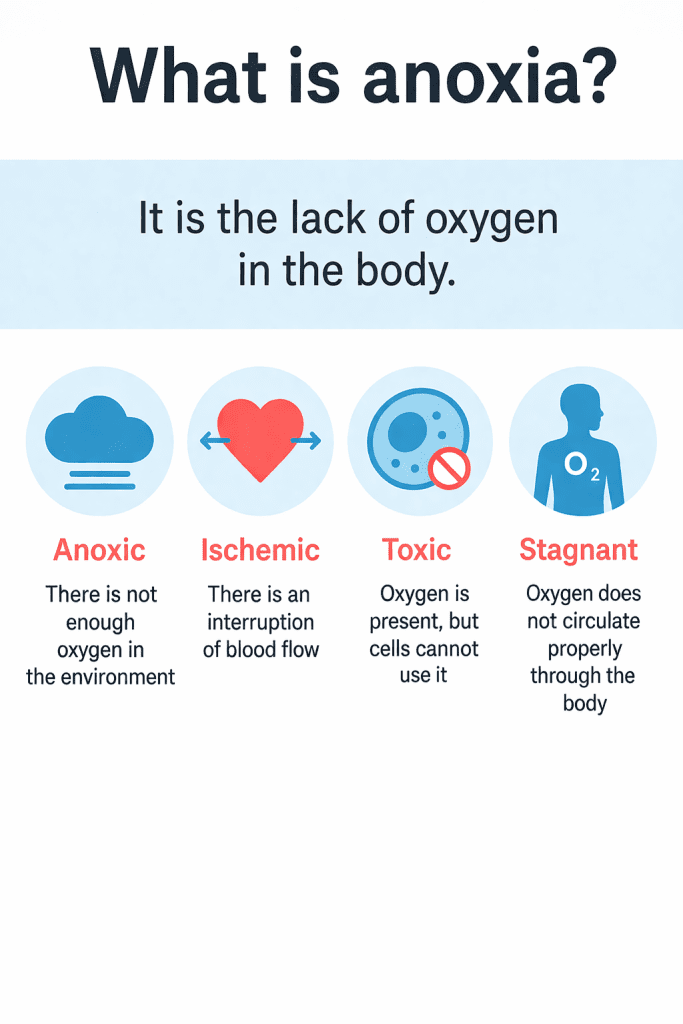
Anoxic anoxia: This occurs when the air we breathe contains an insufficient amount of oxygen. It can take place at high altitudes or in polluted environments.
-
Ischemic anoxia: This form occurs when the blood flow responsible for transporting oxygen is interrupted. It is commonly observed in events such as myocardial infarction or stroke.
-
Toxic anoxia: In this case, oxygen is present, but cells are unable to utilize it due to the action of toxic substances, such as carbon monoxide or certain poisons.
-
Stagnant anoxia: This results from inadequate blood circulation, as seen in conditions such as shock or heart failure.
Each of these forms helps to further define what anoxia is, as it demonstrates that it is not always due to a simple lack of air, but rather to a chain of factors affecting the transport and utilization of oxygen.
Causes of anoxia
There are multiple causes that can explain what anoxia is and why it occurs:
-
Cardiac arrest: One of the most common causes, as the heart stops pumping oxygenated blood throughout the body.
-
Drowning: The absence of air and pulmonary collapse completely interrupt oxygenation.
-
Airway obstruction due to foreign bodies: Obstruction of the airways prevents the passage of oxygen.
-
Toxic exposure: Carbon monoxide, for example, binds to hemoglobin, preventing the transport of oxygen.
-
Surgical complications: In procedures where cerebral blood flow is interrupted.
-
Severe pulmonary conditions, such as extensive pneumonia or pulmonary embolism.
Understanding what anoxia is also involves recognizing its triggers, many of which are preventable through education, appropriate equipment, and rapid medical response.
Symptoms of anoxia
The symptoms of anoxia may vary depending on the duration and the location of the damage. Understanding what anoxia is involves being aware of these signs:
-
Mental confusion or loss of consciousness
-
Severe dizziness
-
Shortness of breath
-
Seizures
-
Dilated pupils
-
Loss of motor control
-
Respiratory or cardiac arrest
When the brain is affected, even for just a few minutes, symptoms can rapidly progress to a vegetative state or death.
Consequences of cerebral anoxia
Among the most dangerous forms of this condition is cerebral anoxia. Understanding what anoxia is in the context of the brain helps to illustrate how life-threatening it can be.
The brain can tolerate approximately 3 to 5 minutes without oxygen before irreversible damage begins. Some of the consequences include:
-
Memory loss
-
Speech impairment
-
Partial or complete paralysis
-
Personality or behavioral changes
-
Impaired ability to reason or solve problems
-
Prolonged comatose states
Even when oxygen supply is restored, the damage already sustained may not be reversible.
Diagnosis
The diagnosis of anoxia requires a rapid and accurate assessment. Understanding what anoxia is helps healthcare professionals identify it through tests such as:
-
Computed tomography (CT scan)
-
Magnetic resonance imaging (MRI)
-
Blood gas analysis
-
Electroencephalogram (EEG)
-
Neurological assessment and reflex testing
Early diagnosis is critical to minimizing damage, especially in cases of cerebral anoxia.
Treatment

The treatment of anoxia depends on its underlying cause, but it always requires urgent intervention. Understanding what anoxia is involves recognizing that every second counts.
-
Oxygen therapy: Immediate administration of 100% oxygen to restore normal blood oxygen levels.
-
Life support: Cardiopulmonary resuscitation (CPR), intubation, and mechanical ventilation if necessary.
-
Brain injury management: In severe cases, therapeutic hypothermia may be induced to reduce cerebral inflammation.
-
Specific antidotes: As in cases of carbon monoxide poisoning.
-
Rehabilitation: Physical, cognitive, and occupational therapies to restore motor and mental functions following the episode.
Subsequent treatment is tailored to the extent of injury caused by anoxia in the patient.
Prevention
Understanding what anoxia is also involves knowing how to prevent it. Key preventive measures include:
-
Install carbon monoxide detectors at home
-
Supervise children in pools or bathtubs
-
Avoid enclosed environments with poor ventilation
-
Strict medical monitoring in patients with cardiac or pulmonary conditions
-
Proper use of diving and oxygen equipment in high-risk activities
Prevention is the most effective tool against a condition with such severe consequences.
Rehabilitation and prognosis
The prognosis of a person who has experienced anoxia depends on several factors:
-
Duration of oxygen deprivation
-
Patient age
-
Overall health status
-
Timeliness of medical intervention
Some patients recover fully, while others require long-term care. Neurological rehabilitation may last for months or years, and full recovery is not always achieved.
Conclusion
Understanding what anoxia is goes beyond a simple medical definition. It is a critical condition that can change a person’s life within minutes, especially when the brain is affected. Identifying its causes, preventing its risk factors, and knowing how to respond in an emergency are essential to protect the life and functional outcomes of those affected.
Understanding what anoxia is can make the difference between an effective response and a tragic outcome. Education and timely medical care are our best tools against this silent threat.
If you would like more information about NeuroAiD II, please fill out this contact form.
"*" indicates required fields


