



The difference between aphasia and apraxia is fundamental to understanding how the brain can affect our communication abilities and motor execution. Both disorders may occur after brain damage, especially following a stroke, but they affect different functions: aphasia is related to language, while apraxia involves difficulties in planning and executing voluntary movements. Understanding this distinction is not only crucial for healthcare professionals, but also for family members, caregivers, and individuals undergoing rehabilitation.
What is aphasia?
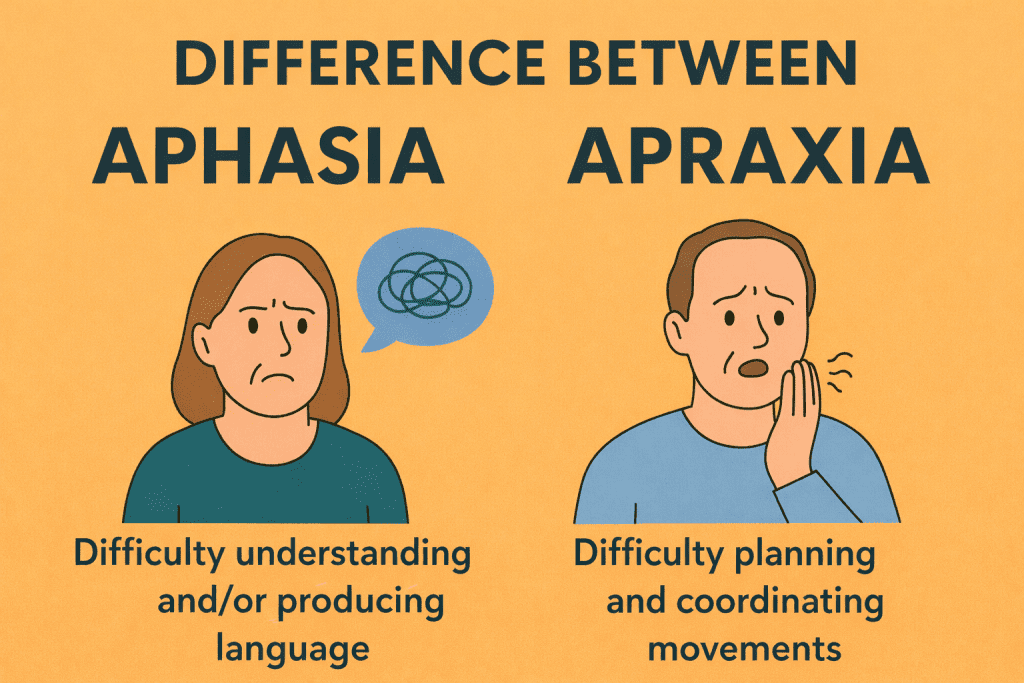
Aphasia is an acquired language disorder that affects a person’s ability to understand, produce, or correctly use spoken or written language. It generally occurs due to damage to the left hemisphere of the brain, which contains the areas responsible for language processing, such as Broca’s area and Wernicke’s area.
Types of aphasia
There are several types of aphasia, depending on which part of the brain is affected:
-
Broca’s aphasia (non-fluent): difficulty speaking fluently, but with relatively preserved comprehension.
-
Wernicke’s aphasia (fluent): fluent but incoherent speech, with impaired comprehension.
-
Global aphasia: severe impairment of all language functions.
-
Anomic aphasia: difficulty finding words, especially nouns.
In all cases, aphasia involves a problem with language as a symbolic system, not with the muscles involved in speech.
What is apraxia?
Apraxia, on the other hand, is a motor disorder of neurological origin that affects the ability to plan and execute previously learned voluntary movements, even when there is no muscle paralysis or sensory impairment to explain it. There are several types of apraxia, but when it is related to speech, it is specifically referred to as apraxia of speech or verbal apraxia.
Apraxia of speech
Apraxia of speech involves difficulty coordinating the muscle movements required for speech, even though the person knows what they want to say and the involved muscles function properly. This leads to:
-
Errors in the pronunciation of sounds or syllables.
-
Difficulty initiating words.
-
Slow speech and visible effort when speaking.
-
Inconsistency in speech errors (a word may be produced correctly once and incorrectly another time).
This condition is especially frustrating, as the person has mental clarity, but the message gets “stuck” when trying to be expressed.
Main differences between aphasia and apraxia
The difference between aphasia and apraxia lies in which part of the communication process is affected:
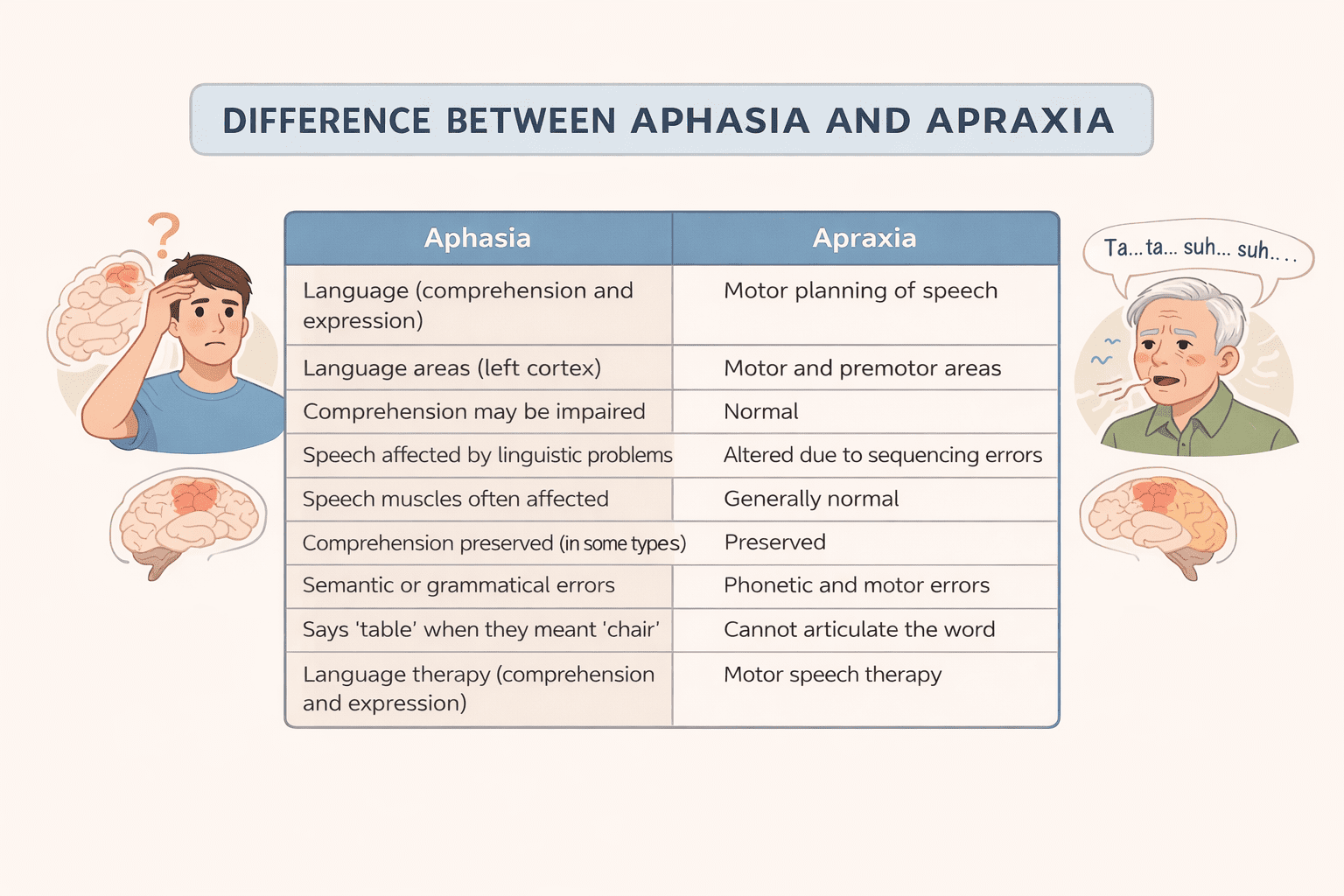
This table clearly summarizes the difference between aphasia and apraxia, allowing for better clinical and therapeutic understanding.
Can aphasia and apraxia coexist?
Yes. In fact, it is common for a person to present both aphasia and apraxia of speech at the same time, especially after a large stroke in the left hemisphere. In these cases, the patient faces a double barrier: difficulties in language construction and problems executing the movements required for speech.
Identifying both conditions is crucial, as treatment must address them separately and in a specific manner. For example, a patient with Broca’s aphasia and verbal apraxia will need to work on both language formulation and the sequencing of sounds.
Diagnosis
The diagnosis of aphasia and apraxia is carried out by an interdisciplinary team that may include neurologists, speech-language therapists, speech pathologists, neuropsychologists, and occupational therapists. The following are used:
-
Language assessments: comprehension, repetition, naming, reading, and writing.
-
Speech motor assessments: articulation of sounds, motor coordination, and the ability to repeat phonetic sequences.
-
Neuroimaging studies: magnetic resonance imaging or computed tomography.
Clearly distinguishing the difference between aphasia and apraxia during the initial assessment helps avoid treatment errors and improves the patient’s functional prognosis.
Treatment
Although both disorders require speech-language therapy, the approaches are different.
In aphasia:
-
Exercises to improve auditory and reading comprehension.
-
Practice in sentence construction and vocabulary use.
-
Support in writing and in alternative communication systems.
In apraxia:
-
Repetition and rhythm techniques to reprogram speech movements.
-
Visual and gestural support (use of images, signs).
-
Intensive training with auditory feedback.
In both cases, treatment must be personalized, frequent, and progressive. In addition, family support is essential to reinforce therapeutic gains in the daily environment.
Both aphasia and apraxia have a significant impact on the quality of life of those who experience them. They can lead to isolation, frustration, anxiety, and depression. It is essential to create supportive, pressure-free communication environments where the patient feels heard and valued.
The difference between aphasia and apraxia is also important for the patient’s environment: a person with aphasia may not understand what is being said to them, while a person with apraxia understands perfectly but cannot respond verbally. This distinction radically changes the way of communicating with them.
Conclusion
Understanding the difference between aphasia and apraxia allows not only for a more accurate diagnosis, but also for more effective treatment. While aphasia affects language itself, apraxia of speech interferes with the ability to execute the movements necessary for speaking, even when language is preserved.
Both disorders require specialized care, understanding from the patient’s environment, and differentiated therapeutic strategies. Recognizing these differences improves clinical intervention and helps restore communication and autonomy in those whose ability to express themselves has been affected.
If you need information about NeuroAiD II, you can fill out this contact form.
"*" indicates required fields


