



Ischemic hypoxia is one of the most severe neurological conditions a human can experience, as it involves a critical lack of oxygen in the brain caused by a reduction or interruption of blood flow. This disorder can have devastating consequences for the central nervous system, especially if not treated promptly.
What is ischemic hypoxia?
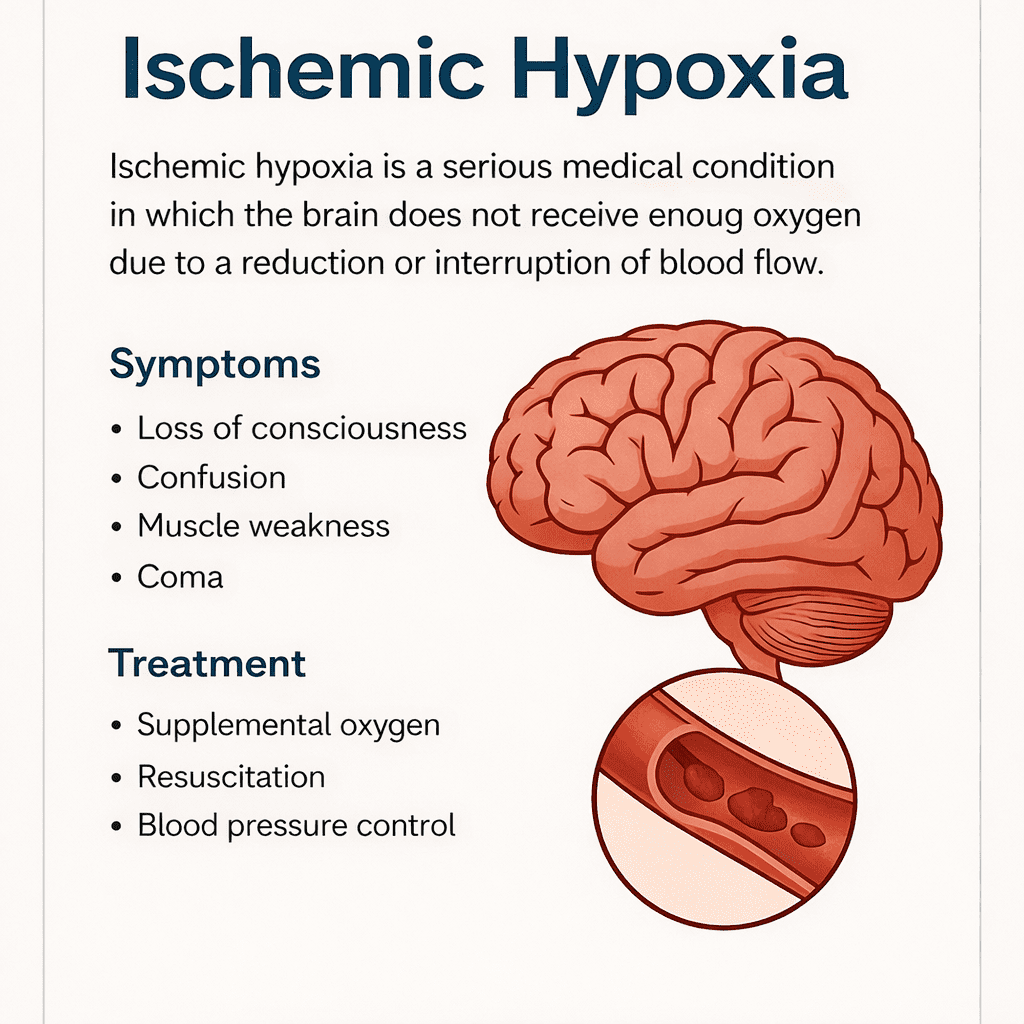
Ischemic hypoxia occurs when the brain does not receive sufficient oxygen because the blood flow that delivers it is significantly reduced or interrupted. The term combines two important medical concepts: hypoxia, which refers to a lack of oxygen, and ischemia, which indicates a deficiency in blood supply to the tissues.
When neurons do not receive oxygen, they begin to undergo functional deterioration within minutes. If ischemic hypoxia persists for more than five minutes, brain cells start to die irreversibly, which can lead to permanent neurological sequelae or even death.
Most common causes of ischemic hypoxia
The causes of ischemic hypoxia are diverse, but they share a common mechanism: the interruption or reduction of cerebral blood flow. Among the most frequent causes are:
-
Cardiac arrest: It is the most common cause. When the heart stops beating, the blood supply to the brain also ceases, resulting in immediate ischemic hypoxia.
-
Ischemic stroke: A blood clot can block a cerebral artery, causing a sudden interruption of blood flow and oxygen supply to specific areas of the brain.
-
Asphyxia: It may occur due to drowning, strangulation, smoke inhalation, or airway obstruction by foreign bodies. Although the heart may continue beating, the lack of environmental oxygen can lead to ischemic hypoxia if prolonged.
-
Perinatal complications: In newborns, ischemic hypoxia may occur if oxygen supply is interrupted during labor, which can lead to hypoxic-ischemic encephalopathy.
-
Severe shock or prolonged hypotension: A drastic drop in blood pressure can reduce cerebral perfusion, leading to this type of hypoxia.
-
Severe traumatic brain injury: When cerebral edema or internal hemorrhage is present, cerebral blood flow may be compromised.

Symptoms of ischemic hypoxia
The clinical presentation of ischemic hypoxia depends on several factors, such as the duration of the event, the affected brain region, and the speed at which treatment is initiated. However, the most common symptoms include:
-
Sudden loss of consciousness
-
Confusion and disorientation
-
Difficulty speaking or understanding language
-
Loss of motor coordination
-
Seizures
-
Dilated or non-reactive pupils to light
-
Shallow or irregular breathing
-
Loss of reflexes
-
Coma
In mild cases of ischemic hypoxia, symptoms may be transient, but if the event is prolonged, sequelae may range from partial paralysis to severe cognitive impairment.
Neurological and functional consequences
The brain is अत्यremely sensitive to oxygen deprivation. When ischemic hypoxia occurs, neurons can die within minutes, leading to brain injury that varies depending on the duration of exposure. Among the most common consequences are:
-
Permanent cognitive impairment
-
Memory and concentration deficits
-
Language disorders (aphasia)
-
Motor disabilities (hemiparesis, paralysis)
-
Personality and behavioral changes
-
Chronic seizures or post-hypoxic epilepsy
-
Persistent vegetative state
-
Brain death
Especially in newborns, ischemic hypoxia can irreversibly affect brain development, leading to cerebral palsy, intellectual disability, or pediatric epilepsy.
Diagnosis of ischemic hypoxia
The diagnosis of ischemic hypoxia is usually initiated based on clinical suspicion. A patient who has experienced cardiac arrest, asphyxia, or a stroke is considered high risk. Physicians use various tools to confirm the diagnosis:
-
Computed tomography (CT): allows visualization of potential brain damage.
-
Magnetic resonance imaging (MRI): more precisely detects affected areas.
-
Electroencephalogram (EEG): assesses the electrical activity of the brain.
-
Arterial blood gas analysis: indicates whether systemic hypoxia has occurred.
-
Clinical neurological assessment: evaluates the level of consciousness, reflexes, and pupillary responses.
Treatment of ischemic hypoxia
Ischemic hypoxia is a medical emergency. The sooner oxygen delivery and cerebral blood flow are restored, the better the chances of survival without sequelae.
-
Cardiopulmonary resuscitation (CPR): In cases of cardiac arrest, it is essential to initiate CPR maneuvers as soon as possible.
-
Oxygen therapy: Supplemental oxygen is administered to increase the available concentration in the blood.
-
Blood pressure and glycemic control: essential for patient stabilization.
-
Therapeutic hypothermia: lowering body temperature in post–cardiac arrest patients has been shown to reduce brain injury.
-
Treatment of the underlying cause: In the case of stroke, this may involve thrombolysis; if there is airway obstruction, immediate clearance is performed.
Prognosis and rehabilitation
The prognosis of ischemic hypoxia is highly variable. Some patients achieve complete recovery if the episode was mild or of short duration. In contrast, others develop severe sequelae or progress to irreversible coma. Key prognostic factors include:
-
Duration of oxygen deprivation
-
Patient age
-
Severity of brain injury
-
Timeliness of treatment
-
Presence of pre-existing conditions
Rehabilitation is essential to improve quality of life after ischemic hypoxia. It may include:
-
Physical therapy and occupational therapy
-
Speech and language rehabilitation
-
Neuropsychological treatment
-
Management of epilepsy and other sequelae
-
Family and psychological support
Prevention of ischemic hypoxia
Preventing ischemic hypoxia involves reducing the risk factors that may trigger it. Some useful measures include:
-
Control cardiovascular diseases such as hypertension and arrhythmias
-
Ensure timely treatment of strokes
-
Avoid the use of drugs that depress the respiratory system
-
Ensure proper medical supervision during childbirth
-
Be trained in CPR to respond in emergency situations
Conclusion
Ischemic hypoxia represents one of the most critical medical conditions due to its rapid progression and its potential to cause permanent neurological damage. Timely medical intervention can make the difference between recovery and severe disability. Recognizing its symptoms, acting quickly, and understanding the associated risks are essential to improve prognosis and provide patients with a real opportunity for recovery.
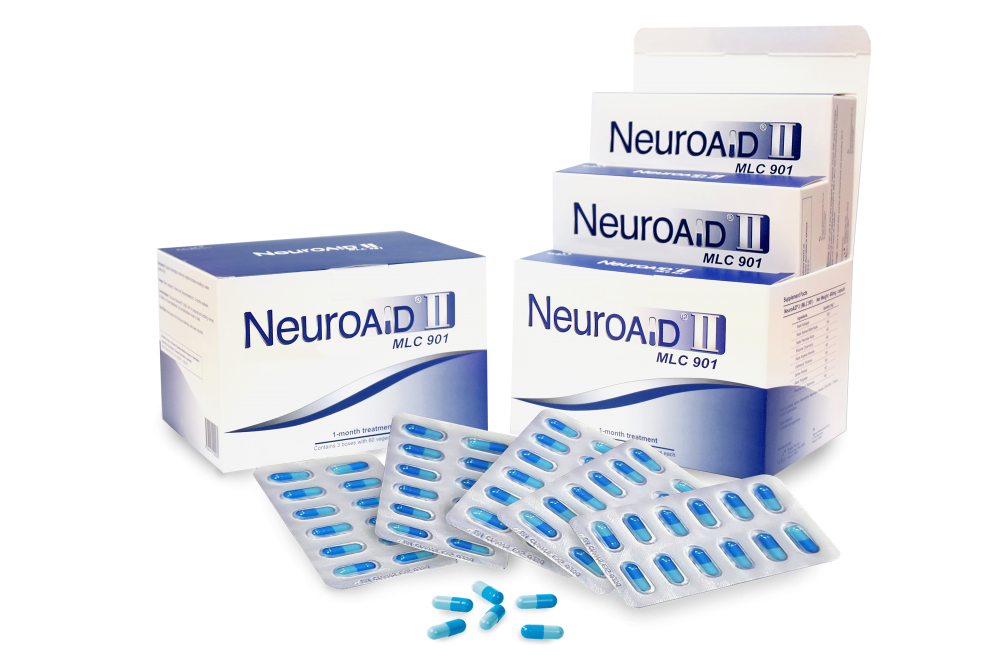
If you would like more information about NeuroAiD II, please fill out this contact form.
"*" indicates required fields


