



Stagnant anoxia is a critical form of anoxia in which oxygen is available in the environment and in the blood, but it does not circulate adequately throughout the body. This type of oxygen deprivation represents a serious threat, as although oxygen is present, tissues do not receive it due to impaired circulation.
What is stagnant anoxia?
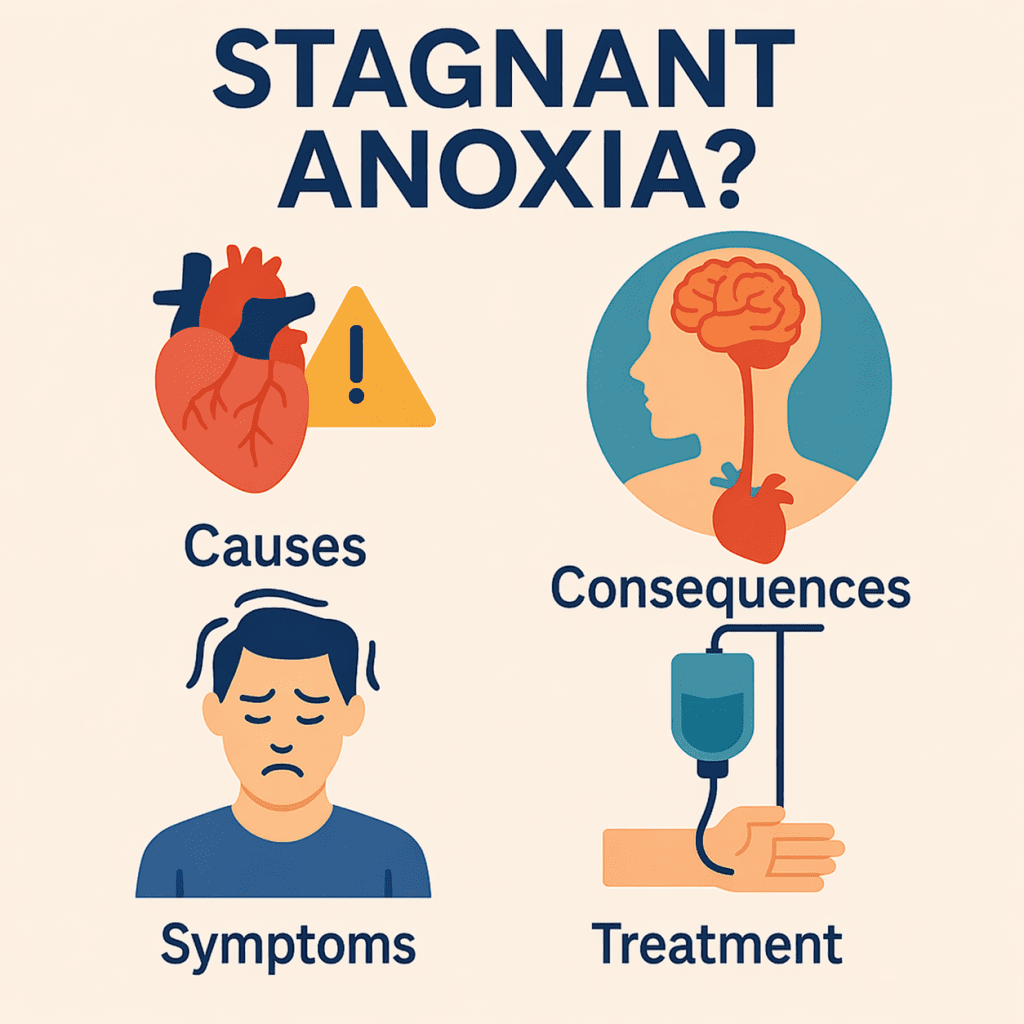
Stagnant anoxia occurs when the oxygen carried by the blood does not effectively reach the tissues due to a reduction or stagnation of blood flow. Unlike other forms of anoxia, the issue here is not the absence of oxygen or the inability to use it, but rather that the blood does not move with sufficient speed or pressure to fulfill its transport function.
It is a potentially reversible condition if treated in time, but it can cause severe and irreversible damage if it persists.
Difference between stagnant anoxia and other forms of anoxia
Difference between stagnant anoxia and other forms of anoxia
-
In anoxic anoxia, oxygen is not present in the inspired air.
-
In ischemic anoxia, there is a complete interruption of blood flow due to arterial obstruction.
-
In toxic anoxia, cells are unable to utilize the available oxygen.
-
In stagnant anoxia, blood circulates, but very slowly or with inadequate flow.
This stagnation is sufficient to prevent optimal oxygen delivery to the tissues, creating conditions similar to severe hypoxia.
Causes of stagnant anoxia
The causes of stagnant anoxia are related to failures in the circulatory system, whether involving the heart, blood vessels, or circulating blood volume. The most common include:
-
Congestive heart failure: the heart does not pump with sufficient force to distribute oxygenated blood.
-
Circulatory shock (septic, hypovolemic, anaphylactic): leads to a drop in blood pressure and stagnation of blood flow.
-
Severe bradycardia or arrhythmias: reduce the heart’s effectiveness as a pump.
-
Cardiac tamponade: the heart becomes compressed and is unable to fill or empty adequately.
-
Coagulopathies or generalized thrombosis: as in cases of disseminated intravascular coagulation (DIC), where blood does not circulate efficiently.
In all these cases, although the blood contains oxygen, its distribution is compromised, which defines the condition of stagnant anoxia.
Which organs are most vulnerable?
The organs with the highest oxygen demand are the first to sustain damage when stagnant anoxia occurs:
-
Brain: neuronal damage can occur within minutes.
-
Kidneys: their filtration function is rapidly impaired.
-
Heart: oxygen deprivation worsens its contractility, exacerbating the condition.
-
Liver and lungs: progressively deteriorate with multiorgan failure.
Symptoms of stagnant anoxia
Symptoms depend on the severity and duration of the stasis, but generally include:
-
Mental confusion, drowsiness, or loss of consciousness
-
Cold, pale, or bluish extremities (peripheral cyanosis)
-
Decreased blood pressure
-
Rapid or shallow breathing
-
Weak or irregular pulse
-
Nausea, generalized weakness, extreme fatigue
-
Cardiac arrest in advanced cases
These signs indicate systemic hypoperfusion and must be addressed immediately to prevent severe sequelae.
Diagnosis of stagnant anoxia
The diagnosis of stagnant anoxia is based on clinical assessment and on functional and imaging studies. Key investigations include:
-
Oxygen saturation (may be normal initially, which can be misleading)
-
Arterial blood gas analysis: to measure the actual oxygen partial pressure in the blood
-
Elevated serum lactate: indicates anaerobic metabolism due to inadequate oxygen delivery to tissues
-
Electrocardiogram (ECG): to detect arrhythmias or signs of cardiac hypoxia
-
Echocardiogram: useful for assessing cardiac output and ventricular function
-
Doppler ultrasound or angiography: to assess blood flow
The key lies in correlating signs of hypoxia with circulatory causes, leading to the suspicion of stagnant anoxia.
Treatment of stagnant anoxia

The primary objective is to restore adequate blood flow so that oxygen can reach the tissues. This may require:
-
Hemodynamic support:
-
Administration of intravenous fluids
-
Use of vasopressor agents such as norepinephrine or dopamine
-
-
Correction of arrhythmias with antiarrhythmic agents or temporary pacing
-
Treatment of the underlying cause (for example, antibiotics in septic shock, epinephrine in anaphylaxis)
-
Intensive oxygen therapy: although it is not the primary cause, it improves overall oxygen availability
-
Mechanical ventilation if there is respiratory compromise
-
Continuous monitoring in the intensive care unit (ICU)
Treatment must be individualized according to the underlying cause and focused on restoring organ perfusion as early as possible.
Prognosis
The prognosis of stagnant anoxia depends on:
-
The speed at which it is identified and treated
-
The duration of circulatory stasis
-
The underlying cause
-
The patient’s age and overall condition
When reversed in a timely manner, many patients recover completely. However, in prolonged cases, there may be neurological sequelae, renal or hepatic damage, or even death.
Prevention
Stagnant anoxia can be prevented in many cases, especially in individuals with a history of cardiac conditions or chronic diseases. Preventive measures include:
-
Strict control of blood pressure and heart rate
-
Timely treatment of severe infections to prevent septic shock
-
Careful monitoring during complex surgical procedures
-
Early resuscitation in cases of cardiac arrest
-
Education on early signs of hemodynamic decompensation
Prevention relies on monitoring, early management of risk factors, and appropriate medical care.
Conclusion
Stagnant anoxia is a severe form of anoxia that occurs when oxygen does not adequately reach the tissues due to impaired blood flow. Although oxygen may be present in the lungs and in the blood, the tissues are affected as if it were absent.
Recognizing its causes, symptoms, and management is critical to enable rapid intervention. The longer effective circulation is delayed, the greater the extent of tissue damage. Medical education, cardiovascular prevention, and prompt response are the most effective strategies to save lives in these cases.
If you would like more information about NeuroAiD II, please fill out this contact form.
"*" indicates required fields


