




Oxygen is essential for cellular life, and its absence or deficiency can trigger serious health problems. In medicine, two closely related terms highlight the difference between hypoxia and anoxia. Although both refer to alterations in tissue oxygenation, their mechanisms, degrees of severity, and clinical consequences are different.

What is hypoxia?
Hypoxia is a condition in which the body’s tissues receive less oxygen than they need to function properly. It does not imply a complete absence of oxygen, but rather a significant reduction that compromises cellular metabolism.
It can be classified into different types, depending on the mechanism that causes it:
-
Hypoxic hypoxia: occurs when there is a low concentration of oxygen in the air (for example, at high altitudes).
-
Anemic hypoxia: the amount of hemoglobin available to transport oxygen is insufficient.
-
Ischemic hypoxia: blood flow does not adequately reach the tissues.
-
Histotoxic hypoxia: cells are unable to use oxygen due to the action of toxins.
What is anoxia?
Anoxia, on the other hand, refers to a more extreme situation: a complete absence of oxygen in the tissues. It is a severe and urgent form of hypoxia that can cause cell death within minutes if not reversed.
Anoxia can be:
-
Anoxic: oxygen is not present in the air or cannot enter the body.
-
Ischemic: the flow of oxygenated blood is completely interrupted.
-
Toxic: oxygen is present, but it cannot be used by the cells.
-
Stagnant: oxygen does not reach the tissues due to poor circulation.
Main differences between hypoxia and anoxia
The difference between hypoxia and anoxia lies mainly in the degree of oxygen deprivation:
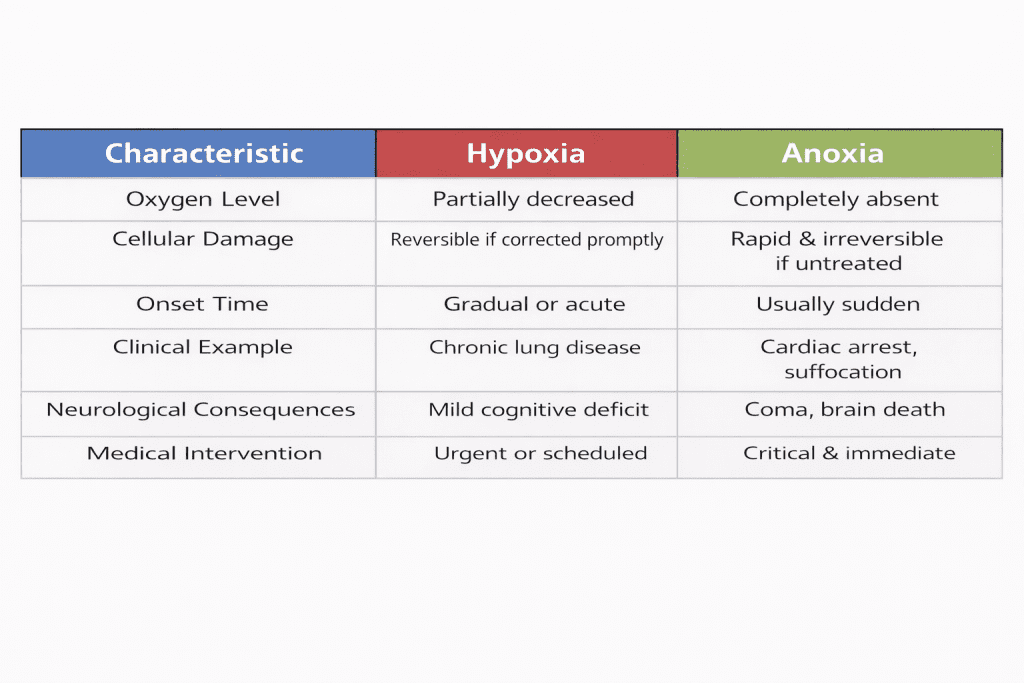
Understanding the difference between hypoxia and anoxia allows professionals to act with precision in clinical situations, and also helps the general public identify warning signs.
Causes of hypoxia
The causes of hypoxia are multiple and vary depending on the type:
-
Chronic respiratory diseases (COPD, pulmonary fibrosis)
-
Severe anemia
-
Partial obstructions of the airways
-
Congestive heart failure
-
High altitudes
These conditions do not completely eliminate oxygen, but reduce it to dangerous levels.
Causes of anoxia
La anoxia suele estar relacionada con situaciones más graves:
-
Paro cardiorrespiratorio
-
Asfixia por ahogamiento
-
Inhalación de gases tóxicos (monóxido de carbono, cianuro)
-
Embolia pulmonar masiva
-
Estrangulamiento o compresión del cuello
Aquí, la falta de oxígeno es total, y sus efectos se desencadenan en cuestión de segundos o minutos.
Síntomas comunes y diferenciación clínica
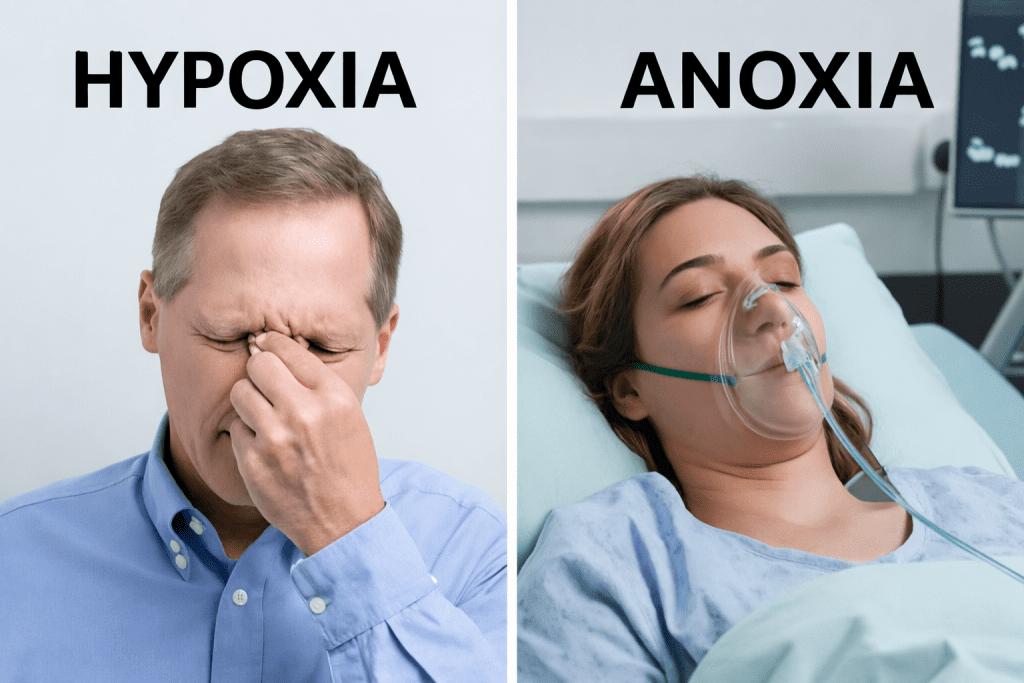
The symptoms may partially overlap, as both conditions compromise cerebral and systemic metabolism. However, their intensity and speed of onset vary.
Hypoxia:
-
Fatigue
-
Shortness of breath
-
Headache
-
Dizziness or disorientation
-
Palpitations
Anoxia:
-
Sudden loss of consciousness
-
Seizures
-
Bluish or bright red discoloration of the skin and mucous membranes
-
Respiratory arrest
-
Coma
It is crucial to distinguish between both in order to apply the appropriate treatment within the necessary timeframe.
Diagnosis
The diagnosis of hypoxia or anoxia is based on medical history, symptoms, and tests such as:
-
Arterial blood gas analysis: measures the levels of oxygen and carbon dioxide in the blood.
-
Pulse oximetry: measures oxygen saturation in a non-invasive way.
-
Electroencephalogram (EEG): useful in cerebral anoxia to assess neurological damage.
-
Brain imaging: CT or MRI to detect hypoxic or anoxic lesions.
-
Blood tests: evaluation of hemoglobin, carboxyhemoglobin (in cases of intoxication), and lactate (an indicator of anaerobic metabolism).
Treatment
Treatment depends on the underlying cause and the degree of impairment:
Hypoxia:
-
Oxygen therapy
-
Correction of anemia or pulmonary diseases
-
Bronchodilators
-
Improvement of cardiac function
-
Environmental control (pressure, altitude, exposure to pollutants)
Anoxia:
-
Cardiopulmonary resuscitation (CPR)
-
100% oxygen
-
Mechanical ventilation
-
Use of specific antidotes (hydroxocobalamin for cyanide, methylene blue for methemoglobinemia)
-
Hyperbaric chamber in some cases
The sooner oxygen supply is restored, the better the chances of recovery without permanent sequelae.
Prognosis
-
In hypoxia, the prognosis is usually good if the underlying cause is corrected and there has been no prolonged organ damage.
-
In anoxia, the prognosis is guarded, especially if there has been brain damage for more than 5 minutes without oxygen.
The difference between hypoxia and anoxia is not only conceptual, but has direct implications for the life or death of the patient.
Conclusion
Understanding the difference between hypoxia and anoxia is essential for all healthcare professionals and for those who want to learn about medical emergencies. Hypoxia involves a reduction in oxygen, while anoxia represents its complete absence. Although related, both conditions require different clinical approaches, and their prognosis varies depending on severity and timing of intervention.
Acting quickly and accurately in response to symptoms, identifying the cause, and applying the appropriate treatment can make the difference between a favorable recovery and a tragic outcome.
If you would like more information about NeuroAiD II, please fill out this contact form.
"*" indicates required fields


