



Stroke is one of the leading causes of neurological disability worldwide. Depending on the location of the lesion, sequelae can vary widely, affecting motor function, sensation, language, and cognitive functions. One of the less recognized yet highly disabling complications is hypersomnia following a thalamic stroke, a sleep disorder characterized by excessive daytime sleepiness that interferes with patient recovery.
This phenomenon is of significant clinical interest because it not only impairs quality of life, but also interferes with rehabilitation processes and social reintegration. Understanding its origin, characteristics, and treatment is essential for healthcare professionals and caregivers.
The role of the thalamus in sleep regulation

The thalamus is a deep brain structure that acts as a relay center between the cerebral cortex and other subcortical areas. One of its most relevant functions is the modulation of the sleep-wake cycle, participating in:
-
The integration of sensory stimuli
-
The regulation of attention and arousal
-
The connection with the ascending reticular activating system, responsible for maintaining wakefulness
When a stroke involves the thalamus, the pathways that regulate these processes may be disrupted, leading to post-stroke hypersomnia characterized by prolonged, irresistible, and non-restorative sleep.
Post-stroke hypersomnia: clinical characteristics
Post-stroke hypersomnia following a thalamic stroke presents differently from common drowsiness. Its main clinical features include:
-
Excessive daytime sleepiness: patients sleep more than usual, often requiring prolonged and involuntary naps.
-
Difficulty maintaining wakefulness: even during basic activities such as eating or conversing, the patient may fall asleep.
-
Persistent fatigue: despite prolonged sleep duration, rest is not restorative.
-
Cognitive impairment: difficulties with concentration, attention, and memory that are exacerbated by excessive sleepiness.
-
Impact on rehabilitation: excessive fatigue limits participation in physical, occupational, or speech therapy.
This condition should not be confused with post-stroke depression or neurological fatigue, although it may coexist with both.
Etiology and mechanisms
Post-stroke hypersomnia following a thalamic stroke is primarily explained by dysfunction of the circuits connecting the thalamus with the brainstem and the prefrontal cortex. These circuits are essential for cerebral activation and the regulation of states of consciousness.
The most widely accepted hypotheses include:
-
Disruption of the ascending reticular activating system.
-
Bilateral thalamic lesions that disrupt the circadian cycle.
-
Alterations in the production of neurotransmitters such as dopamine and orexin, which are key in sleep regulation.
The risk is higher in patients with predisposing factors such as hypertension, diabetes, pre-existing sleep apnea, and extensive vascular damage.
Diagnosis
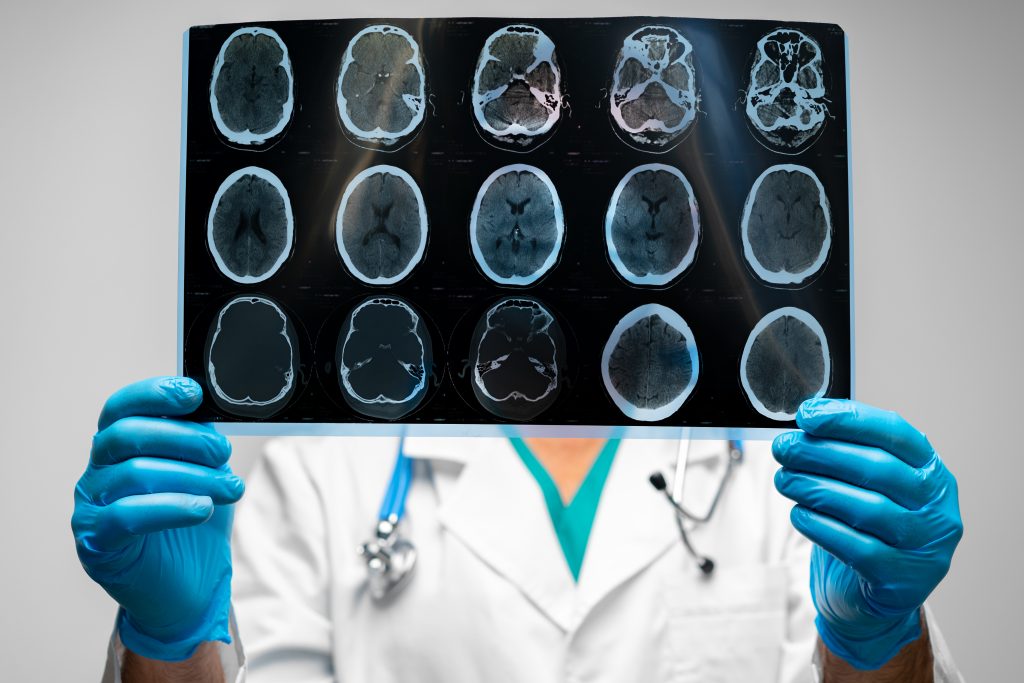
The diagnosis of post-stroke hypersomnia requires a comprehensive evaluation:
-
Clinical history: identification of excessive sleepiness following stroke, differentiating it from depression, fatigue, or medication effects.
-
Clinical scales: such as the Epworth Sleepiness Scale, which quantifies the degree of daytime sleepiness.
-
Polysomnography: useful to rule out other sleep disorders.
-
Neuroimaging (MRI or CT): confirms the thalamic lesion and its extent.
Accurate diagnosis is essential, as hypersomnia may be treatable and can significantly improve the patient’s quality of life.
Treatment
The management of post-stroke hypersomnia following a thalamic stroke combines both pharmacological and non-pharmacological approaches:
1. Pharmacological treatment
-
Modafinil: a wakefulness-promoting agent, considered first-line therapy.
-
Methylphenidate: a stimulant used in some cases to increase alertness.
-
Antidepressants with noradrenergic or dopaminergic activity: used when associated depression is present.
2. Non-pharmacological treatment
-
Sleep hygiene: establishing stable nighttime rest routines.
-
Cognitive stimulation therapies: aimed at improving attention and memory.
-
Intensive physical rehabilitation: tailored to the patient’s energy levels.
-
Caregiver education: on the importance of structuring activities and promoting wakefulness at appropriate times.
Prognosis
The course of post-stroke hypersomnia is variable. In some patients, symptoms improve over time due to neuroplasticity and rehabilitation. However, in others, excessive sleepiness persists and becomes a chronic sequela that impacts functional independence.
The prognosis is better when it is diagnosed early and appropriate treatment measures are implemented in a timely manner. Late detection may lead to a worsening of the patient’s overall recovery.
Impact on quality of life
Post-stroke hypersomnia affects not only the patient, but also their surroundings. Among the main consequences are:
-
Difficulty in resuming work or social activities
-
Increased dependence in daily life
-
Increased risk of falls and accidents due to drowsiness
-
Emotional and physical burden on caregivers
Therefore, it is essential that rehabilitation teams include sleep assessment within their post-stroke protocols.
Conclusion
Post-thalamic stroke hypersomnia is an underrecognized complication, but of significant clinical importance. Its early identification and management can make a difference in patient recovery, facilitating rehabilitation and improving quality of life.
Knowledge of this disorder should be disseminated among neurologists, rehabilitation physicians, physiotherapists, and caregivers, as its management requires a multidisciplinary approach. With advances in neuroscience and sleep medicine, there are increasingly more tools available to mitigate its effects and enable patients to achieve greater autonomy.
Si necesita información sobre NeuroAiD II, puede rellenar este formulario de contacto
"*" indicates required fields


