




Dejerine syndrome, also known as medial medullary syndrome, is a rare neurological condition first described by the French neurologist Joseph Jules Dejerine in the late 19th century. It results from a localized lesion in the medial region of the medulla oblongata, typically due to a vascular event such as an infarction in the territory of the anterior spinal artery or its branches. This syndrome is characterized by a specific combination of motor and sensory deficits, allowing it to be differentiated from other bulbar syndromes.
Anatomy and involved structures
To understand the origin of Dejerine syndrome, it is essential to review the structures of the medulla oblongata involved in the lesion:
-
Medullary pyramids: responsible for the conduction of motor fibers of the corticospinal tract.
-
Medial lemniscus: ascending pathway that transmits fine touch, vibration, and proprioceptive sensations.
-
Hypoglossal nerve (cranial nerve XII): its root emerges in the medial region of the medulla and is responsible for tongue motor function.
The involvement of these structures explains the classic clinical triad that defines the syndrome.
Clinical manifestations

The condition is characterized by a well-defined set of symptoms:
-
Contralateral hemiparesis or hemiplegia: due to damage to the pyramidal fibers, resulting in loss of strength on the side of the body opposite to the lesion.
-
Contralateral loss of fine touch and proprioceptive sensation: secondary to involvement of the medial lemniscus.
-
Ipsilateral tongue paralysis: caused by involvement of the hypoglossal nerve, with deviation of the tongue toward the affected side upon protrusion.
These three signs constitute the typical triad of Dejerine syndrome. In some cases, additional symptoms may appear depending on the extent of the lesion.
Etiology
The most common causes include:
-
Ischemic infarction in the territory of the anterior spinal artery.
-
Medullary hemorrhages of hypertensive origin or due to vascular malformations.
-
Tumors or space-occupying lesions compressing the medial region of the medulla oblongata.
-
Demyelinating diseases such as multiple sclerosis, although less frequently.
Vascular etiology remains the most common, particularly in patients with cardiovascular risk factors.
Diagnosis
The diagnosis is based on the combination of neurological examination and neuroimaging studies:
-
Clinical examination: the characteristic triad strongly supports the diagnosis.
-
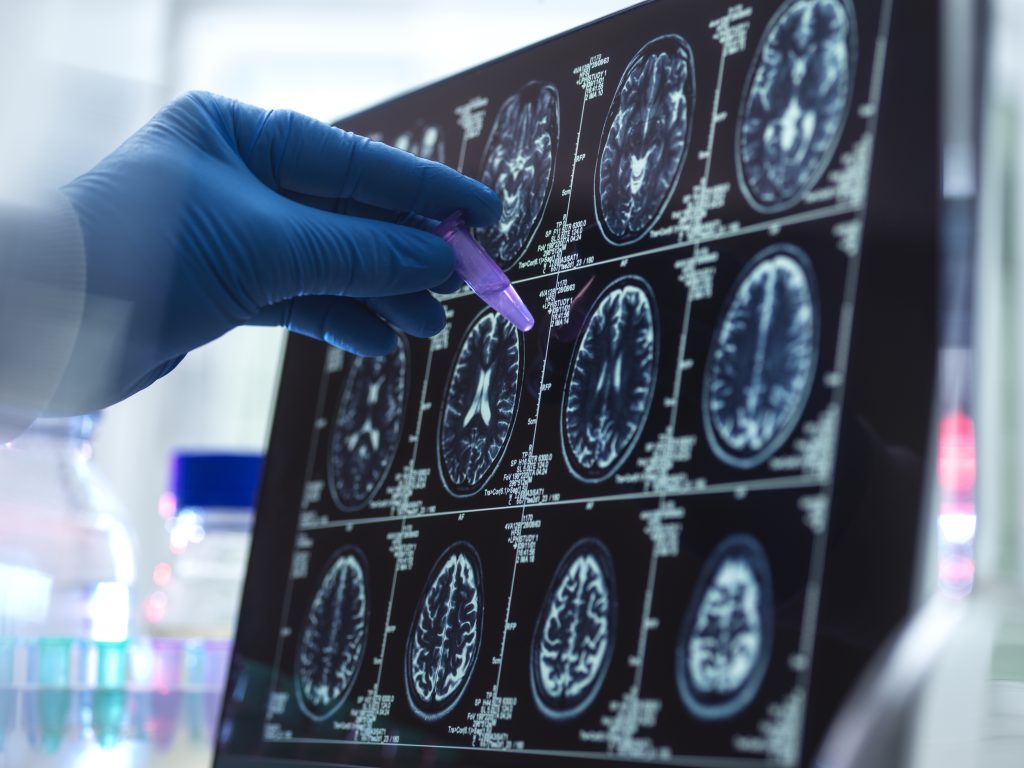
Brain magnetic resonance imaging: allows visualization of the affected area in the medulla and confirms the ischemic or hemorrhagic lesion.
-
Angiography or MR angiography: useful for assessing vascular involvement of the anterior spinal artery or its branches.
Treatment
The therapeutic approach depends on the underlying cause:
-
In cases of ischemic origin, stroke treatment protocols are applied, including thrombolysis or thrombectomy in selected cases, along with secondary prevention measures.
-
For hemorrhagic cases, management focuses on controlling blood pressure, coagulation status, and, in some cases, considering neurosurgical intervention.
-
In tumor-related or demyelinating lesions, treatment is directed toward the underlying cause.
In addition, neurological rehabilitation is essential for functional recovery, particularly to improve mobility, coordination, and speech articulation.
Prognosis
Prognosis varies depending on the extent of the lesion and the timeliness of treatment. Many patients achieve partial recovery, although residual deficits such as persistent paresis, sensory disturbances, and difficulty with speech articulation due to tongue involvement may remain. Early rehabilitation significantly improves quality of life.
Conclusion
Dejerine syndrome is a classic example of a vascular medullary syndrome, characterized by the triad of contralateral hemiplegia, contralateral loss of fine touch sensation, and ipsilateral tongue paralysis. Its clinical recognition is essential for early diagnosis and appropriate management. Although it is a rare condition, its study is crucial for neurology and emergency medicine professionals, as it illustrates the correlation between brainstem anatomy and clinical manifestations.
If you would like more information about NeuroAiD II, please fill out this contact form.
"*" indicates required fields


