



Dysphagia is a disorder that affects the ability to swallow safely and efficiently, and it may occur in older adults, patients with neurological damage, degenerative diseases, or head and neck cancer. One of the most challenging aspects in its management is ensuring adequate hydration. Therefore, understanding which beverages are suitable for dysphagia becomes essential for both patients and their caregivers.
Understanding dysphagia and the risk of aspiration
When a person has dysphagia, the swallowing process may be impaired from the oral phase to the pharyngeal or esophageal phase. This can cause liquids to enter the airway, increasing the risk of aspiration. Aspiration occurs when liquids or food enter the respiratory tract instead of the esophagus, which may lead to pulmonary infections such as aspiration pneumonia.
For this reason, a central component of dysphagia management involves modifying the texture of beverages. This is achieved using commercial or natural thickening agents that increase liquid viscosity, slowing their transit through the throat and reducing the risk of entering the airway.
What beverages are suitable for dysphagia?
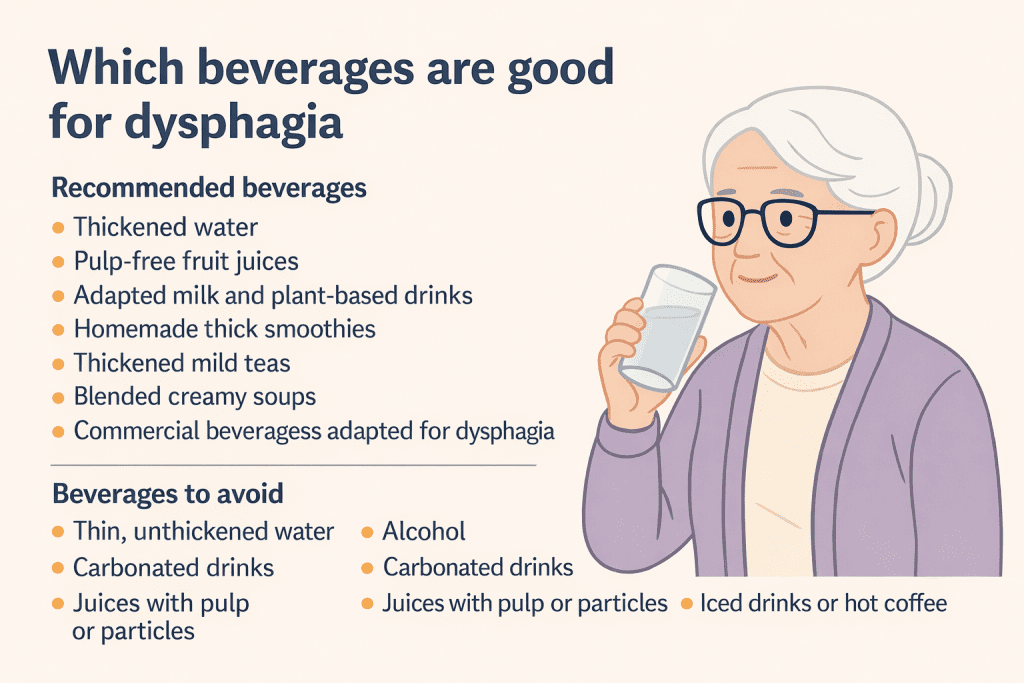
The following are the main safe options that address the question of which beverages are suitable for dysphagia, taking into account texture, nutritional value, and individual tolerance:
1. Thickened water
Although it is the most important beverage for hydration, water in its normal form is difficult to swallow in dysphagia. Fortunately, it can be thickened with specific products. One of the primary answers to the question of which beverages are suitable for dysphagia is texture-modified water, which preserves its function while reducing the risk of aspiration.
2. Thickened fruit juices
Natural fruit juices such as apple, pear, peach, or cranberry are rich in antioxidants and vitamin C. For patients with dysphagia, these juices should be thickened to achieve a safe consistency. Thickened juices are easier to control during swallowing and are generally well tolerated.
It is important to avoid highly acidic citrus juices such as orange or pineapple, as they may cause pharyngeal irritation in some patients with advanced dysphagia.
3. Thickened milk and plant-based beverages
Cow’s milk or plant-based beverages such as soy, oat, or almond can be included in the diet if properly thickened. They provide essential nutrients and are easy to adapt. Among the options of beverages suitable for dysphagia, these stand out for their energy value.
4. Thickened shakes and smoothies
Natural shakes prepared with fruit, milk, or yogurt and properly thickened are an excellent option due to their nutritional value and versatility. Smoothies allow the inclusion of fruits rich in soluble fiber and protein, supporting the nutritional status of patients with dysphagia.
Additionally, they can be enriched with oral nutritional supplements if increased caloric intake is required.
5. Blended soups or smooth creams
Although not strictly beverages, soups can be considered part of daily hydration. Blended vegetable soups, pumpkin, carrot, or chicken creams can be thickened and consumed safely. It is important to avoid poorly blended food particles that may pose a risk.
6. Commercial thickened nutritional beverages
There are multiple liquid oral nutritional formulas on the market specifically designed for patients with dysphagia.
These beverages, in addition to being safe, provide complete nutrition when the patient has difficulty consuming conventional meals.
7. Thickened mild teas
Chamomile, rooibos, or white tea, prepared without caffeine or excessive sugar, can be included in a dysphagia diet if properly thickened. These teas provide hydration and a soothing effect.
Avoid very hot teas or those with strong flavors such as intense ginger or spicy mint, as they may irritate the throat.
Beverages to avoid
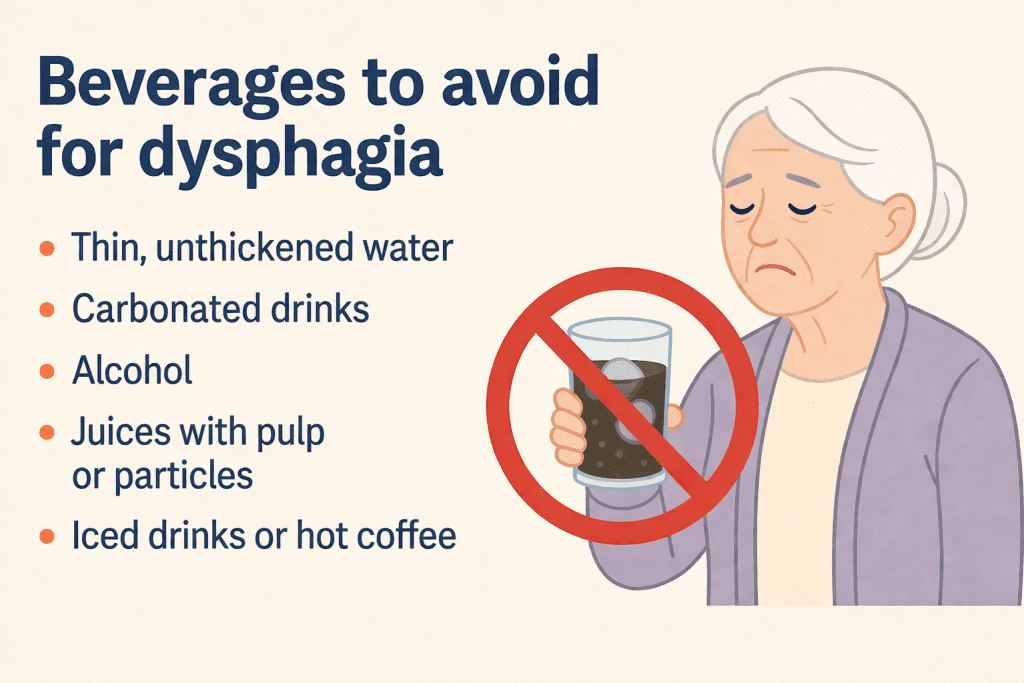
In addition to knowing which beverages are suitable for dysphagia, it is important to identify those that should be avoided due to their texture, temperature, or composition:
-
Unthickened clear liquids such as water or fresh juice
-
Carbonated beverages such as soft drinks or sodas
-
Alcohol
-
Very hot or unmodified coffee
-
Juices with pulp or lumps
-
Beverages containing seeds, ice, or floating particles
These options are often difficult to control during swallowing, increasing the risk of choking or aspiration.
The role of the swallowing therapist
The professional responsible for guiding safe feeding in individuals with dysphagia is the swallowing therapist or a speech-language pathologist specialized in dysphagia. This professional performs a clinical evaluation, and in some cases instrumental assessment such as videofluoroscopy, to determine which types of beverages are safe, at what consistency, and in what volume they can be administered.
They may also recommend postural strategies such as head positioning or double swallowing, temperature modifications, and sensory stimulation techniques to facilitate the swallowing reflex.
How to thicken beverages safely
Commercial thickeners come with clear instructions on the amount required to achieve the desired viscosity. It is important to follow these instructions precisely and verify the final texture using a flow test such as the IDDSI test.
The use of appropriate utensils such as spoons, spouted cups, or specialized straws can also facilitate safer hydration.
Final tips for caregivers and patients
-
If you or someone close to you needs to know which beverages are suitable for dysphagia, here are some useful tips:
-
Always thicken beverages, even those that may seem harmless.
-
Control temperature: lukewarm liquids are usually easier to swallow.
-
Avoid mixing liquids with solids in the same spoonful.
-
Use adapted utensils such as spouted cups or dosing spoons.
-
Supervise each swallow, especially in patients with a history of aspiration.
-
Conclusion
Identifying which beverages are suitable for dysphagia is essential to prevent serious complications such as dehydration or pneumonia. The use of thickeners, appropriate texture selection, and professional supervision make it possible for individuals with dysphagia to maintain safe and adequate hydration. Adapting beverages to the patient’s abilities improves not only physical health but also emotional well-being and quality of life.
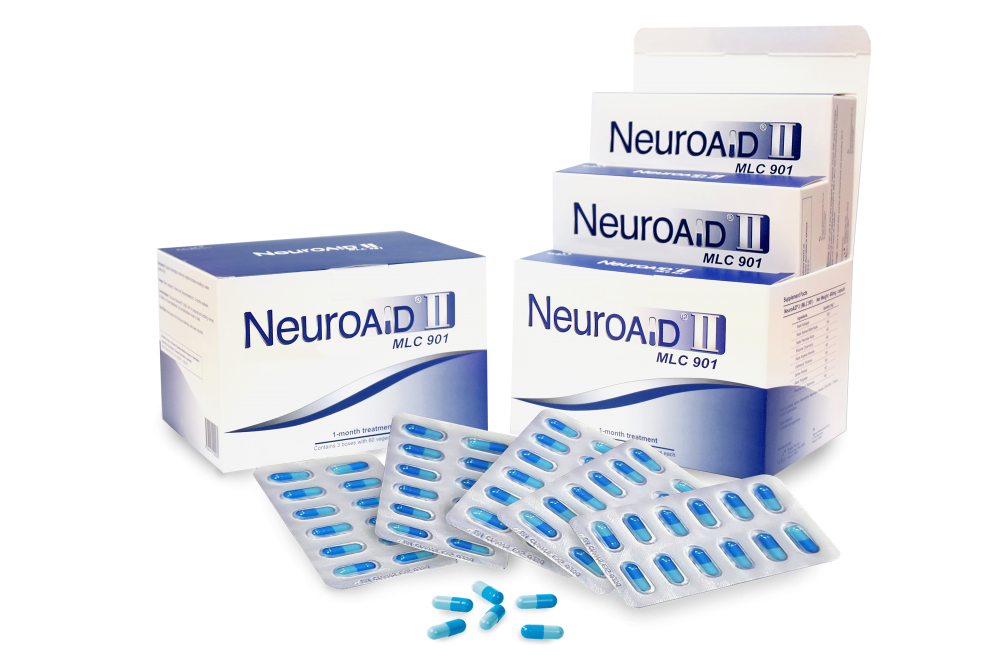
If you would like more information about NeuroAiD II, please fill out this contact form.
"*" indicates required fields


