


Dysglossia is a speech disorder that affects the articulation of sounds due to physical alterations in the peripheral speech organs. Unlike other disorders such as dysarthria or apraxia, dysglossia does not have a neurological origin, but rather an anatomical or structural one.
What is dysglossia?
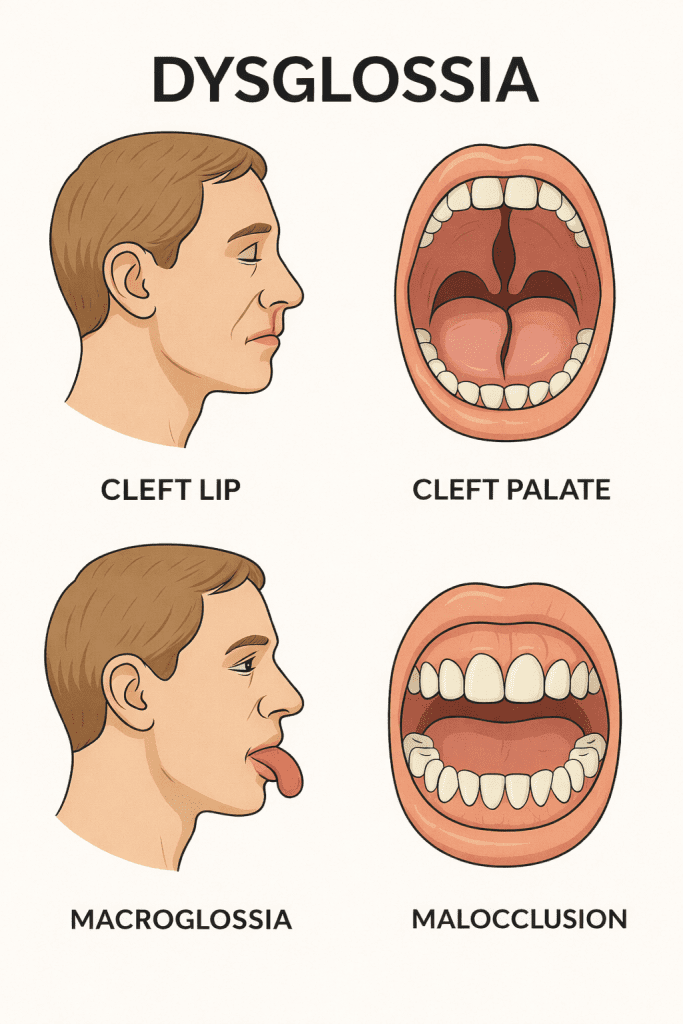
Dysglossia is an articulatory disorder that occurs when there is an anomaly or malformation in the orofacial speech organs: lips, tongue, palate, jaw, teeth, or nasal cavities. These alterations hinder or prevent the correct production of speech sounds, leading to persistent phonetic errors.
Individuals with dysglossia have normal intelligence and linguistic ability. They can understand language and construct sentences correctly, but their pronunciation is impaired due to physical limitations. Therefore, dysglossia is considered a disorder of peripheral organic origin, not functional or neurological.
Causes of dysglossia
The causes of dysglossia are related to congenital, acquired, or traumatic anatomical alterations that affect the structure of the articulatory organs. Among the most common are:
-
Cleft lip and cleft palate: congenital malformations that alter the separation between the nasal and oral cavities, making articulation difficult.
-
Macroglossia: abnormally enlarged tongue, commonly seen in conditions such as Down syndrome.
-
Glossectomy or partial removal of the tongue: due to surgeries resulting from cancer or other conditions.
-
Malpositioned or missing teeth: especially when they affect the upper or lower incisors.
-
Short lingual frenulum (ankyloglossia): limits normal tongue movement, making it difficult to produce certain sounds such as /r/ or /l/.
-
Palatal clefts: which may be visible or submucous, affecting speech resonance and articulation.
-
Mandibular malformations: such as micrognathia (small lower jaw) or prognathism (excessive projection of the jaw).
-
Trauma: severe injuries to the tongue, lips, jaw, or palate that alter their functionality.
-
Surgeries or resections: in patients with oral or maxillofacial tumors.
Types of dysglossia
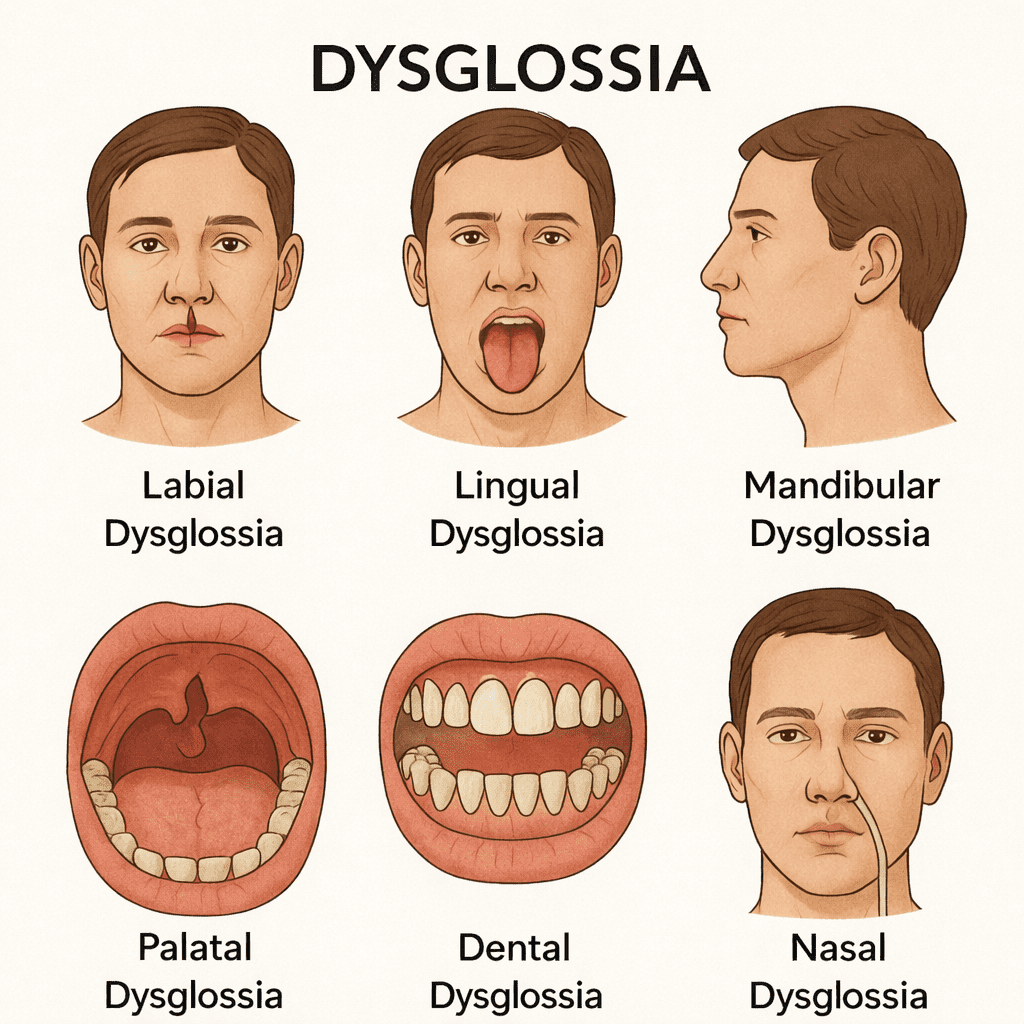
Dysglossia is classified according to the affected organ. This categorization helps define the most appropriate treatment.
-
Labial dysglossia:
-
Affects the mobility, shape, or integrity of the lips.
-
Causes difficulties with bilabial sounds (/p/, /b/, /m/) and labiodental sounds (/f/, /v/).
-
Example: cleft lip.
-
-
Lingual dysglossia:
-
Affects the tongue in size, shape, or mobility.
-
Impacts alveolar sounds (/t/, /d/, /n/, /s/) and trill sounds (/r/, /rr/).
-
Common in cases of ankyloglossia or macroglossia.
-
-
Mandibular dysglossia:
-
Associated with malformations of the jaw.
-
May cause problems with occlusion and overall articulation.
-
-
Dental dysglossia:
-
Caused by malformed dentition, tooth loss, or malposition.
-
Particularly affects fricative and dental sounds.
-
-
Palatal dysglossia:
-
Involves the hard or soft palate.
-
Produces a nasalized and unintelligible voice.
-
Common in cleft palate or palatal fissures.
-
-
Nasal dysglossia:
-
Less common, but may occur in malformations of the nasal cavities.
-
Affects the resonance and nasalization of sounds.
-
Each type of dysglossia may occur in isolation or in combination, and the degree of impairment ranges from mild to severe depending on the anatomical alteration.
Diagnosis of dysglossia
The diagnosis of dysglossia is primarily clinical and requires a multidisciplinary approach. It typically involves speech therapists, otolaryngologists, pediatric dentists, orthodontists, and, in some cases, maxillofacial surgeons.
The main diagnostic tools are:
-
Orofacial examination: visual and functional assessment of the tongue, lips, teeth, and palate.
-
Articulatory assessment: analysis of the speech sounds produced by the patient.
-
Oral motor tests: to assess the strength, mobility, and coordination of the involved structures.
-
X-rays or scans: in cases of skeletal or dental anomalies.
-
Detailed medical history: including medical background, language development, and any previous surgical interventions.
It is important to rule out neurological, psychological, or auditory causes that may mimic dysglossia, such as in cases of dysarthria or phonological disorders.
Treatment of dysglossia
The treatment of dysglossia depends on the type, cause, and severity of the anatomical alteration. It may require surgery, orthodontics, speech therapy, or a combination of these.
1. Surgical treatment
-
Correction of cleft lip or cleft palate (cheiloplasty or palatoplasty).
-
Lingual frenectomy in cases of ankyloglossia.
-
Reconstructive surgeries following trauma or tumors.
-
Mandibular osteotomies to correct severe deformities.
2. Orthodontic treatment
-
Correction of dental malocclusions.
-
Palatal expansion or dental alignment.
-
Functional appliances in children with mandibular abnormalities.
3. Speech therapy
-
Orofacial motor exercises.
-
Articulatory re-education of the affected phonemes.
-
Breath control and resonance techniques.
-
Auditory and visual training.
-
Use of visual support, mirrors, and auditory feedback.
In many cases, even if the anatomical cause of dysglossia is corrected, a speech therapy rehabilitation process is necessary to relearn the correct production of sounds.
4. Psychological support
-
In children, especially at school age, intervention may be necessary to prevent emotional disorders, social anxiety, or low self-esteem.
Prognosis of dysglossia
The prognosis of dysglossia varies depending on the cause, the timing of diagnosis, and the therapeutic approach. In general:
-
Mild cases: usually resolve with speech therapy.
-
Moderate cases: require a combination of surgery and rehabilitation.
-
Severe cases: may result in permanent sequelae if not properly treated.
Early diagnosis, especially in childhood, significantly improves the likelihood of full recovery.
Dysglossia and quality of life
Dysglossia can affect the social, academic, and emotional development of children, as well as adult life in untreated cases. Difficulty in clearly pronouncing sounds may lead to teasing, withdrawal, low self-esteem, and insecurity when communicating.
For this reason, the family and educational environment should be informed and understanding. Emotional support, inclusion, and appropriate therapeutic follow-up are essential to minimize the impact on quality of life.
Conclusion
Dysglossia is an articulatory disorder of organic origin that, although it does not affect intellectual or linguistic capacity, can significantly impair verbal communication. Its treatment requires a comprehensive approach combining medical, dental, and speech therapy interventions.
Early diagnosis and a therapeutic plan tailored to each case are key to achieving effective articulation and full social integration. Dysglossia does not have to be a permanent obstacle if addressed promptly, professionally, and with sensitivity.
If you would like more information about NeuroAiD II, please fill out this contact form.
"*" indicates required fields


