


The corona radiata is a structure composed of bundles of nerve fibers located deep within the brain. Its primary function is to transmit information between the cerebral cortex and other regions of the nervous system, allowing motor commands and sensory information to be transmitted efficiently.
Although the term may be unfamiliar to many people, the corona radiata plays a fundamental role in functions such as movement, sensation, language, and coordination. When this region is affected by a stroke, different neurological deficits may occur depending on the location and extent of the lesion.
What is the corona radiata?
The corona radiata is a bundle of white matter fibers that connects the cerebral cortex with deeper structures of the brain and the spinal cord.
These fibers act as a communication network, transmitting signals in both directions. Some carry motor commands from the brain to the muscles to produce movement, while others transmit sensory information from the body to the cerebral cortex.
Its fan-shaped arrangement gives the corona radiata its name, as the fibers spread out from a narrower region toward different areas of the cerebral cortex.
Where is the corona radiata located?

The corona radiata is located in both cerebral hemispheres, immediately beneath the cerebral cortex.
Along its course, the fibers converge toward a structure known as the internal capsule, one of the major communication pathways of the central nervous system.
Because of the large number of neural pathways that pass through this region, even a relatively small lesion can affect important neurological functions.
What is its function?
The corona radiata is involved in the transmission of numerous nerve impulses.
Among its most important functions are:
- Carrying motor commands to the arms and legs.
- Transmitting sensory information related to touch, temperature, and pain.
- Contributing to the coordination of voluntary movements.
- Connecting different brain regions involved in language and other higher-order functions.
Through these connections, the brain can continuously send and receive information to regulate the body’s functions.
How can a stroke affect the corona radiata?
When a stroke compromises blood flow to this region, the nerve fibers may no longer transmit information properly.
The clinical manifestations depend on the neural pathways affected and the extent of the lesion.
In many cases, neurological deficits occur on the side of the body opposite to the affected cerebral hemisphere, as many nerve pathways cross before reaching the spinal cord.
Symptoms of corona radiata damage
The consequences can vary considerably among patients.
Some of the most common symptoms include:
- Weakness in an arm or leg.
- Loss of strength on one side of the body.
- Sensory disturbances.
- Difficulty coordinating movements.
- Changes in gait.
- Reduced manual dexterity.
- Balance disturbances.
If the lesion affects fibers involved in language or other cognitive functions, difficulties with communication or performing certain tasks may also occur.
Does it always cause the same long-term effects?
No.
The corona radiata contains thousands of nerve fibers with different functions. Therefore, two people with lesions in the same region may experience very different symptoms.
The severity also depends on the size of the infarction, how quickly blood flow is restored, and the brain’s ability to reorganize its neural connections.
How is a corona radiata lesion diagnosed?
Lesions in this region are usually identified using brain imaging techniques.
The most commonly used techniques are:
- Computed tomography (CT).
- Magnetic resonance imaging (MRI).
These imaging studies help identify the location of the affected area and assess the extent of brain damage.
The imaging findings are then complemented by a neurological examination to determine how the lesion is affecting movement, sensation, and other functions.
Can a corona radiata lesion recover?
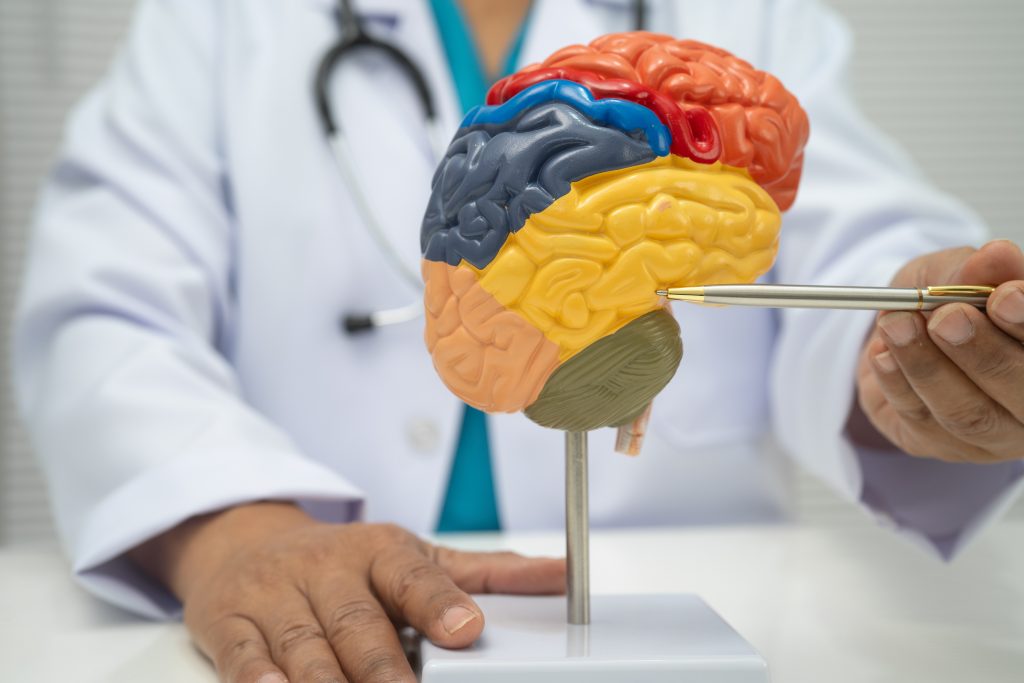
The progression of recovery varies from person to person.
Following a stroke, the brain activates adaptive mechanisms known as neuroplasticity, which allow some neural connections to reorganize.
Through this process, certain functions may improve over time, although the degree of recovery depends on multiple factors, including the extent of the lesion, the patient’s age, and the individual characteristics of each case.
Not everyone recovers the same level of function, and outcomes may differ even among patients with apparently similar lesions.
Why is the corona radiata so important?
The importance of the corona radiata lies in its role as a major communication pathway between different regions of the nervous system.
Damage to these nerve fibers can simultaneously affect several functions, as they carry signals related to movement, sensation, and other neurological processes.
For this reason, lesions in this region often receive particular attention during the evaluation of patients with cerebrovascular diseases.
Conclusion
The corona radiata is a structure composed of nerve fibers that connect the cerebral cortex with other regions of the nervous system. Its function is to transmit information related to movement, sensation, and various neurological functions. When a stroke affects this region, neurological deficits such as weakness, sensory disturbances, or difficulty walking may occur, with their severity depending on the location and extent of the lesion. Understanding the role of the corona radiata helps explain how certain brain lesions can affect the functioning of the body.
If you need information about NeuroAiD II, please fill out this contact form.
"*" indicates required fields


