
Gerstmann syndrome is a rare neurological disorder characterized by the simultaneous presence of four specific cognitive impairments: difficulty writing, inability to perform simple calculations, difficulty identifying or distinguishing the fingers, and difficulty differentiating between the right and left sides. These manifestations usually result from a lesion in a specific region of the dominant parietal lobe, commonly following a stroke.
Although other neurological functions may be affected depending on the extent of the lesion, the presence of these four signs is the most characteristic feature of the syndrome.
What is Gerstmann syndrome?

Gerstmann syndrome is a group of neuropsychological impairments caused by a lesion of the angular gyrus in the dominant parietal lobe, typically the left hemisphere in right-handed individuals.
It was first described by the Austrian neurologist Josef Gerstmann in 1924 and remains one of the classic neurological syndromes used to localize cortical lesions.
Why does it occur?
The syndrome occurs when a lesion affects the brain networks responsible for integrating functions related to language, writing, calculation, and spatial orientation.
The regions most commonly involved include:
- The angular gyrus.
- The dominant parietal lobe.
- Parietal association areas.
When these structures are damaged, specific cognitive abilities may be impaired in a characteristic pattern.
Causes
The most common causes include:
- Ischemic stroke.
- Cerebral hemorrhage.
- Brain tumors.
- Traumatic brain injury.
- Vascular malformations.
- Neurodegenerative diseases.
- Central nervous system infections.
Stroke is one of the most common causes in adults.
Symptoms of Gerstmann syndrome
The classic syndrome includes four main impairments:
- Agraphia (difficulty writing).
- Acalculia (difficulty performing calculations).
- Finger agnosia (inability to identify the fingers).
- Right-left disorientation.
In addition, some patients may experience:
- Language difficulties.
- Reading difficulties.
- Attention deficits.
- Associated cognitive impairments, depending on the extent of the lesion.
Not all patients develop the complete form of the syndrome.
Relationship with stroke
Many cases occur following a cerebral infarction affecting the dominant parietal lobe.
When the lesion involves the angular gyrus, the functions responsible for writing, calculation, and spatial orientation may be simultaneously impaired, resulting in the characteristic clinical presentation.
How is it diagnosed?
Diagnosis is based on neurological examination and neuropsychological assessment.
The most commonly used diagnostic tests and assessments include:
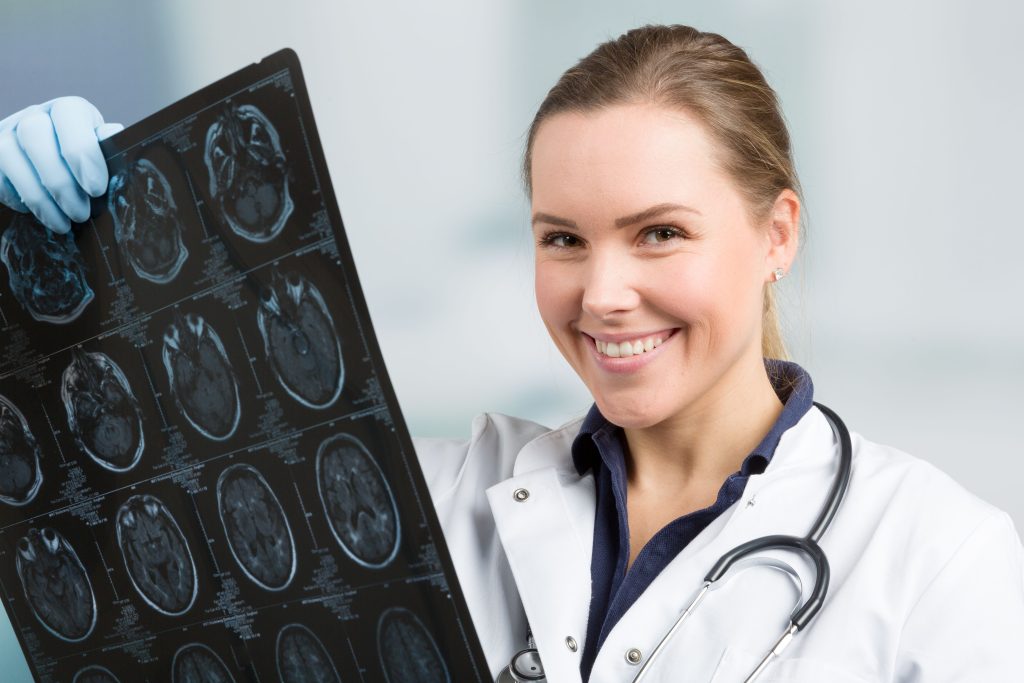
- Brain magnetic resonance imaging (MRI).
- Computed tomography (CT).
- Neuropsychological assessment.
- Evaluation of language and cognitive functions.
These assessments help identify both the brain lesion and the associated functional impairments.
Treatment
Treatment depends on the underlying condition responsible for the syndrome.
When the syndrome is caused by a stroke, management follows established stroke treatment protocols. Subsequently, many patients may benefit from neuropsychological rehabilitation and speech and language therapy aimed at improving the affected cognitive functions.
The treatment approach should always be tailored to each patient’s individual needs.
Prognosis
The clinical course depends on several factors, including:
- The extent of the brain lesion.
- The underlying cause.
- The timeliness of diagnosis.
- The treatment received.
- The response to rehabilitation.
In some patients, cognitive impairments may improve progressively, while in others, long-term deficits may persist.
Conclusion
Gerstmann syndrome is a rare neurological disorder that affects cognitive functions such as writing, calculation, and spatial orientation. It is commonly associated with lesions of the dominant parietal lobe, particularly following a stroke. Recognizing its clinical manifestations can help localize the brain lesion and better understand the neuropsychological impairments experienced by each patient.
If you would like more information about NeuroAiD II, please complete this contact form.
"*" indicates required fields


